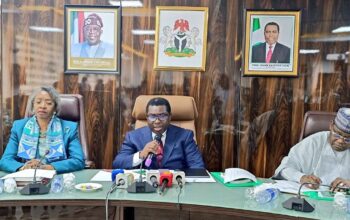
The Economic Community of West African States (ECOWAS) has sounded a fresh alarm over worsening climate-related disruptions across the region, citing rising temperatures, erratic rainfall patterns, and increasing flood disasters.
Speaking at the ECOWAS Hydrology and Meteorology Directors’ Meeting in Abuja on Tuesday, the ECOWAS Commissioner for Economic Affairs and Agriculture, Mrs. Massandjé Toure-Litse, said West Africa recorded a 1.2°C rise above pre-industrial levels in 2024, placing the Sahel among the five hottest regions globally last year. While parts of the Gulf of Guinea experienced above-average rainfall, the Sahel and northern zones faced extended dry spells that disrupted farming cycles and reduced water availability.
Represented by the ECOWAS Acting Director for Environment and Natural Resources, Mr. Yao Bernard Koffi, Toure-Litse disclosed that between 2021 and 2024, flood-related incidents rose by 47%, affecting over five million people and causing economic damages estimated at $1.3 billion. She also cited an ECOWAS-WASCAL study indicating a 10% drop in agricultural productivity in 2024 due to climate impacts—deepening food insecurity and inflation.
“This trend will only worsen if global temperatures reach 1.5°C between 2030 and 2052, as projected,” she warned, stressing the urgent need to strengthen hydrological and meteorological (hydromet) services across the region.
Toure-Litse emphasized the role of accurate weather data in rural resilience and called for improved access and dissemination of forecasts. “Investing in early warning systems can yield up to $9 in benefits for every $1 spent,” she said, citing World Bank data.
She announced that ECOWAS had adopted a Hydromet Initiative in 2021 to assess regional and national capabilities, with investment needs estimated at $324.5 million—$290 million for member states and $34.5 million for regional support. A project concept note developed with the UNFCCC Secretariat will be presented at the meeting for validation and submission to the Green Climate Fund.
Also speaking, Nigeria’s Minister of Aviation and Aerospace Development, Festus Keyamo, reaffirmed Nigeria’s commitment to strengthening the Nigerian Meteorological Agency (NiMet). He noted that climate hazards currently cost African nations 2–5% of GDP annually, with some diverting up to 9% of their national budgets to address extreme weather.
“In West Africa, rainfall deficits in Nigeria, Benin, and Ghana in 2023 led to localised agricultural shortfalls. This underscores the urgency of accurate and timely climate information for saving lives and supporting sustainable development,” Keyamo said.
He challenged the region to assess its preparedness for the UN’s “Early Warnings for All” initiative, which aims to ensure that every person on Earth is protected by an early warning system by the end of 2027.
WMO’s Director for Africa, Dr. Agnes Kijazi, in a goodwill message, reiterated the agency’s commitment to supporting West African nations through initiatives like the Systematic Observations Financing Facility (SOFF) and the Climate Risk and Early Warning Systems (CREWS).
The Director-General of NiMet, Prof. Charles Anosike, also pledged Nigeria’s continued support for regional cooperation. “We are ready to share expertise and resources to build a climate-smart West Africa,” he said.
The three-day meeting aims to consolidate strategies, share experiences, and define clear action plans to enhance hydromet capabilities in the face of growing climate threats.