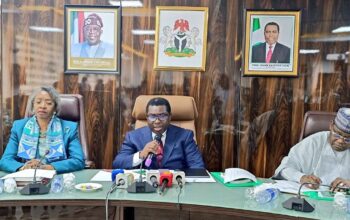
The Federal Government has condemned unchecked environmental degradation in Nigeria, describing it as a direct contradiction to the national anthem’s call for a nation where “no man is oppressed.”
Minister of Environment, Balarabe Abbas Lawal, made the statement during the Circular and POPs-Free Plastics in Africa Project Inception Workshop held in Abuja. He emphasized that environmental pollution disproportionately affects the country’s most vulnerable populations and must be addressed urgently.
“This project reflects our shared resolve to break free from environmental oppression and build a future where both people and nature thrive,” Lawal said, thanking global and local partners including the Global Environment Facility (GEF), UN Environment, and BCCC-Africa for their support.
Nigeria is one of five African countries benefiting from the initiative, which aims to reduce Persistent Organic Pollutants (POPs) in plastics used across key sectors such as construction, electronics, and automotive manufacturing. POPs—chemicals that persist in the environment—pose severe risks to human health and biodiversity.
Director-General of NESREA, Prof. Innocent Barikor, noted that many plastic products used in electronics and household materials contain harmful additives like polybrominated diphenyl ethers (PBDEs), which are carcinogenic and disrupt ecological systems.
“Nigeria’s role as a regional hub for electronic goods means we bear a responsibility to manage the environmental risks these products bring. This project provides the framework for a transformative shift towards sustainability,” Barikor said.
The project seeks to implement circular economy principles, promote eco-friendly alternatives to POPs, and introduce robust waste management systems. Stakeholders from government, academia, civil society, and industry were present, committing to a united approach to one of the most pressing environmental challenges of the time.