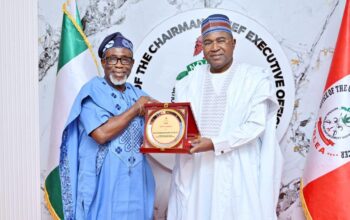
The Economic and Financial Crimes Commission (EFCC) has pledged to collaborate with the Presidential Committee on Campaign Against Social Vices in Secondary and Tertiary Institutions to curb corruption, economic crimes, and other harmful behaviours among students.
EFCC Chairman, Mr. Ola Olukoyede, made the commitment in Abuja during a courtesy visit by the committee, led by its chairman, Professor Jerry Ugokwe. Represented by Commander CE Ibrahim Shazali, Director of Fraud Risk Assessment and Control, Olukoyede reiterated the Commission’s zero tolerance for social vices, stressing that integrity and good conduct must be entrenched in schools.
“The campaign against social vices is something the EFCC has championed from inception. We have Integrity Clubs in primary and secondary schools, and Zero Tolerance Clubs in higher institutions. These initiatives encourage students to embrace positive values and resist corrupt practices,” Shazali said.
He explained that the EFCC was prioritizing preventive measures such as sensitization and re-orientation, which are cost-effective and align with the Commission’s mandate. “We are ready to collaborate with all stakeholders to rid Nigeria of corruption, economic and financial crimes,” he added.
Professor Ugokwe emphasized that building the right values among young Nigerians was crucial to sustaining the fight against corruption. He noted that the Committee’s four pillars—awareness and sensitization, capacity building and training, policy and advocacy, as well as collaboration and enforcement support—would drive its mandate.
“The fight against corruption cannot succeed without shaping the mindset of the younger generation. Joint campus sensitization, anti-corruption clubs in schools, essay competitions, training programmes, and media campaigns will consolidate the gains in this struggle,” Ugokwe stated.
Both bodies agreed to deepen collaboration through joint initiatives that will address drug abuse, cybercrime, cultism, alcoholism, and other vices that threaten to undermine academic institutions and fuel corrupt behaviour in the wider society.