Egypt has expressed its readiness to deepen cultural cooperation with Nigeria as it marked the inauguration of the Grand Egyptian Museum (GEM), the world’s largest archaeological museum complex.
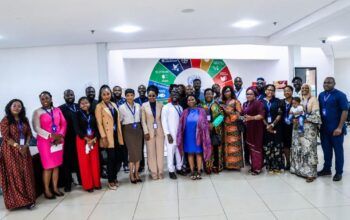
The commitment was conveyed by Egypt’s Ambassador to Nigeria, Mohamed Fouad, during a celebration held in Abuja. The event, attended by the Director General of the National Council for Arts and Culture (NCAC), Obi Asika, members of the diplomatic community, and representatives of Nigeria’s cultural institutions, underscored Egypt’s leadership in preserving Africa’s cultural heritage.
Ambassador Fouad called for greater collaboration among African nations in heritage conservation, museum development, and tourism, reaffirming Egypt’s willingness to share its expertise with Nigeria and other partners. “Africa’s cultural renaissance must be built on mutual respect and shared pride in our past,” he said.
Speaking about the newly inaugurated Grand Egyptian Museum, Ambassador Motaz Zahran described it as a historic achievement and a “gift from Egypt to humanity.” Located less than two kilometres from the Great Pyramid of Khufu, the museum represents more than two decades of planning, innovation, and international partnership.
“GEM stands as a testament to Egypt’s commitment to preserving our ancient heritage while opening a new chapter in our engagement with the world,” Zahran said. He added that the museum embodies a living dialogue between civilizations and generations, showcasing Egypt’s ancient civilization as a shared legacy of humanity.
Zahran emphasized that Egypt’s historical contributions—from governance and architecture to science and art—continue to shape global culture. “Today, through GEM, we renew that spirit of sharing and invite the world to experience our story,” he stated.
In his remarks, NCAC Director General Obi Asika praised Egypt for setting a global benchmark in cultural preservation. He described the Grand Egyptian Museum as “a beacon of African excellence and a model for nations seeking to safeguard their heritage.”
Guests were invited to visit the museum to “feel the pulse of history and witness Egypt’s continuing role as a cradle of civilization and a beacon of cultural exchange.”
The Grand Egyptian Museum houses more than 100,000 artifacts, including 20,000 items being displayed publicly for the first time. Its highlights include the complete 5,400-piece collection of King Tutankhamun’s treasures, showcased together for the first time in history.
Visitors can explore Egypt’s extensive timeline—from the Predynastic Period and the 30 dynasties of ancient Egypt through the Greco-Roman, Islamic, and modern eras—tracing the evolution of governance, spirituality, art, and architecture.
Beyond its vast collections, GEM functions as a dynamic cultural and research institution equipped with state-of-the-art conservation laboratories, digital learning centres, and cultural exchange facilities—bridging ancient heritage with contemporary innovation.