Experts from across West Africa have called for a reimagining of the Economic Community of West African States (ECOWAS) to make it more inclusive, citizen-driven, and responsive to the region’s developmental and security challenges.
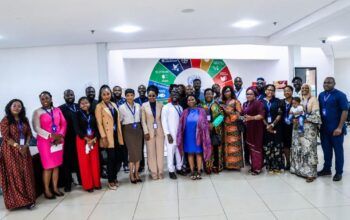
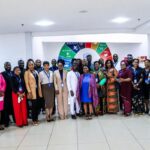
The call was made at the weekend during the Second Continental Edition of the African Political Square and Expert Conference on Alternative Futures for ECOWAS @ 50, held in Abuja. The conference was jointly organized by the African Leadership Centre in collaboration with CODESRIA and WATHI.
Participants emphasized the urgent need to integrate women and girls in governance, highlighting their critical roles in peacebuilding, security, and economic development. They also urged the regional body to adopt citizen-centered reforms that strengthen accountability and bridge the gap between ECOWAS and the people it serves.
The experts noted that despite frameworks such as ECOWAS Vision 2050 and national affirmative action policies in countries like Sierra Leone, Senegal, and Ghana, deep-rooted patriarchal structures and weak implementation continue to undermine women’s participation.
While acknowledging Senegal’s success in achieving over 40% female parliamentary representation through parity laws, speakers lamented Nigeria’s poor record of just 4% in the Senate, and criticized ECOWAS itself for having only 25% female representation and never a female president in its 50-year history.
Key recommendations included enforcing 30% gender quotas, promoting intergenerational dialogue, and fostering transformational, ethical, and accountable leadership that documents women’s historical contributions and combats gender-based violence.
Speaking on “ECOWAS of the People, Peace, and Prosperity for All”, Dr. Emmanuel Akwetey, Executive Director of the Institute for Democratic Governance, warned that democracy in the region was in distress. He cited the withdrawal of three Sahelian nations from ECOWAS and the subsequent rise of jihadist activities as evidence of the body’s weakening influence. “The ECOWAS of today is not the ECOWAS of 15 or 20 years ago. Leadership must rise to the challenge if the region is to adhere to Agenda 2063 and other development goals,” Akwetey said.
Also speaking, Gen. El-Hadji Babacar Faye (Rtd), a counterterrorism and security expert, said many citizens now view ECOWAS as “a distant and bureaucratic institution”, calling for a new social contract built on trust and accountability.
Ambassador Abdullahi Shehu, former Nigerian envoy to Russia, emphasized the need for flexible, people-centered integration focused on building resilient economies driven by energy, transport, and digital innovation. He also urged ECOWAS to adopt a human-security approach to tackle the root causes of instability.
Dr. Egghead Odewale, Director of Policy and Operations at the Amanda Institute, criticized the disparity in financial transactions within ECOWAS, noting persistent barriers to the free movement of people despite the bloc’s protocols. He called for a “decolonization of mindsets and institutions” to enable genuine regional integration.
On her part, gender and climate justice advocate Ms. Hyeladzira James Mshelia lamented the poor public awareness of ECOWAS’s role, blaming misinformation and weak communication strategies. She urged the regional body to rebrand its engagement with youth and grassroots communities while harnessing digital tools to counter disinformation.
The two-day conference concluded with a shared consensus that for ECOWAS to remain relevant at 50 and beyond, it must transform into a people-driven, inclusive, and transparent community, capable of meeting the aspirations of West Africans in a changing global landscape.