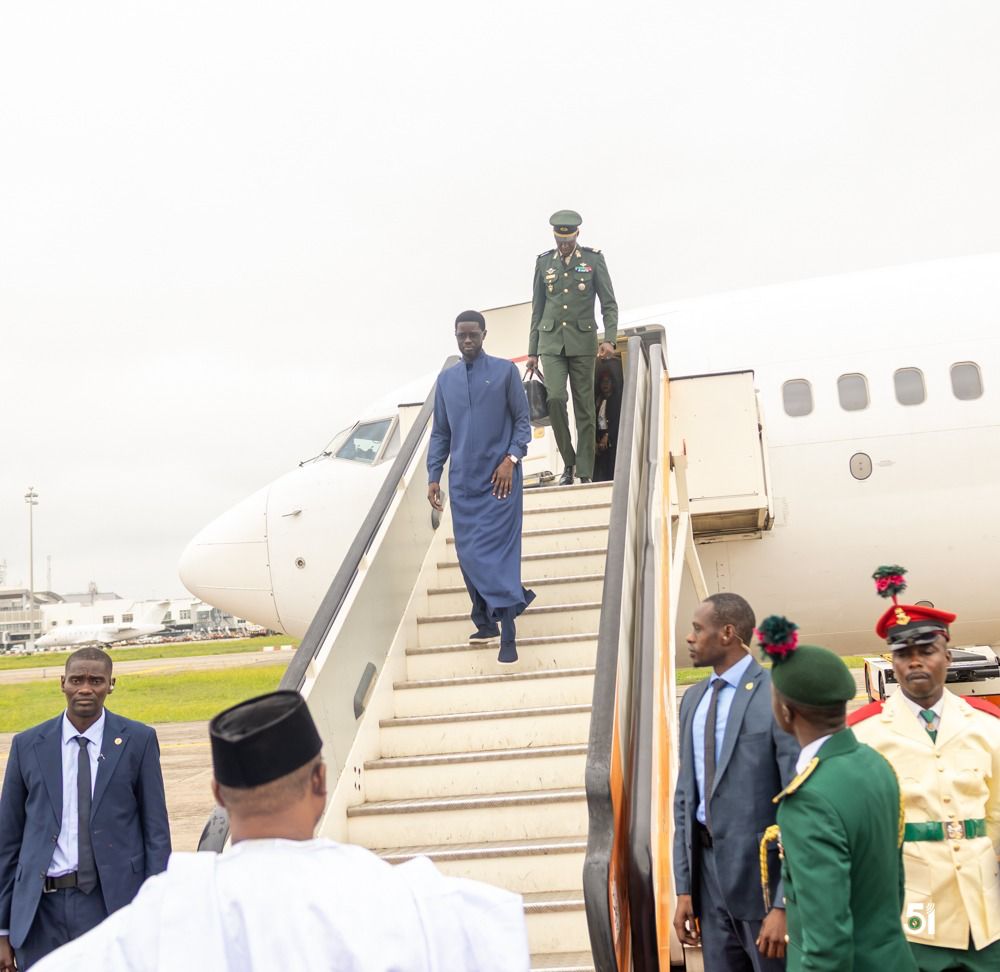
The Chairman of the Authority of Heads of State and Government of the Economic Community of West African States (ECOWAS), President Bassirou Diomaye Faye of Senegal, has called for a stronger role for the ECOWAS Parliament in reconnecting the regional integration agenda with citizens across West Africa.
Faye said regional integration could not be sustained by governments and regional institutions alone, stressing the need for greater citizen participation, dialogue and institutional cooperation.
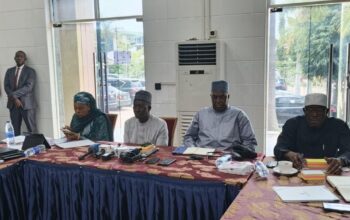
The Senegalese President spoke on Tuesday in Abuja during an official visit to the ECOWAS Parliament, where he was received by the Speaker, Rt. Hon. Mémounatou Ibrahima, and other principal officers of the regional legislature.
Describing the Parliament as the “hub of regional dialogue,” Faye said its representative mandate was crucial to ensuring that citizens remained engaged in decisions shaping the future of the West African bloc.
He reaffirmed his support for the Parliament and pledged to work with the institution to advance the objectives of the Community.
Faye also linked regional integration to conflict prevention, mediation, public enlightenment and stability, urging Parliament staff to remain committed to serving the people of the Community.
His visit came amid continuing political, security and economic pressures across West Africa that have tested regional cohesion and ECOWAS’ capacity to sustain a common agenda.
Welcoming the President, Ibrahima described his presence in the parliamentary chamber as significant, saying it underscored the importance of dialogue and political participation to the integration process.
She linked Senegal’s tradition of public debate to the Parliament’s responsibility to provide a platform for the voices and aspirations of West Africans.
The Speaker warned against an integration process driven largely by governments, insisting that citizens must become active participants and beneficiaries.
“Regional integration should not remain merely a project of States, but should become a work of citizens and for citizens,” Ibrahima said.
She reaffirmed the Parliament’s commitment to representative democracy, human rights, peace and security, but stressed that stronger legislative and oversight powers were necessary for the institution to contribute effectively to those objectives.
Ibrahima called for a stronger, more representative and impactful Community Parliament capable of influencing the regional agenda and strengthening the relationship between ECOWAS institutions and citizens.
The First Deputy Speaker of the ECOWAS Parliament and Deputy President of the Nigerian Senate, Senator Jibrin Barau, said Faye’s visit demonstrated the importance of closer engagement between the regional legislature and the Authority of Heads of State and Government.
In a vote of thanks, Barau said regular interaction between the two institutions would help translate citizens’ aspirations into concrete regional action.
He assured Faye of the Parliament’s cooperation throughout his tenure as ECOWAS chairman, saying the visit had reinforced the need for sustained dialogue within the Community.
“This visit reinforces our conviction that regular interaction between the Authority of Heads of State and Government and the Parliament can help strengthen the coherence of Community action, the representation of our peoples’ aspirations, and their ownership of the regional integration project,” Barau said.
He said the Parliament regarded the visit as an encouragement to continue discussions on progressively strengthening its role and establishing closer ties between the institution and citizens.
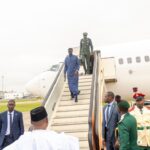
Faye’s engagement with the Parliament was part of his official visit to Nigeria to meet ECOWAS institutions headquartered in Abuja and attend the swearing-in of new judges of the ECOWAS Community Court of Justice.
The engagements provided an opportunity for ECOWAS leadership to emphasise the need for stronger coordination among the bloc’s political, parliamentary and judicial institutions in advancing regional integration.
For the Parliament, however, the challenge extends beyond institutional cooperation to ensuring that the ECOWAS project is increasingly understood, owned and shaped by the citizens it is intended to serve.