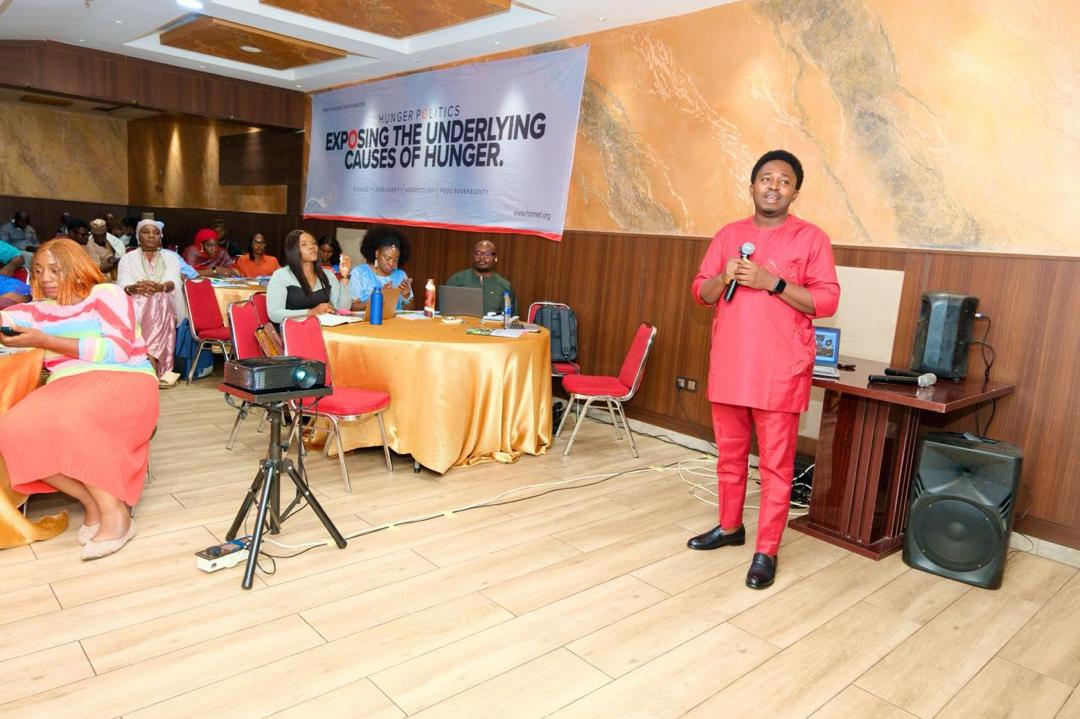
Nigeria is facing a critical test over the future of its food system as climate change, insecurity, food waste and dependence on imports increasingly threaten the country’s capacity to feed its growing population.
An assessment of Nigeria’s food system presented by Prof. Adeoluwa Olugbenga showed that the country spent about ₦1.18 trillion on food imports, while an estimated 40 per cent of locally produced food was reportedly wasted.
The figures highlight a major contradiction in Nigeria’s food economy: millions of citizens struggle to access adequate food even as significant quantities of domestically produced food fail to reach consumers and the country continues to depend heavily on imports.
The challenge is expected to intensify as climate change disrupts rainfall patterns, increases the risks of drought and erosion and makes agricultural production increasingly difficult to predict.
The emerging reality, therefore, is shifting the agricultural debate beyond simply producing more food to building a resilient food system capable of withstanding environmental, economic and demographic pressures.
At the centre of the debate is the direction of Nigeria’s agricultural transformation, particularly the growing use of genetically modified (GM) crops alongside increasing calls for investment in agroecology.
Since the establishment of the National Biosafety Management Agency (NBMA) in 2015, more than 25 GM products have reportedly been approved, including GM beans, GM cotton and Tela maize, with some already reaching farmers.
Proponents regard biotechnology as one of several tools available to address productivity challenges confronting Nigerian agriculture.
Critics, however, have raised concerns about the potential long-term implications of GM agriculture for biodiversity, soil health, indigenous seed systems, farmers’ livelihoods and food sovereignty.
They have also called for a review of the National Biosafety Management Agency Act, arguing that stronger liability provisions are necessary to ensure accountability in cases of environmental or agricultural damage associated with GM technology.
The debate has also drawn attention to the experience of Bt cotton, with some farmers reportedly questioning whether the GM variety has delivered the productivity gains anticipated after years of cultivation.
Concerns have equally been raised about soil health and farmers’ increasing dependence on commercial seeds, fertilisers and other external agricultural inputs.
Critics argue that greater reliance on purchased seeds and external inputs could increase production costs and diminish farmers’ control over traditional seed-saving practices.
Agroecology advocates are proposing a different pathway based on soil regeneration, biodiversity, indigenous crops, seed sovereignty and reduced dependence on external inputs.
Joyce Brown, associated with the Health of Mother Earth Foundation (HOMEF), highlighted the growing impact of climate change on Nigerian agriculture and stressed the need for farming systems capable of withstanding changing environmental conditions.
Practices including mixed cropping, crop rotation, composting and other soil-building techniques are being promoted as ways to improve farm resilience while conserving biodiversity.
Osun State is emerging as one example of this approach, with the development of a draft Agroecology Policy aimed at establishing a framework for sustainable agriculture and climate-resilient food production.
Presenting the draft policy, Martins Ogunlade said it contains six chapters covering sustainable agri-food systems, ecosystem restoration, agricultural markets and enterprises, food and nutrition security, knowledge development, implementation, oversight and funding.
The policy also proposes the establishment of an Osun State Agroecology Policy Implementation Committee (OSAPIC) to coordinate implementation across relevant ministries and government institutions.
With about 740,000 hectares of land, including approximately 378,000 hectares of arable land, Osun has considerable agricultural potential.
The proposed framework seeks to integrate agroecology into the state’s broader development, agricultural, climate-resilience, forestry, nutrition and local-government policies.
Beyond the debate over agricultural technologies, however, the food-system assessment highlights a more immediate challenge: what happens to food after it leaves the farm.
With an estimated 40 per cent of locally produced food reportedly lost or wasted, reducing post-harvest losses could be as important to Nigeria’s food security as increasing agricultural output.
Investment in storage facilities, transportation, processing infrastructure and efficient markets could determine whether increased farm production ultimately translates into affordable food for households.
The country’s reported ₦1.18 trillion food-import bill also raises concerns about vulnerability to external shocks at a time when climate change, geopolitical tensions and disruptions to global supply chains can rapidly affect food prices and availability.
The emerging debate, therefore, is no longer simply about whether Nigeria should embrace or reject a particular agricultural technology.
The broader challenge is how to build a food system that produces sustainably, reduces waste, protects farmers, preserves biodiversity, withstands climate shocks and provides affordable nutrition to a growing population.
Nigeria’s future food security will depend not only on what happens on farms, but also on decisions concerning seeds, soil, water, markets, storage, infrastructure, technology, nutrition and the rights and livelihoods of small-scale farmers.
The experience of recent years has demonstrated the consequences of treating these issues separately. The next phase of agricultural policy provides an opportunity to shift from responding to food crises after they emerge to building resilience before the next crisis arrives.
For Nigeria, the choice is increasingly about more than producing enough food today. It is about building a food system capable of feeding Nigerians in a hotter, more populous and increasingly unpredictable country in the decades ahead.