The Federal Government has intensified efforts to unlock pension funds, Sukuk bonds, green financing, and other capital market instruments to address Nigeria’s estimated $2.3 trillion infrastructure deficit, Director-General of the Infrastructure Concession Regulatory Commission, Dr. Jobson Oseodion Ewalefoh, has said.
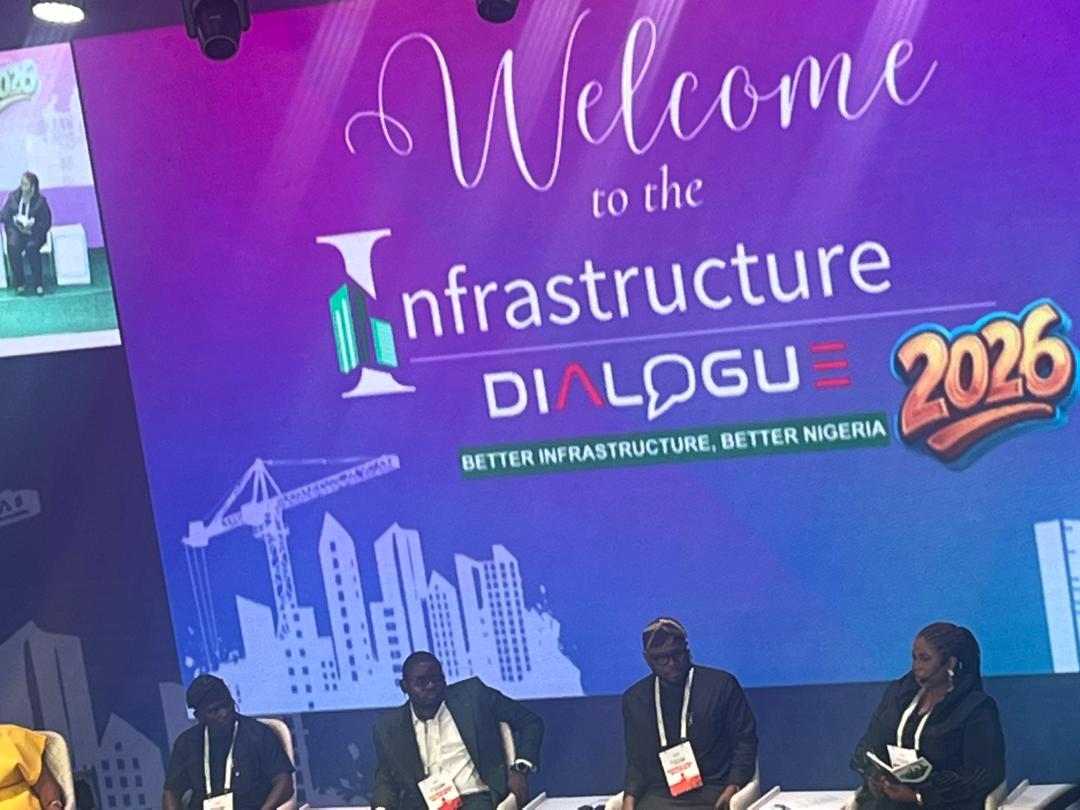
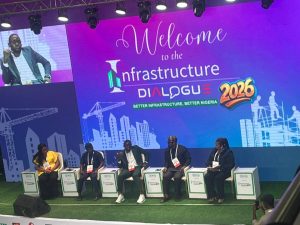
Speaking at the 2026 Infrastructure Dialogue in Abuja, Ewalefoh said the country could no longer depend solely on public funding to finance critical infrastructure projects, noting that government budgets currently cover less than 30 per cent of Nigeria’s annual infrastructure investment requirements.
The dialogue, organised by Deutsche Partners Holding at the Shehu Musa Yar’Adua Centre, was themed: “Building Nigeria’s Future: The Strategic Role of DFIs and Capital Markets in Infrastructure Financing and Economic Development.”
According to Ewalefoh, Nigeria requires about $100 billion annually to bridge infrastructure gaps across key sectors including transportation, energy, ICT, agriculture, aviation, and housing.
“With an annual investment requirement of $100 billion and public spending covering less than 30 per cent of this need, traditional procurement models and dwindling budgets are no longer sufficient,” he said.
He explained that the Federal Government was repositioning Public-Private Partnerships (PPPs) as a major strategy for attracting long-term private sector capital into infrastructure development.
The ICRC boss noted that the commission was working to create a more investor-friendly environment capable of attracting institutional investors and development finance institutions into major infrastructure projects.
“As the regulator overseeing PPPs in Nigeria, we commend the focus on shifting from diagnosis to execution. By examining how DFIs can de-risk projects and how instruments such as Sukuk, green bonds, and pension assets can be effectively structured, this dialogue addresses the critical challenge of securing long-term and affordable financing,” Ewalefoh stated.
He disclosed that the commission had already commenced reforms aimed at reducing bureaucratic bottlenecks and accelerating project approvals.
According to him, revised PPP guidelines issued in August 2025 decentralised approval powers, enabling ministries to approve projects valued up to ₦20 billion and agencies up to ₦10 billion without requiring Federal Executive Council approval.
Ewalefoh said the reforms were expected to shorten project delivery timelines and improve investor confidence in Nigeria’s infrastructure sector.
He further revealed that the ICRC, in collaboration with the Federal Ministry of Justice and PPP experts, would next month unveil a model PPP agreement designed to fast-track commercial and financial closure of infrastructure transactions.
The commission, he added, would also publish an updated pipeline of eligible PPP projects to provide investors with clearer opportunities within Nigeria’s infrastructure market.
Earlier, President of the Abuja Chamber of Commerce and Industry, Dr. Emeka Obegolu, urged stakeholders in both the public and private sectors to move beyond discussions and focus on practical financing solutions.
Obegolu described infrastructure as the backbone of economic growth, warning that inadequate financing remained the greatest obstacle to modernising Nigeria’s economy.
“Beyond identifying infrastructure gaps, the greater challenge today lies in financing — how to mobilise adequate, long-term, and sustainable capital to support infrastructure development at the scale required for national growth,” he said.
He stressed that policy consistency, transparency, regulatory clarity, and stronger investor confidence were critical to attracting both domestic and foreign investments into infrastructure financing.
The ACCI president added that several global economies had successfully deployed blended finance models, guarantees, infrastructure bonds, and PPPs to accelerate development, urging Nigeria to strengthen its regulatory and financing frameworks to achieve similar results.
Stakeholders at the dialogue agreed that unlocking long-term financing through pension assets, development finance institutions, and capital markets could significantly transform Nigeria’s infrastructure sector and stimulate broader economic growth.