The Federal Government has reaffirmed its commitment to improving the operations of waste pickers in the country by formalizing their framework within the informal economy. This initiative aims to foster inclusivity, enhance social protection, and address environmental challenges.
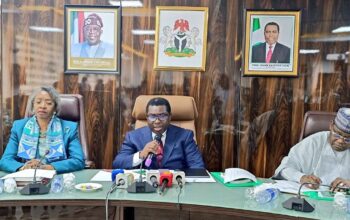
Minister of Foreign Affairs, Ambassador Yusuf Tuggar, highlighted this during the presentation of a research report titled “Formalizing the Informal Waste Picker Economy for Sustainable Development in Nigeria.” The event, held in Abuja on Thursday, was organized by the Institute of Peace and Conflict Resolution (IPCR) in collaboration with INCLUDE.
Represented by Ambassador Bolaji Akinremi, Director of Economy, Trade & Investment at the Ministry, Tuggar praised the research for spotlighting the critical contributions of waste pickers. He noted that the findings align with Nigeria’s national and international development objectives.
“Waste pickers are integral to Nigeria’s waste management ecosystem, contributing to recycling, reducing landfill burdens, and creating livelihoods for millions. Yet, they often face marginalization and lack recognition for their vital role,” Tuggar stated.
The Minister emphasized the importance of leveraging the report to engage international partners, NGOs, and multilateral organizations to exchange best practices in waste management, workers’ rights, and economic inclusion.
IPCR Director General, Dr. Joseph Ochogwu, described the workshop as pivotal in addressing the challenges faced by waste pickers. He noted that informal waste pickers account for 59.3% of the nation’s waste collection, far surpassing the 4.7% handled by formal systems.
“These individuals bridge the recycling gap and support the circular economy, yet they remain among the most marginalized and stigmatized in society,” Ochogwu said. He underscored the need to integrate waste pickers into formal systems to improve their dignity, safety, and livelihoods while advancing Nigeria’s sustainability goals.
The report provides actionable insights for stakeholders, including the government, civil society, and the private sector, to better understand and address the needs of waste pickers.