The Federal Government has emphasized the critical role of tree planting and nurturing in providing vegetation cover and protecting farmlands from desert encroachment, especially in the northeastern region of Nigeria.
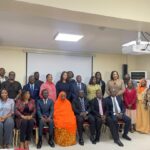
During the celebration of International Sand and Dust Storm Day in Abuja, observed annually on July 12, the Minister of State for Environment, Dr. Iziaq Salako, highlighted the importance of this day established by the United Nations General Assembly.
Dr. Salako explained that Sand and Dust Storms (SDS) are atmospheric phenomena occurring primarily in dry lands, with their effects felt far beyond these areas due to the long-range transportation of sand and dust, often originating from arid, semi-arid, and dry sub-humid regions.
The International Day of Combating Sand and Dust Storms aims to raise awareness about the catastrophic effects, causes, and preventive measures of SDS. It seeks to sensitize policy and decision-makers on the socio-economic impacts of SDS and to advocate for knowledge sharing, best practices, and mitigation measures at international, national, and regional levels. The day also focuses on strengthening observation, forecasting, and adaptive capacities to cope with the adverse effects of SDS.
“Globally, afforestation and reforestation are considered the easiest and cheapest methods to restore ecosystems, protect biodiversity, and reduce the impact of climate change,” Dr. Salako stated. He emphasized that the absence of forests and trees leads to loss of vegetation cover and extreme weather conditions such as heatwaves and droughts, which facilitate the movement of sand particles across areas with sparse or no vegetation cover, known as SDS.
Dr. Salako underscored the importance of planting and nurturing trees to combat SDS and protect farmlands from desert encroachment. He noted that forests are crucial in the campaign against SDS, as they prevent the removal of fertile topsoil, a major cause of farmland and crop loss, threatening food production sustainability.
He also mentioned that the Federal Ministry of Environment and the UNCCD have implemented an SDS Risk Reduction Project aimed at enhancing knowledge and developing predictive models for SDS risk.
Despite Nigeria not being a source country for SDS, its proximity to the Sahara makes it vulnerable to SDS activities, especially during the Harmattan period from November to February, when dust particles are regularly transported from dust sources across the country towards the Atlantic Ocean.