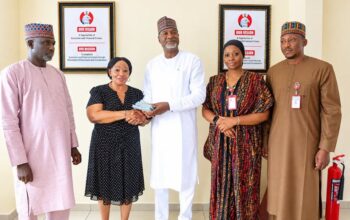
India has offered to share its power-sector technology, regulatory experience and technical expertise with Nigeria to help address the country’s persistent electricity challenges and provide the reliable power supply needed to accelerate industrialisation.
The Indian High Commissioner to Nigeria, Benin and the ECOWAS region, Abhishek Singh, made the offer in Abuja at the India-Nigeria Power Forum hosted by the High Commission of India.
Singh said dependable electricity was fundamental to Nigeria’s industrial ambitions, particularly the growth and competitiveness of the manufacturing sector, stressing that a stable power supply could become a major catalyst for an industrial revolution.
He urged Nigeria to draw from India’s experience in power-sector development and regulation, assuring that the Indian government was prepared to support the country with technology and technical expertise across generation, transmission and distribution.
According to him, the proposed cooperation would build on the strong bilateral relationship between India and Nigeria while creating practical solutions to one of Nigeria’s most critical economic challenges.
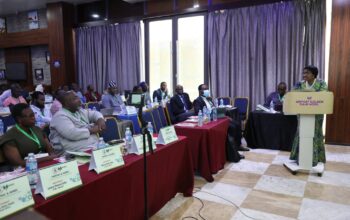
The forum attracted more than 60 power-sector experts and stakeholders from government and industry to examine opportunities for collaboration and possible solutions to Nigeria’s electricity deficit.
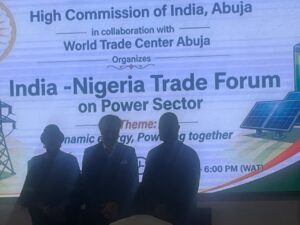
Participants included representatives of the Ministry of Power, Ministry of Science and Technology, Energy Commission of Nigeria and the Rural Electrification Agency, alongside private-sector players such as SkipperSeil, Simba Group and Africa Industries.
The broad participation underscored the urgency of addressing Nigeria’s power constraints, particularly as businesses increasingly require reliable electricity to sustain production, attract investment and remain competitive.
Singh’s proposal places India’s experience at the centre of a potential new phase of bilateral cooperation, with emphasis on strengthening the entire electricity value chain rather than concentrating solely on generation.
For Nigeria, experts have long identified transmission and distribution as critical components of the power challenge, as increased generation capacity can only translate into economic benefits when electricity is efficiently transmitted and distributed to homes, businesses and industries.
The proposed partnership could therefore provide Nigerian institutions and private-sector operators with access to technical knowledge, technology and regulatory lessons from India’s power-sector experience.
Discussions at the forum also provided an opportunity for policymakers, industry experts and private-sector stakeholders to engage directly on the practical requirements for improving Nigeria’s electricity system, including cooperation in generation, transmission and distribution.
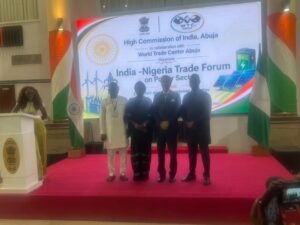
The Indian initiative signals a willingness to deepen bilateral relations through practical interventions in the power sector, with the broader objective of supporting Nigeria’s manufacturing and industrial development.
The immediate challenge, however, will be translating the proposed cooperation into concrete projects, technology partnerships, capacity-building initiatives and regulatory reforms capable of delivering more reliable electricity to industries and communities.
A successful India-Nigeria power partnership could extend beyond electricity supply, potentially boosting manufacturing, investment, employment and wider economic cooperation between the two countries.