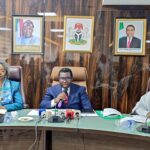
In a momentous event that reaffirms the government’s dedication to fortifying the nation’s petroleum sector, Senator Heineken Lokpobiri, the Minister of State for Petroleum Resources (Oil), embarked on a significant visit to the Warri Refinery. This visit served as the official inauguration of the 13th Refineries’ Rehabilitation Steering Committee Meeting, a pivotal platform for charting the course of action in rejuvenating Nigeria’s refining capabilities.
Accompanying Senator Lokpobiri on this crucial mission was none other than Mr. Mele Kyari, the distinguished Group CEO of NNPC Limited. Their united presence signified the gravity and urgency of the issues at hand. Together, they represented the government’s resolute commitment to ushering in a new era of efficiency and excellence in the petroleum industry.

The primary focal point of the Minister’s visit was to conduct a comprehensive assessment of the ongoing Quick-Fix Project at the Warri Refinery. This initiative, a critical component of the broader refineries’ rehabilitation effort, aims to swiftly address and rectify operational challenges, thus ensuring that the refinery operates at optimal capacity.
As Senator Lokpobiri and Mr. Kyari embarked on their tour of the refinery, they engaged with engineers, technicians, and workers on the ground, gaining firsthand insights into the progress and challenges encountered during the Quick-Fix Project. This hands-on approach demonstrated their commitment to actively participating in the process of revitalizing the refinery.Moreover, this visit underscored the government’s unwavering commitment to the extensive and indispensable petroleum infrastructure that drives Nigeria’s economy. It conveyed a clear message that the administration places a high premium on the efficient functioning of the nation’s refineries, which are pivotal in achieving energy security and economic growth.
Senator Heineken Lokpobiri’s visits to the Warri Refinery, alongside Mr. Mele Kyari, served as a significant milestone in the ongoing efforts to revamp Nigeria’s petroleum industry. It showcased a synergy between government and industry leaders and a determination to elevate the nation’s refining capabilities to new heights, ultimately benefiting both the citizens and the economy at large.