The National Agency for the Prohibition of Trafficking in Persons (NAPTIP) and France have launched a new regional initiative aimed at dismantling human trafficking networks, disrupting illicit proceeds and strengthening Nigeria’s capacity to combat increasingly sophisticated forms of the crime.
The PROTECT Regional Project, funded by the French Development Agency (AFD) and implemented by Expertise France, seeks to shift Nigeria’s anti-trafficking strategy from the arrest of individual suspects to the disruption of the criminal networks, financial systems and cross-border partnerships that sustain the exploitation of victims.
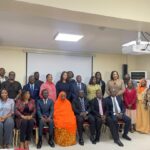
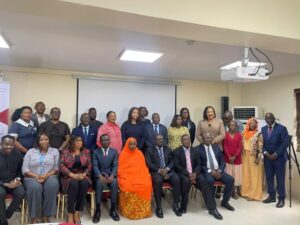
The five-country initiative covers Nigeria, Benin, Guinea, Sierra Leone and Togo and was formally launched in Nigeria on Monday during a validation workshop on diagnostic assessments in Abuja.
Speaking at the event, NAPTIP Director-General, Binta Adamu-Bello, said the evolving nature of human trafficking required institutions responsible for prevention, investigation, prosecution and victim protection to continuously adapt to emerging threats.
She warned that traffickers were increasingly exploiting social media and other digital platforms to recruit, communicate with and control victims, while taking advantage of poverty, unemployment, conflict, displacement and irregular migration routes.
“Trafficking is no longer confined to identifiable physical locations or traditional recruitment methods,” Adamu-Bello said, noting that the growing use of technology had made the crime more complex and difficult to combat.
The NAPTIP chief said the agency had intensified public awareness campaigns in communities, schools, markets, transport corridors, religious institutions and other vulnerable locations, while expanding the use of radio, television and social media to reach young people targeted by traffickers.
She added that NAPTIP was providing skills acquisition, educational opportunities, family tracing and sustainable reintegration support to victims and survivors.
However, Adamu-Bello identified delays in the judicial process as a major challenge, noting that some trafficking cases remained unresolved for prolonged periods.
She called for stronger collaboration with the judiciary and prosecutorial institutions to ensure the speedy conclusion of cases and effective accountability for perpetrators.
The NAPTIP director-general also disclosed that the agency was strengthening its investigative capabilities to tackle technology-facilitated recruitment, exploitation and other trafficking-related crimes conducted through digital platforms.
She stressed, however, that enforcement efforts must go beyond arrests to target the financial structures that sustain trafficking operations.
According to her, investigators must increasingly identify, trace and recover proceeds of trafficking while dismantling the criminal enterprises that finance and sustain the exploitation of victims.
“The greatest value of the project will be measured not simply by the number of activities conducted, but by the extent to which it leaves behind stronger institutions, better coordination, improved systems and more effective protection of vulnerable persons and survivors,” she said.
The PROTECT initiative is built around five major areas: strengthening institutional coordination and gender sensitivity; improving the criminal justice chain; preventing trafficking and protecting victims and survivors; enhancing bilateral, cross-border and regional cooperation; and improving the production and analysis of quality data and knowledge.
Adamu-Bello said the project would strengthen digital systems, improve data collection and promote evidence-based policy development, operational planning and resource allocation.
She urged ministries, departments and agencies to integrate anti-trafficking measures into relevant government policies and programmes, stressing that prevention and victim protection must form part of Nigeria’s wider development agenda.
She also called on state and local governments to strengthen community-level prevention, while urging civil society organisations to sustain their support for public awareness, victim assistance, advocacy, research and community-based interventions.
The NAPTIP boss further appealed to the media to report trafficking cases responsibly while protecting the privacy and dignity of victims and survivors. Traditional and religious leaders, she said, also had important roles to play in strengthening community awareness and prevention.
“Prevention begins with awareness, vigilance and the willingness to report suspicious activities,” she said.
In his welcome address, NAPTIP Director of Research and Programme Development, Josiah Emerole, said the Abuja workshop followed extensive consultations conducted during the project’s inception phase.
Emerole said the diagnostic assessments were designed to provide a comprehensive understanding of Nigeria’s counter-trafficking challenges and identify areas requiring urgent intervention.
He said the findings drew on the experiences of survivors, frontline practitioners and professionals working in the anti-trafficking sector.
The workshop, he added, was expected to build stakeholder consensus around the proposed Nigerian Action Plan and Theory of Change ahead of their formal adoption by the PROTECT Nigerian Committee.
He disclosed that the committee was scheduled to meet on September 22, 2026, to commence the formal adoption process.
Also speaking, PROTECT Regional Project Manager at Expertise France, Modeste Krah, said the workshop represented both the validation of the project’s inception-phase findings and the official commencement of implementation in Nigeria.
Krah recalled that Expertise France had worked with NAPTIP and other national and international stakeholders between 2019 and 2024 under an earlier anti-trafficking programme funded by the European Union and France.
He said that partnership delivered digital reporting mechanisms, toll-free reporting lines and other interventions designed to strengthen Nigeria’s trafficking prevention and response infrastructure.
The experience, he noted, also exposed gaps requiring further support and stronger cooperation, contributing to the development of the PROTECT project.
Krah said trafficking networks were becoming increasingly sophisticated and interconnected with other forms of organised crime, with digital technologies and online platforms providing new avenues for recruitment and control of victims.
He argued that legislation and institutions alone could not defeat the crime, stressing the need for stronger inter-agency cooperation, improved use of digital information systems, enhanced investigative and prosecutorial capacity, and effective systems for identifying, referring and protecting victims.
He said the diagnostic assessments examined institutional coordination, governance and asset recovery, digital systems and emerging trafficking trends, as well as gender considerations.
Krah explained that the assessments would provide the evidence base for determining priority interventions and identifying areas where the project could deliver measurable support.
He stressed that the validation exercise was intended to go beyond endorsing reports, urging stakeholders to critically examine the findings, challenge assumptions and strengthen the proposed Theory of Change and Action Plan to reflect Nigeria’s realities and institutional needs.
According to him, PROTECT would not create parallel structures or duplicate existing initiatives but would focus on strengthening Nigerian institutions, closing identified gaps, building sustainable capacity and facilitating cooperation.
Krah further emphasised the importance of regional collaboration, noting that human trafficking operates across borders and therefore requires coordinated responses among affected countries.
He said the launch of PROTECT in Nigeria marked a new phase of cooperation between Nigeria, France and regional partners, with the ultimate objective of achieving tangible and sustainable improvements in trafficking prevention, investigation and prosecution, as well as the protection and reintegration of victims and survivors.