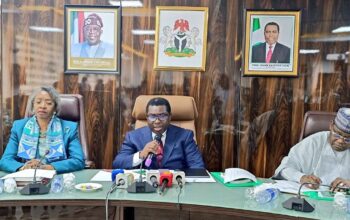
The Director General of the National Environmental Standards and Regulations Enforcement Agency (NESREA), Dr. Innocent Barikor, has called on African nations to adopt a unified and coordinated approach to address environmental challenges threatening the continent.
Dr. Barikor made this appeal while speaking in Abuja at the International Conference on Upgrading the Lead-Acid Battery Recycling Sector. He emphasized the need for African countries to establish and implement common environmental standards, stressing that a collective strategy would strengthen environmental protection efforts and ensure compliance by investors across the continent.
According to Dr. Barikor, the lack of close collaboration among Environmental Protection Agencies (EPAs) in Africa has weakened the continent’s ability to tackle pressing environmental issues effectively. “Environmental Protection Agencies in Africa are not as close as expected,” Barikor stated. “This suggests that we are not giving the environment the attention it deserves. To get it right in terms of environmental sustainability, EPA managers across Africa must work together, as they are the closest advisors to Ministers of Environment. Only through such cooperation can we achieve lasting environmental sustainability on the continent.”
Barikor highlighted the importance of aligning environmental regulations across African countries to create a level playing field for investors. He stressed that inconsistent standards have allowed some investors to take advantage of regulatory loopholes, resulting in environmental degradation and poor enforcement outcomes.
He urged African leaders and environmental regulators to leverage the conference as a platform to strengthen cross-border collaboration and ensure that the management of Used Lead-Acid Batteries (ULABs) meets global best practices. “Africa must rise from this conference with a collective resolve to promote the sound management of ULABs,” Barikor said. “We need to develop a framework that encourages sustainable recycling practices while safeguarding public health and the environment.”
Barikor emphasized that establishing unified recycling standards would not only protect the environment but also boost investor confidence and attract more environmentally responsible businesses to the continent.
Call for Improved Recycling Practices
Echoing Barikor’s stance, Dr. Leslie Adogame, Executive Director of the Sustainable Research and Action for Environmental Development (SRADeV), underscored the need for African governments to ensure that recycling facilities operate in line with international standards.
Dr. Adogame highlighted the environmental and health risks posed by poorly managed lead-acid battery recycling facilities, including soil and water contamination, air pollution, and exposure to toxic substances. “It is imperative that recycling facilities adopt cleaner and safer technologies,” Adogame said. “The government must provide incentives to encourage the use of environmentally sound recycling methods while enforcing strict compliance with environmental regulations.”
He also stressed the importance of training and capacity building for recycling operators and environmental enforcement officers to enhance regulatory compliance and operational efficiency.
Regional Insights and Proposed Solutions
The second day of the conference featured presentations from delegates representing Kenya, Ghana, Cameroon, and Tanzania. The delegates shared insights on the state of ULAB recycling in their respective countries and highlighted the challenges faced in enforcing environmental regulations and managing hazardous waste.
Experts at the conference proposed a range of solutions, including:
- Establishing financial incentives for companies that adopt eco-friendly recycling practices.
- Strengthening cross-border cooperation to prevent the illegal dumping and trafficking of hazardous waste.
- Enhancing public awareness campaigns to educate communities on the dangers of improper battery disposal.
- Developing infrastructure for the collection, transportation, and processing of used batteries to reduce environmental impact.
The delegates stressed that a continent-wide regulatory framework for ULAB recycling would improve environmental outcomes and create economic opportunities through the development of a sustainable recycling industry.
Government and Stakeholder Participation
The two-day conference was organized by NESREA and the Federal Ministry of Environment, in collaboration with SRADeV and on behalf of Oeko-Institut Germany. It brought together participants from 55 organizations, including government agencies, non-governmental organizations, academia, media, development partners, recyclers, telecommunications companies, and traditional rulers from different parts of the world.
Barikor praised the broad participation and exchange of ideas at the conference, describing it as a crucial step toward building a coordinated African response to environmental challenges. “The collective expertise and insights shared at this conference will serve as a foundation for developing a continent-wide approach to sustainable recycling and environmental management,” he said.
He expressed confidence that the outcomes of the conference would inform policy decisions and drive the adoption of best practices in environmental protection and resource management across Africa.
Barikor concluded by reaffirming NESREA’s commitment to strengthening environmental governance and ensuring that Nigeria remains a leader in promoting sustainable environmental practices on the continent.