The National Human Rights Commission (NHRC) has emphasized that Artificial Intelligence (AI) should only be embraced if it enhances human dignity and upholds fundamental human rights.
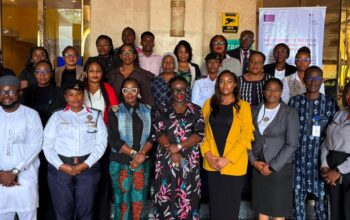
Speaking at a conference themed “Human Rights Dimensions of Artificial Intelligence (AI) Governance and UN Guiding Principles on Business and Human Rights: Challenges and Opportunities in Africa” — organized by the International Network for Corporate Social Responsibility (IN-CSR) in partnership with NHRC, United Nations Human Rights, National Information Technology Development Agency (NITDA), and the Nigerian Communications Commission (NCC) — NHRC’s Executive Secretary, Dr. Tony Ojukwu, called for a balanced approach to AI governance that aligns technological advancement with respect for human rights.
“As we stand on the brink of an AI-driven future, I urge policymakers, technologists, business leaders, civil society advocates, and international partners to work together to ensure that innovation and human rights go hand in hand,” Ojukwu stated. “The transformative potential of AI can only be fully realized when it elevates human dignity. Our regulatory frameworks must be continuously reviewed and refined to address emerging challenges while safeguarding fundamental rights.”
He stressed the need for a shared vision where technology serves as a tool for inclusive growth, sustainable development, and enhanced human dignity.
AI as a Catalyst and a Challenge
Dr. Ojukwu noted that while AI presents remarkable opportunities for innovation, economic growth, and improved public service delivery, it also carries significant risks if not governed by strong ethical frameworks. “We are at a pivotal moment where AI is both a catalyst and a challenge,” he said. “AI has emerged as one of the most transformative forces of our time, with its capabilities in data processing, automation, and decision-making opening new avenues for progress. However, with great power comes great responsibility.”
He warned that without proper governance, AI could exacerbate social inequalities, reinforce algorithmic bias, invade privacy, and infringe on human rights. “AI, if not governed with robust ethical frameworks anchored in human dignity, could deepen inequalities and weaken trust in technological systems,” he cautioned.
Ojukwu described the rise of AI not as a threat but as an opportunity for the NHRC to expand its mandate into the digital space. “We see this as an extraordinary opportunity to integrate human rights principles into AI governance,” he stated. “The Commission is committed to ensuring that technological progress is inextricably linked with respect for dignity, equality, and justice.”

Establishing Ethical AI Governance
Dr. Ojukwu outlined the Commission’s strategic approach to AI governance, emphasizing the need to develop and advocate for comprehensive guidelines to ensure the ethical use of AI. “Our work will be anchored on international human rights standards such as the Universal Declaration of Human Rights, the UN Guiding Principles on Business and Human Rights, and the National Action Plan on Business and Human Rights,” he said. “We will ensure that AI systems respect the rights of all individuals.”
He announced that the NHRC will engage with technology companies to promote algorithmic transparency, ensuring that AI models are free from bias and discrimination. “Transparency will allow for independent audits, the establishment of redress mechanisms, and the enforcement of accountability measures to prevent harm,” Ojukwu explained.
The Commission, he added, will work closely with both domestic and international stakeholders to align AI governance with global best practices while adapting it to local realities.
Corporate Responsibility and Human Rights
Eustace Onuegbu, President and Lead Consultant of IN-CSR, highlighted the dual nature of AI as both an opportunity and a challenge, particularly regarding human rights and ethical considerations. “The rapid advancement of AI presents both immense opportunities and significant risks,” Onuegbu said. “The UN Guiding Principles on Business and Human Rights provide a crucial framework for ensuring that businesses involved in AI development and deployment respect human rights.”
He stressed that businesses developing and deploying AI systems must incorporate human rights considerations into their operations to prevent potential harm. “We will explore the specific challenges and opportunities that AI presents for human rights in Africa, including issues of access, fairness, and accountability,” Onuegbu stated.
Onuegbu called for stronger partnerships between governments, businesses, and civil society to establish a governance framework that ensures AI development aligns with ethical standards and human rights protections.
A Global Collaborative Effort
The conference convened leading experts, policymakers, business leaders, and human rights advocates to discuss the implications of AI on human rights and develop a roadmap for responsible AI governance.
Participants underscored the need for African governments to align AI governance with international human rights frameworks while addressing the continent’s unique socio-economic challenges.
Ojukwu concluded by reaffirming the NHRC’s commitment to leading the charge for ethical AI governance in Nigeria and across Africa. “Our goal is to ensure that AI becomes a force for good — one that enhances human dignity, promotes fairness, and supports sustainable development,” he said.