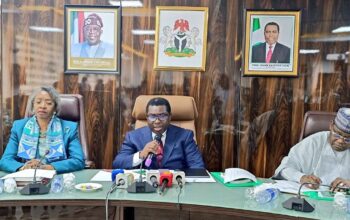
The Nigerian government recently formalized a Memorandum of Understanding (MoU) with Cameroon, its neighboring country, to bolster collaborative efforts aimed at combating trans-border wildlife trade while advancing the cause of ecosystem conservation and the sustainable management of forestry and wildlife resources.
The agreement, inked in Abuja on Friday, was signed by Nigeria’s Minister of Environment, Balarabe Abbas, and Cameroon’s Minister of Forestry and Wildlife, Jules Doret Ndongo.
In his remarks during the signing ceremony of the MoU, Minister Abbas emphasized the pivotal significance of the agreement, characterizing it as a milestone achievement that establishes a structured platform for the development of a joint transboundary management framework. This framework is envisaged to facilitate seamless cooperation and coordination between the two nations in addressing shared challenges related to the conservation and sustainable utilization of natural resources.
Minister Abbas delineated the key objectives of the agreement, which include supervising and coordinating identified areas of cooperation, ensuring alignment of special protocols with the overarching objectives, collaborative implementation of mutual transboundary programs, and mobilization of institutional and financial resources to support joint initiatives.
Highlighting the pressing global issues such as climate change and environmental degradation, exacerbated by social factors like overpopulation and poverty, Minister Abbas underscored the urgency of addressing transboundary criminal activities such as illegal logging, poaching, and wildlife trafficking. He referenced the alarming findings of the Inter-Governmental Science-Policy Platform on Biodiversity and Ecosystem Services (IPBES) 2019 Global Assessment Report, which warned of the impending extinction threat facing approximately one million species.

Recognizing the imperative of bilateral and multilateral approaches in tackling transboundary challenges, Minister Abbas emphasized the significance of the Nigeria-Cameroon partnership in addressing the complexities associated with the management and conservation of shared natural resources. He reiterated the commitment of both nations to the Renewed Hope Agenda, stressing the importance of international cooperation in confronting global environmental challenges.
In his response, Minister Ndongo expressed Cameroon’s unwavering commitment to the implementation of the agreement, acknowledging the grave threats posed by the overexploitation of forestry resources and cross-border poaching to sustainable resource management and climate stability. He urged all stakeholders involved in the process to demonstrate heightened dedication to the effective implementation of the accord.
Echoing these sentiments, the Head of the Environment and Climate Change Division of the Economic Community of West African States (ECOWAS), Bernard Koffi, represented by ECOWAS advisor Adewale Adeleke, emphasized the importance of regional cooperation and knowledge sharing in safeguarding the natural resources of both countries. He hailed the agreement as a significant step forward in fostering collaboration and synergy among West African nations in addressing environmental challenges.
The signing of this MoU marks a significant stride towards enhancing regional cooperation and collective action in the conservation and sustainable management of natural resources, underscoring the shared commitment of Nigeria and Cameroon to environmental stewardship and sustainable development.