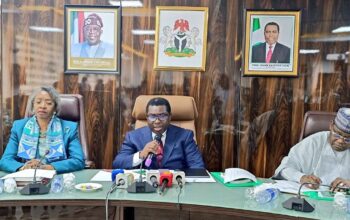
The Federal Government of Nigeria, in partnership with the German Government, has intensified efforts to tackle waste management challenges in the country through capacity building on Extended Producer Responsibility (EPR).
A one-day workshop on EPR, organised in Abuja by the Federal Ministry of Environment through the National Environmental Standards and Regulations Enforcement Agency (NESREA), in collaboration with German technical partner Adelphi and funded by the German government, brought together key stakeholders in environmental sustainability.
Delivering a keynote address, Minister of Environment, Alhaji Balarabe Lawal, represented by the Director General of the National Agency for the Great Green Wall, Abubakar Saleh, highlighted the government’s commitment to integrating the informal waste sector into Nigeria’s EPR framework.
“Our policy actively seeks to integrate waste pickers, aggregators, and small-scale collectors by organizing them into cooperatives, providing incentives, and formally recognizing their contributions,” he said. “This is about social equity, job creation, and ensuring a sustainable future.”
The Minister described the workshop as a platform to empower policymakers, industry leaders, and civil society actors with tools to design and implement effective EPR systems. He called for collective action to overcome infrastructure, financing, and data management challenges, praising NESREA and the PROTEGO (Prevention of Marine Litter in the Gulf of Guinea) team for spearheading the initiative.
Also speaking, NESREA Director General, Prof. Innocent Barikor, emphasized the urgency of tackling marine pollution and plastic waste, describing EPR as a “proven and proactive policy instrument” that shifts post-consumer waste responsibility to producers.
“This model fosters sustainable design and accountability while reducing pressure on public waste systems,” he said, assuring continued commitment to promoting a circular and low-carbon economy.
The workshop featured interactive sessions, case studies, and toolkits to support the development of EPR programmes tailored to Nigeria’s environmental and socio-economic context.