Nigeria and Ghana have strengthened their joint campaign against drug trafficking networks in West Africa, sealing a landmark agreement aimed at intensifying enforcement operations and intelligence sharing across borders.
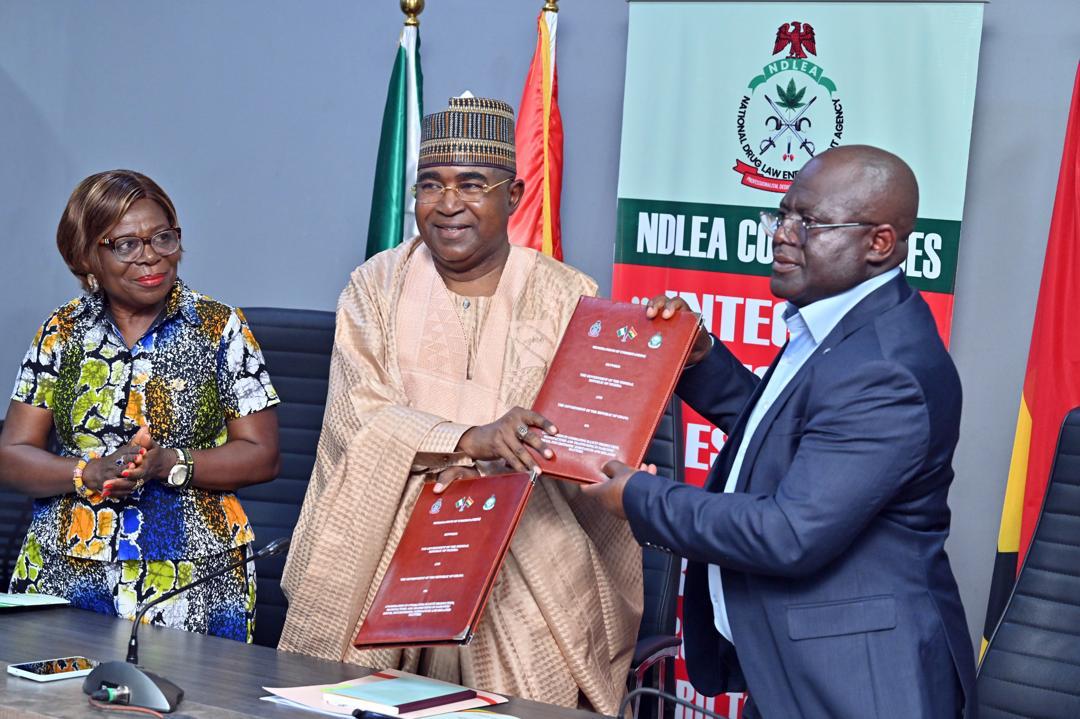
Chairman of the National Drug Law Enforcement Agency, Brig. Gen. Buba Marwa (Rtd), said both countries are now more closely aligned in confronting transnational drug crimes. He spoke in Abuja while receiving a delegation from Ghana’s Narcotics Control Commission, led by its Director-General, Brig. Gen. Maxwell Obuba Mantey.
Marwa described the engagement as a strategic shift from routine diplomacy to operational collaboration, noting that the increasing sophistication of drug trafficking—often linked to money laundering—requires deeper regional coordination.
“Let this serve as a warning to those who seek to destabilise our societies with illicit drugs: Nigeria and Ghana stand united,” he said, adding that intelligence-led operations and joint interdiction strategies would significantly constrain criminal networks.
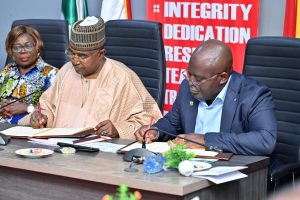
A key outcome of the meeting was the signing of a Memorandum of Understanding (MoU) between the two agencies, establishing a formal framework for cooperation in tackling the production and trafficking of psychotropic substances, precursor chemicals, and related financial crimes.
According to Marwa, the agreement elevates existing ties into a “structured, aggressive, and unified front” against drug cartels, with both countries set to expand joint training, digital forensics collaboration, and coordinated enforcement operations along the West African corridor.
In his remarks, Mantey acknowledged Nigeria’s leadership role in regional security, describing bilateral relations as longstanding and rooted in mutual respect. He noted that the visit was aimed at strengthening existing cooperation rather than initiating new ties.
He warned that drug trafficking in West Africa is becoming increasingly complex, with criminal groups adopting advanced methods, expanding maritime routes, and scaling up the production and distribution of synthetic drugs. He also highlighted a shift in Ghana’s role from primarily a transit hub to one facing rising domestic drug use and distribution challenges.
“No single country can effectively address this threat in isolation,” Mantey said, stressing the importance of practical cooperation in intelligence sharing, joint operations, and institutional capacity building.
He added that the success of the new pact would depend on effective implementation, including sustained collaboration and coordinated enforcement actions.
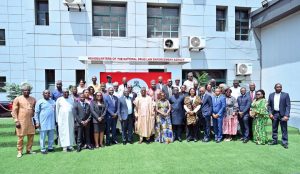
The meeting, held at the NDLEA headquarters in Abuja, was attended by senior officials from both countries and representatives of the Ghanaian High Commission.
The renewed partnership underscores a broader regional effort to confront organised drug networks amid growing concerns over their impact on security, governance, and public health across West Africa.