Nigeria paid a heavy human price for peace in Liberia, with hundreds of its soldiers deployed to one of West Africa’s most brutal civil wars and many never returning home.
More than three decades after the Economic Community of West African States Monitoring Group (ECOMOG) intervened in Liberia, Nigeria’s Minister of Defence, Christopher Musa, has reopened the chapter on the enormous sacrifices made by Nigerian troops in an operation that transformed ECOWAS from a regional economic bloc into a major security actor.
Musa disclosed that he lost 10 of his coursemates from the Nigerian Defence Academy during military operations in Liberia, offering a personal insight into the human cost of Nigeria’s leading role in the regional peace effort.
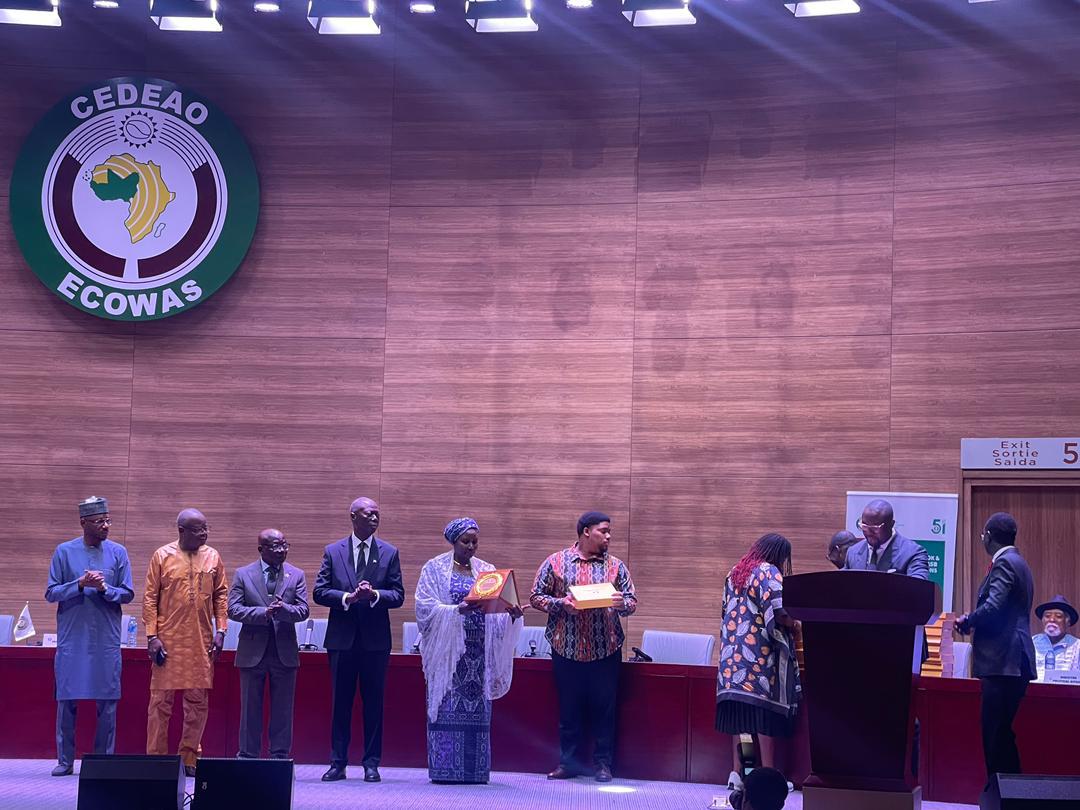
The minister spoke in Abuja on Thursday at the unveiling of Fighting Bushfires: ECOWAS and Peacemaking in West Africa – The Experience and Learning Curves, a book by Prof. Amadu Sesay chronicling ECOWAS interventions in Liberia, Sierra Leone and Guinea-Bissau.
His account served as a stark reminder that the peace eventually achieved in Liberia was secured not only through diplomacy and political negotiations, but also through years of dangerous military operations in which West African troops confronted armed factions, disease, difficult terrain and an unpredictable battlefield.
Nigeria became the backbone of ECOMOG following the deployment of the regional force to Liberia in 1990 after the outbreak of civil war.
The conflict, which began in 1989, rapidly developed into a regional security crisis, threatening neighbouring countries and triggering massive refugee movements across West Africa.
Musa said Nigeria could not afford to ignore Liberia’s instability, stressing that insecurity in one country could quickly generate consequences across the region.
He identified refugee flows, disruption of trade, organised crime and cross-border insecurity among the threats that made regional intervention a matter of national security for Nigeria.
Behind those strategic calculations, however, were individual soldiers who left behind their families and careers to enter a deadly war zone.
Musa recalled the case of a young officer who was initially advised to remain in Nigeria because he was considered too junior to participate in the operation.
The officer, he said, insisted on joining his colleagues.
About a year later, he was killed in the conflict.
“Those are the sacrifices that have been made and that will continue to be made,” Musa said.
For the Defence Minister, preserving the memory of those sacrifices is not merely an exercise in military history but a warning to West Africa against allowing the conditions that produced the region’s devastating conflicts to return.
“What we owe them is to make sure that we unite, and not allow Africa to fall. Other than that, they will not achieve what they died for,” he said.
The Liberian intervention also exposed the limitations and complexity of military power.
ECOMOG’s involvement was marked by intense fighting, shifting alliances and the enormous challenge of securing peace in a conflict involving multiple armed factions.
However, the operation demonstrated that African countries were prepared to take responsibility for security crises within their region at a time when external intervention could not be guaranteed.
The experience subsequently shaped ECOWAS interventions in Sierra Leone, where ECOMOG again played a major role in efforts to confront rebel forces and restore constitutional order.
Musa said the lessons from those interventions remain highly relevant to the security challenges confronting West Africa today, particularly the growing threat of asymmetric warfare.
“Under no condition should an army allow asymmetric warfare to take root in your country, because it’s a very, very difficult situation,” he warned.
He urged countries across the region to act early and decisively before insurgencies and other forms of irregular warfare become deeply entrenched.
“It is important for countries not facing it, please don’t allow it to take root. Nip it in the bud as quickly as possible,” he said.
The minister also stressed that military force alone could not guarantee lasting peace, arguing that kinetic operations represented only about 30 per cent of the broader response required to address insecurity.
According to him, the remaining 70 per cent depends on non-kinetic measures, including political engagement, social interventions and other efforts aimed at addressing the underlying drivers of conflict.
The Abuja event also honoured another group that paid a heavy price during the Liberian war—the journalists who entered conflict zones to document the fighting.
Krees Imodibie of Vanguard and Tayo Awotusin of Champion, two Nigerian journalists killed while covering the Liberian conflict, were posthumously honoured with the Peace of the Rose Award.
Their deaths underscored the risks faced by journalists who reported from the battlefield and ensured that a conflict unfolding far from the world’s major news centres was documented.
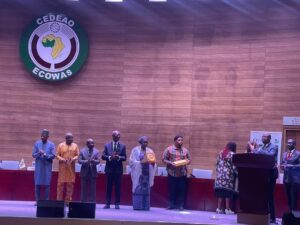
The recognition of soldiers and journalists at the same ceremony presented a broader account of the Liberian war—a conflict in which West Africans not only fought to restore peace but also risked their lives to document the struggle and defend the region’s future.
As ECOWAS marks its 50th anniversary, the Liberian experience has assumed renewed significance.
The conflict demonstrated that instability in one West African country could rapidly become a regional crisis and that collective security required far more than diplomatic declarations.
It demanded troops, resources, political will and, ultimately, human sacrifice.
For Nigeria, the legacy of Liberia is therefore more than the story of a foreign military intervention. It is the story of soldiers who never returned home, journalists who lost their lives reporting the conflict and a generation of West African leaders who concluded that the region could not leave its security entirely in the hands of outsiders.
Musa’s account has brought that often-forgotten human cost back into sharp focus, while raising a critical question for present-day ECOWAS: whether the region will learn from the sacrifices that secured its previous peace before another conflict demands a new generation of lives.