Nigeria’s education challenge has evolved from expanding school enrolment to building an education system capable of delivering quality learning, according to a new policy report released by the Athena Centre for Policy and Leadership.
The report, titled Nigeria’s Education Capacity Crisis: Closing the Gap Between Enrolment Growth and System Capacity, argues that although the country has made significant progress in increasing access to education, inadequate investment in classrooms, teachers, infrastructure and institutional governance has left the sector overstretched and unable to convert rising enrolment into meaningful learning outcomes.
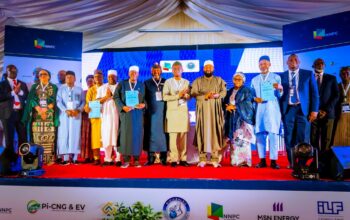
Authored by Professor Temitayo Shenkoya and Anita Olatunde, the report was unveiled on Wednesday in Abuja. It described Nigeria’s education challenge as a structural capacity crisis rather than a temporary funding problem, warning that failure to implement comprehensive institutional reforms could undermine the country’s human capital development and long-term economic competitiveness.
According to the report, Nigeria’s public basic and secondary education system enrolled about 40.1 million pupils and students during the 2024/2025 academic session across 107,042 public schools. However, the surge in enrolment has significantly outpaced investments required to maintain quality education.
The report revealed that the average classroom now accommodates about 60 learners, while approximately 66 students share a single toilet, reflecting severe overcrowding and poor sanitation in many public schools nationwide.
It further noted that Nigeria allocated only 0.3 per cent of its Gross Domestic Product (GDP) to public education in 2025, a figure considerably lower than spending levels recorded in several comparable African countries.
The authors argued that the country’s education system is constrained less by access to schools than by weak governance structures, fragmented planning, inadequate teacher deployment, poor instructional quality, weak institutional coordination and limited use of education data in policy formulation.
“Nigeria’s education challenge is no longer defined solely by access; it is increasingly one of system capacity,” the report stated.
Rather than concentrating exclusively on expanding enrolment, the report urged federal and state governments to prioritise strengthening institutional capacity, improving accountability systems and adopting evidence-based planning to enhance learning outcomes.
A key recommendation is the development and nationwide deployment of the Digital Nigeria Education Management Information System (DNEMIS), which the report said should become the central platform for planning, monitoring and evaluating education performance across the country.
It also recommended the establishment of integrated State Education Management Information Systems linked to the national platform, sustained multi-year investments in classrooms, teacher recruitment and digital infrastructure, evidence-based teacher deployment, improved instructional quality and stronger school leadership.
Other proposals include annual infrastructure and learning-performance scorecards, targeted interventions for vulnerable learners and improved coordination among the Federal Ministry of Education, state governments, State Universal Basic Education Boards (SUBEBs), Teaching Service Commissions (TESCOMs) and Local Government Education Authorities.
The report stressed that future education funding should be driven by verified data and measurable learning outcomes rather than enrolment figures alone.
Drawing lessons from Botswana, South Africa and Namibia, the authors observed that countries with stronger educational outcomes have succeeded by building institutions capable of continuous planning, performance monitoring and accountability.
The report concluded that the true measure of educational success should no longer be the number of children enrolled or classrooms constructed, but the ability of governments to use reliable data to improve teaching quality, strengthen school leadership and guarantee meaningful learning for every child.
It added that addressing Nigeria’s education capacity deficit is not only critical for the education sector but also essential for driving economic growth, improving workforce productivity and enhancing the country’s global competitiveness.