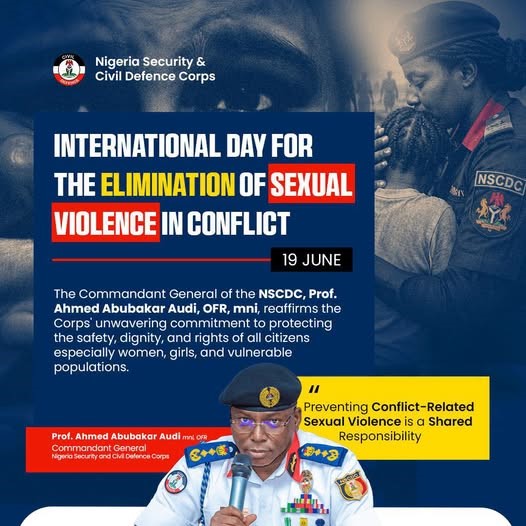
The Nigeria Security and Civil Defence Corps (NSCDC) has reaffirmed its commitment to combating conflict-related sexual violence, pledging to strengthen institutional mechanisms aimed at protecting women, girls and other vulnerable groups affected by crises across the country.
In a statement commemorating the International Day for the Elimination of Sexual Violence in Conflict, the Commandant General of the NSCDC, Prof. Ahmed Audi, said the Corps remains fully aligned with international standards on prevention, accountability and survivor-centred responses to sexual violence in conflict situations.
Audi noted that the agency is intensifying efforts to enhance its operational capacity to prevent abuse, support survivors and ensure that perpetrators are held accountable, describing conflict-related sexual violence as a significant threat to peace, security and human dignity.
“Preventing sexual violence in conflict and protecting women, girls and children is a shared security responsibility. It demands early intervention, strict accountability for offenders and the absolute protection of the dignity of survivors,” he said.
The NSCDC disclosed that its revised Gender Policy, launched on February 3, 2026, is already influencing operational practices across commands nationwide. According to the Corps, the policy is strengthening gender-responsive security operations, enhancing early warning mechanisms and improving trauma-informed support services for survivors of violence.
Speaking on the initiative, the Head of the NSCDC Gender Unit, Deputy Commandant of Corps (DCC) Kemi Ajet, said the framework was designed to ensure that gender considerations are fully integrated into security planning and field operations, particularly in vulnerable and conflict-affected communities.
She identified emerging indicators of conflict-related risks, including rising communal tensions, patterns of harassment and intimidation, forced displacement, human trafficking threats, and increased vulnerability among internally displaced persons and persons with disabilities.
Ajet called for greater collaboration among security agencies, traditional institutions, civil society organisations and the media to strengthen reporting mechanisms, combat stigma and eliminate victim-blaming associated with cases of sexual violence.
She stressed that a coordinated and inclusive approach is essential to preventing abuse and ensuring survivors receive the protection and support they require.
The NSCDC also urged members of the public to promptly report suspicious activities through its official communication channels, emphasizing that timely intelligence and community vigilance remain critical tools in preventing violence and safeguarding lives.
The Corps reiterated its commitment to advancing survivor protection, promoting accountability and supporting national and international efforts to eliminate sexual violence in conflict situations.