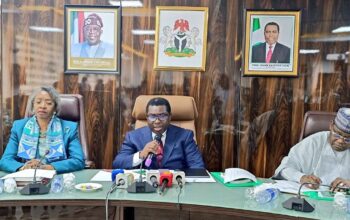
The Pest Control Association of Nigeria (PECAN) has called on the government to intensify its efforts against malaria by implementing broader preventive measures beyond the distribution of mosquito nets. This appeal was made during the World Mosquito Day commemoration held at Jahi II community in Abuja.
Speaking at the event, Mr. Terungwa Abari, Chairman of PECAN’s Federal Capital Territory (FCT) chapter, emphasized the importance of raising awareness about mosquito-borne diseases, particularly malaria, which continues to be a major public health concern in Nigeria. Citing the World Health Organization’s 2022 report, Abari noted that Nigeria had an estimated 68 million malaria cases and 194,000 related deaths in 2021, accounting for nearly 27% of the global malaria burden.
Abari stressed that while the distribution of mosquito nets is crucial, it is not sufficient on its own. He called for a more comprehensive approach that includes Integrated Pest Management (IPM) strategies, which combine cultural practices, biological control, habitat management, and technological innovations. He also highlighted the need for continuous public education and increased advocacy for sustainable practices that protect both the environment and human health.
“We urge the government to step up deliberate efforts to control and minimize mosquito populations through multi-pronged approaches,” Abari said. “This includes enhanced source site management, such as larviciding and adulticiding, conducted by licensed and certified professionals to ensure the safety of both human health and the environment.”
The commemoration also included community clean-up activities, fumigation of certain areas, and the distribution of over 50 mosquito nets in Jahi II. Abari praised the collaboration of various stakeholders and called for their continued synergy in the fight against mosquitoes, which also transmit other diseases like dengue, yellow fever, and Zika.
In her remarks, Suleyman Fatima, an Environmental Health Officer representing the Registrar of the Environmental Health Council of Nigeria, Dr. Yakubu Baba, emphasized the importance of health education in combating malaria. She pointed out that many rural communities lack adequate knowledge about the dangers of mosquitoes as disease vectors.
The Chief of Jahi II community, Salihu Adamu, expressed gratitude to PECAN for their intervention, noting that it would significantly help the community in its fight against malaria.
Established in 1989, PECAN is an association of Environmental Health Council of Nigeria (EHCON)-certified pest control professionals. The organization is dedicated to maintaining ethical and professional standards in the pest control industry while safeguarding public health and the environment.