The surrender of a senior Islamic State West Africa Province (ISWAP) finance operative to troops of Operation HADIN KAI marks more than another tactical victory in Nigeria’s counter-insurgency campaign. It offers fresh evidence that sustained military offensives are steadily weakening the operational, financial and command structures of one of the country’s most resilient terrorist organisations.
Coming alongside the reported surrender of about 46 terrorists and their family members in recent days, the development suggests that relentless military pressure is beginning to produce strategic effects beyond the battlefield, forcing members of terrorist groups to reconsider their allegiance as their strongholds come under increasing assault.
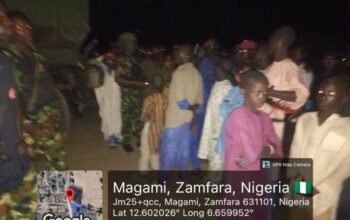
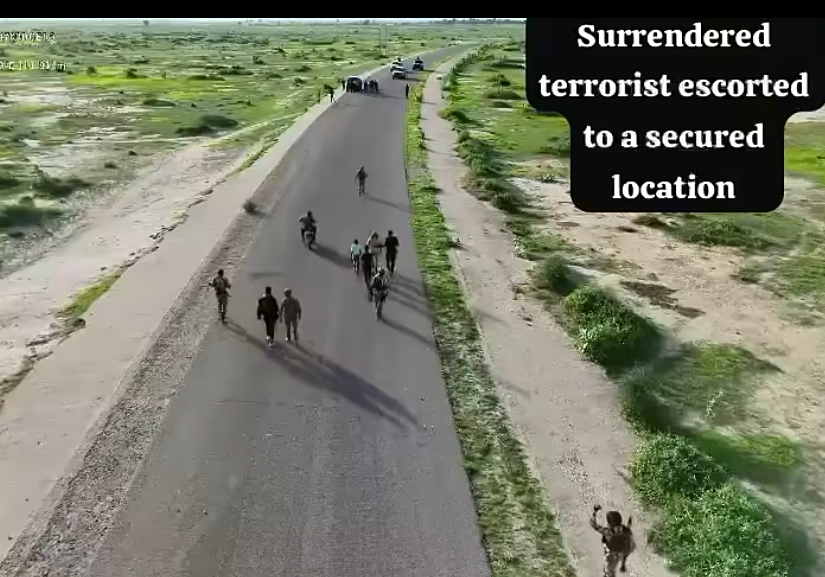
According to military authorities, the senior operative surrendered to troops of the 3 Battalion under the 24 Task Force Brigade at about 6:45 a.m. on July 25, 2026, along the Ladari-Jegarawa-Tunokalia axis on the Gamboru-Wulgo Main Supply Route in Borno State. He reportedly arrived with two male children, bringing an end to his involvement with the insurgent group after a series of coordinated land and air offensives against ISWAP enclaves.
Initial military profiling identified the surrendered suspect as the chief finance operative of the ISWAP enclave at Jubillaram, where he allegedly managed the group’s finances, logistics and operational resources. Security analysts note that finance officers occupy critical positions within terrorist organisations, overseeing the movement of funds, procurement of weapons, payment of fighters, logistics coordination and the administration of extortion revenues.
Unlike foot soldiers who are more easily replaced, finance operatives often possess intimate knowledge of funding networks, supply chains, collaborators and internal command arrangements. Their capture or surrender can therefore provide intelligence capable of disrupting future operations and exposing hidden support structures.
Items recovered from the surrendered operative included an AK-47 rifle, four magazines, 101 rounds of 7.62mm special ammunition, a motorcycle and ₦40,000 in cash. Military authorities said he is currently undergoing extensive profiling and interrogation to obtain actionable intelligence that could aid ongoing operations against remaining terrorist cells.
The significance of the surrender extends beyond the weapons recovered. Counter-insurgency campaigns are increasingly measured not only by territory reclaimed or insurgents neutralised, but also by the erosion of an enemy’s ability to recruit, finance and sustain operations.
For several years, ISWAP has distinguished itself from other extremist factions by maintaining relatively sophisticated administrative and financial systems. The group’s ability to collect taxes in occupied communities, extort traders, control smuggling routes and finance logistics has enabled it to survive repeated military offensives.
The voluntary surrender of an individual responsible for managing such operations raises questions about the internal cohesion of the group. It may also indicate that sustained pressure from Operation HADIN KAI is disrupting the organisational confidence that has long sustained ISWAP’s operations in the Lake Chad Basin.
Military officials have attributed the latest development to intensified intelligence-led operations combining ground assaults with precision air strikes against identified terrorist enclaves. Such coordinated operations have increasingly targeted leadership positions, logistics hubs and supply routes rather than relying solely on conventional combat engagements.
The reported wave of defections also reflects the growing importance of combining kinetic operations with non-kinetic measures. Nigerian security agencies have consistently encouraged insurgents willing to renounce violence to surrender under existing Federal Government initiatives, arguing that defections can accelerate the collapse of terrorist networks while reducing the need for prolonged combat.
However, security experts caution that surrenders alone do not signify the end of the insurgency. ISWAP continues to retain the capacity to launch attacks, recruit fighters and exploit difficult terrain across parts of the North-East and the wider Lake Chad region. The real measure of success will depend on how effectively intelligence obtained from surrendered operatives is translated into further operational gains.
The latest surrender nevertheless strengthens indications that sustained military pressure is gradually constricting the operational space available to terrorist groups. If the current trend of defections continues—particularly among individuals occupying strategic leadership and financial positions—it could significantly accelerate efforts to dismantle the insurgency’s remaining command and support networks.
For Operation HADIN KAI, the surrender of a senior ISWAP finance operative represents both an immediate intelligence opportunity and a broader strategic milestone, reinforcing the military’s assessment that persistent, intelligence-driven operations are steadily eroding the foundations upon which terrorist organisations depend for survival.