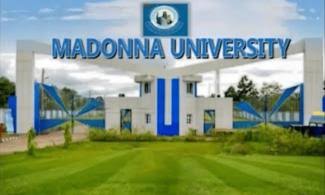
The Speak Out for Justice Advocacy Ltd/Gte (SOJA) has urged the management of Madonna University, Elele Campus, Rivers State, to reconsider the expulsion of a final-year nursing student and the one-year suspension of 14 others over a viral social media video, warning that excessive disciplinary measures could jeopardise the students’ academic and professional futures.
The human rights advocacy organisation called on the university to adopt a balanced approach that upholds professional ethics and institutional discipline while ensuring fairness, proportionality and compassion in handling the controversy.
In a statement dated October 9, 2026, SOJA’s Founder and Executive Director, Hameed Ajibola Jimoh, urged the institution to consider alternative disciplinary measures, including formal warnings, ethics training, counselling and supervised remediation, where appropriate.
The sanctions followed the circulation of a video showing nursing students dancing within the university’s teaching hospital. The footage was reportedly linked to a social media trend featuring healthcare workers dancing in clinical environments and carried the caption, “No fall sick o, na Gen Z full hospital now.”
The university’s decision has generated widespread public debate, with student organisations and human rights advocates calling for a review of the penalties, particularly given that the affected students were reportedly at an advanced stage of their nursing education.
SOJA acknowledged that nursing students must adhere to strict professional standards, especially regarding patient dignity, privacy, confidentiality and welfare. However, it argued that disciplinary measures should reflect the nature of the misconduct, the individual circumstances of the students, their academic records and the availability of less severe corrective options.
“Discipline must correct misconduct without unnecessarily destroying the future of young people,” Jimoh said.
The organisation warned that expulsion and lengthy suspension at the final stages of a degree programme could undermine years of academic effort and financial investment while limiting the affected students’ future employment and professional opportunities.
SOJA cites constitutional safeguards
The advocacy group also called for the disciplinary process to comply with Nigeria’s constitutional provisions and applicable international human rights standards.
It cited Sections 34 and 36 of the 1999 Constitution, as amended, which address the protection of human dignity and the right to a fair hearing, respectively.
SOJA further referenced Articles 5 and 17 of the African Charter on Human and Peoples’ Rights, concerning human dignity and the right to education, as well as Article 13 of the International Covenant on Economic, Social and Cultural Rights, which recognises the right to education.
The organisation, however, acknowledged that these protections do not exempt students from reasonable university regulations or automatically invalidate disciplinary sanctions.
Instead, it maintained that the exercise of disciplinary authority should be guided by procedural fairness, proportionality and respect for the legitimate educational interests of the students involved.
SOJA urged Madonna University to review the sanctions individually, ensure that the affected students had meaningful opportunities to present their cases and facilitate access to available internal appeal mechanisms.
It also recommended strengthening training on patient confidentiality, professional ethics, responsible social media use and respect for human dignity to prevent similar incidents.
NANS, NUNSA, Amnesty seek reconsideration
SOJA’s intervention follows similar appeals by the National Association of Nigerian Students (NANS) and the Nigerian Universities Nursing Students’ Association (NUNSA).
NANS has called on the university to reconsider the expulsion and replace it with a stern warning, arguing that the sanction could have lasting consequences for the student’s academic progression and professional aspirations.
NUNSA has also advocated constructive engagement and a fair review of the disciplinary measures, disclosing that it had initiated discussions with relevant stakeholders to represent the interests of the affected students.
Amnesty International has likewise urged the university to reverse the sanctions, describing them as disproportionate and advocating dialogue and mediation.
The controversy has divided public opinion. While some Nigerians insist that nursing students must demonstrate the highest standards of professional conduct, particularly within hospital environments, others argue that the penalties warrant reconsideration in view of the students’ academic progress and the potential long-term consequences.
SOJA stressed that its appeal should not be interpreted as an endorsement of misconduct but as a call for accountability that considers both the seriousness of the offence and the consequences of punishment.
“A university should uphold standards while remaining an institution of learning, correction and human development,” the organisation said.
It maintained that protecting patients and enforcing professional discipline were not incompatible with giving students a second chance where circumstances justified a more corrective approach.
The organisation urged the university management to exercise discretion with wisdom and compassion, allowing the affected students to learn from the incident and rebuild their professional futures, subject to appropriate safeguards and accountability.