Dear Distinguished Governors of the South-South,
I followed with interest your recent meeting and the political calculations, alliances and possible endorsements ahead of the 2027 elections. With due respect, however, I am less concerned about whom you choose to endorse for President. That is a political decision for you to make.
What concerns me is what happens after the endorsement.
Elections come and go. Presidents come and go. Political parties rise and fall. But the ports we build, the airports we strengthen and the railway lines we construct can remain for generations.
My appeal, therefore, is simple: do not allow your meeting to end with politics. Let it mark the beginning of an economic revolution in the South-South.
There are at least three major initiatives that the six governors can pursue collectively and which, if properly executed, could fundamentally alter the economic fortunes of the region.
Open Up the Ports
The six governors should jointly approach the Federal Government and demand the comprehensive rehabilitation and repositioning of the Calabar, Port Harcourt and Warri ports.
Nigeria cannot continue to concentrate the overwhelming share of its maritime commerce around Lagos while other strategic ports remain underutilised. This is not a case of Lagos versus the South-South. It is a question of national economic efficiency.
Decongesting Lagos and fully activating the ports in the South-South would benefit the entire country.
Imagine what would happen if ships could berth efficiently in these ports and cargo could move seamlessly into the hinterland. Warehouses would emerge. Logistics companies would expand. Trucking businesses would grow. Manufacturing and processing industries would locate closer to the ports. Thousands of direct and indirect jobs would follow.
A functioning port is not merely a place where ships dock. It is an economic ecosystem.
The South-South already possesses the coastline, industrial infrastructure, oil and gas assets and human resources required to support a thriving maritime economy. What is needed is the political will and coordinated advocacy to turn those advantages into sustained economic activity.
Governors, fight for the ports—not with placards, but with the collective economic weight of six states presenting a compelling case to the Federal Government.
Make Uyo the Aviation Hub
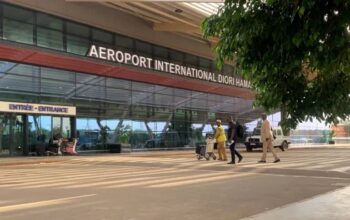
The South-South already has major airports, including international facilities in Port Harcourt and Calabar. The question is not whether the region has airports. The question is what we are doing with them.
The six governors should develop a coordinated regional aviation strategy around Victor Attah International Airport in Uyo, positioning it as a major gateway connecting the South-South with other parts of Nigeria and, ultimately, West and Central Africa.
Why should a businessman travelling from Douala have limited options for reaching the South-South? Why should a tourist from Accra face unnecessary barriers to accessing our region?
Air connectivity is an economic instrument.
When people move easily, businesses grow. When businesses grow, jobs are created. When jobs are created, household incomes rise, poverty declines and government revenues increase.
The South-South needs to stop viewing its airports as isolated state assets and start treating aviation as a regional economic network.
Build the South-South Railway
My most ambitious proposal is also the one that could have the greatest long-term impact: the six states should pursue a South-South regional railway corridor linking Benin City, Delta, Bayelsa, Rivers, Akwa Ibom and Calabar.
Some will immediately say it is too expensive.
Yes, it will cost a great deal.
But we should also ask: what is the cost of not building it?
What does poor transportation cost farmers who cannot move their produce efficiently to markets? What does it cost manufacturers whose logistics expenses remain high? What does it cost businesses, commuters and young people who are excluded from economic opportunities because movement across the region remains difficult?
The governors do not necessarily have to wait for Abuja to construct the entire corridor.
Each state could develop its own section within a coordinated regional framework. One state, one section, one railway—but with one regional vision.
That is how regional development should work.
Not by waiting endlessly for somebody else. Not by complaining about Abuja. But by sitting together and asking: what can we build collectively with the resources and influence we already possess?
Stop Thinking Like Six States
For too long, our political conversation has revolved around one question: Who will give us power?
We should begin asking a different question:
What will we build with the power we already have?
The South-South has six governments, millions of people, a coastline, ports, airports, agricultural land, oil and gas resources, educational institutions and a young population eager to work.
Yet we often behave as though our destiny is entirely dependent on Abuja.
Yes, the Federal Government has constitutional responsibilities, and we must continue to demand that those responsibilities be fulfilled.
But the states also have responsibilities.
Our governors must begin to think beyond their individual political boundaries.
A railway does not stop because it reaches a state boundary. Trade does not recognise political borders. Supply chains do not care which governor controls a particular territory.
So why should our development plans remain fragmented?
The South-South must begin to think and act as one economic bloc.
That is where our real strength lies.
The Politics Will Pass. The Infrastructure Will Remain.
A governor may endorse a presidential candidate today. Another candidate may win tomorrow. By 2031, Nigeria’s political landscape may be completely different.
But a well-built railway connecting the South-South will remain.
Revived ports will remain.
A properly developed regional aviation hub will remain.
Factories, logistics centres, industrial parks and businesses established around that infrastructure will remain.
Those are the things our children and grandchildren will inherit.
That, to me, is a greater legacy than any political endorsement.
Governors, This Is Your Moment
You are already meeting. You already have the platform. You already possess the political influence.
Use it.
Create a South-South Economic Development Compact.
Bring together engineers, economists, financiers, business leaders, urban planners, development experts and young entrepreneurs. Develop a 20-year regional infrastructure and economic master plan and pursue it relentlessly.
Presidents will change.
Ministers will change.
Political parties will change.
The plan should not.
I am not asking you to abandon politics. Politics is an essential part of governance. I am asking you to place development above political calculations and to look beyond 2027—to 2037 and even 2047.
What kind of South-South do we want our children to inherit?
A region still dependent largely on federal allocations?
Or a region connected by rail, powered by commerce, supported by modern infrastructure and open to regional and international trade?
I know which one I would prefer.
So, congratulations on your meeting.
But please, do not let it end with an endorsement.
Let it end with a blueprint—signed resolutions, clear commitments, timelines, financing arrangements and measurable targets.
Let the declaration be simple:
We will build the South-South.
Build the ports.
Build the aviation hub.
Build the railway.
Build the economy.
And when history eventually judges your administrations, let it record not merely whom you supported for President, but that you used your time in office to transform the South-South.
That would be a legacy worth fighting for.
Dr Michael Udam is a teacher, author and preacher. He writes from Ogoja, Nigeria.