The Federal Government, through the Tertiary Education Trust Fund (TETFund), has partnered with Israel to accelerate the commercialisation of research in Nigerian universities, unveiling a new funding initiative and nationwide innovation hubs aimed at transforming academic inventions into thriving businesses.
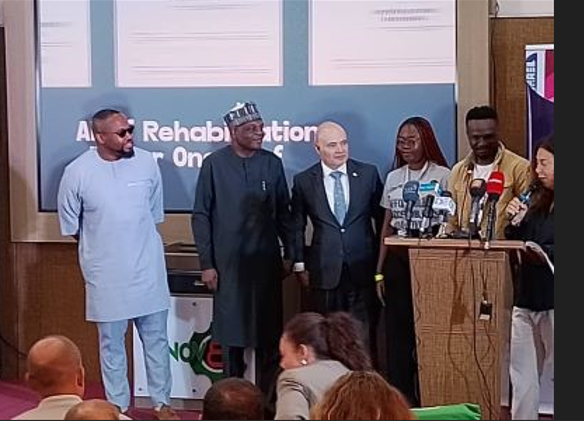
The renewed collaboration was announced on Friday in Abuja during the closing ceremony and Innovation Showcase Challenge of the fourth cohort of the Innovation Fellowship for Aspiring Inventors and Researchers (iFAIR), where Israel also confirmed funding for the fifth edition of the programme scheduled to commence in October 2026.
The initiative is designed to tackle one of Nigeria’s longstanding development challenges—the failure to translate research findings into marketable products and industries—despite the large volume of research generated annually by the country’s tertiary institutions.
Speaking at the event, TETFund Executive Secretary, Sonny Echono, said the country’s innovation deficit lies not in the lack of ideas but in the inability to commercialise research outputs.
“The main problem we are solving is how to commercialise university research results and inventions, bridging the gap between academia, government and the productive industrial sector,” Echono said.
He disclosed that TETFund is investing in innovation infrastructure across the country by establishing innovation centres in more than 60 tertiary institutions to nurture student-led inventions and research-based enterprises.

According to him, the centres will provide students, researchers and innovators with access to incubation facilities, engineering support, mentorship and investment opportunities needed to develop globally competitive products.
“As I speak, TETFund is providing facilities and establishing innovation centres across over 60 tertiary institutions so that students, while still in school, can find solutions to global and national challenges,” he added.
Outgoing Israeli Ambassador to Nigeria, Michael Freeman, announced that funding had been secured for the fifth edition of the iFAIR programme, describing the fellowship as a practical demonstration of Israel’s commitment to strengthening Nigeria’s innovation ecosystem.
“I am so proud to stand here today and announce that we have secured with our partners funding for iFAIR 5, and iFAIR 5 will be launching in October 2026,” Freeman said.
He stressed that the partnership was designed to empower Nigerian innovators to develop homegrown solutions rather than rely on imported technologies.
“This programme has never been about bringing Israeli solutions to Nigeria. It’s been about helping brilliant Nigerian innovators develop Nigerian solutions to Nigerian challenges supported by Israeli experience, mentorship and innovation,” he said.
Freeman noted that the fellowship has successfully connected researchers, entrepreneurs, investors, engineers and government agencies, creating pathways for innovative ideas to evolve into commercially viable businesses capable of generating jobs and driving economic growth.
Technology entrepreneur and Andela co-founder, Iyinoluwa Aboyeji, urged Nigeria to embrace emerging technologies, warning that failure to build local technological capacity and adopt Artificial Intelligence (AI) could undermine the country’s economic future.
“What I appreciate about Israel’s partnership here is that it focuses on technology transfer, teaching us how to build the technologies ourselves,” Aboyeji said.

He cautioned that AI is rapidly reshaping global productivity and competitiveness.
“Nigeria has a median age of 17.6 years. We are dealing with a critical question of national productivity, especially in the age of Artificial Intelligence. If Nigeria falls behind in productivity and AI, we risk falling into decades of economic stagnation,” he warned.
The event featured dozens of prototypes developed by young Nigerian innovators in agriculture, healthcare, renewable energy and community development, with many designed to address local challenges through affordable and scalable technology.
Head of Programmes at Innov8 Hub, Tolulope Aina, challenged the graduating fellows to move beyond prototype development and focus on taking their innovations to the marketplace.
“The finished prototypes you see today are only the start. You must carry these products across the finish line into the commercial market,” she said.
Officials of Innov8 Hub also revealed that the organisation has supported more than 3,000 innovators, researchers and entrepreneurs, while locally manufacturing over 10,000 face shields during the COVID-19 pandemic.
The strengthened Nigeria-Israel collaboration is expected to deepen technology transfer, expand mentorship opportunities and attract greater investment into research commercialisation, as both countries seek to position innovation as a major driver of Nigeria’s economic diversification and industrial growth.
With TETFund’s planned innovation centres and continued international support, stakeholders say Nigerian universities are poised to shift from producing research that gathers dust on library shelves to creating startups, patents, manufacturing ventures and globally competitive enterprises.