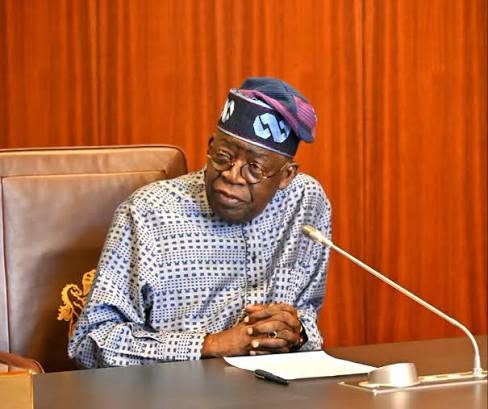
Nigeria’s Permanent Representative to the United Nations, Ambassador Jimoh Ibrahim, has dismissed speculation that President Bola Ahmed Tinubu or members of his family could be arrested or subjected to movement restrictions in the United States during the United Nations General Assembly.
Ibrahim said there had been no notification from the United States government to either the Nigerian Mission to the UN or President Tinubu indicating that his movement would be restricted during his participation in the General Assembly.
The envoy, who also chairs the UN Committee on Budget and Administration, made the clarification in a statement issued by Nigeria’s Permanent Mission in New York amid growing social media speculation over possible legal action against the President while in the US.
Ibrahim based his position on Section 11 of the 1947 Agreement between the United Nations and the United States, which provides a framework for access to and transit around the UN headquarters in New York.
According to him, the provision protects representatives of UN member states and their families from impediments to transit to and from the UN headquarters district when attending to official UN business.
He said US federal, state and local authorities were required to refrain from imposing restrictions that would interfere with the movement of representatives of member states, their families, UN officials, specialised agencies and other persons invited to the headquarters district on official UN business.
Ibrahim therefore maintained that Tinubu’s participation in the General Assembly carries the protections applicable to representatives of member states attending official UN activities.
He stressed, however, that such protections should not be interpreted as a blanket prohibition on lawful investigations or investigative activities by US authorities.
The ambassador said US law-enforcement agencies could, where legally authorised, invite individuals to provide information or statements and collect identifying information as part of an investigation.
He noted that such information could include personal and family history, educational records and fingerprints, depending on the circumstances, adding that investigative information was subject to applicable legal protections and was not automatically made public merely because an investigation was ongoing.
Ibrahim also recalled an earlier incident involving a former Nigerian president, stressing that the individual was not President Tinubu. He said the former president had once been restricted to a 10-kilometre radius from the UN headquarters in connection with a drug-related allegation, but that the allegation was never proven.
The envoy used the example to stress that an allegation or investigation should not be equated with criminal guilt, noting that criminal liability must be established through due process.
His intervention comes amid renewed social media claims suggesting that Nigerian political figures travelling to the US could face arrest, investigations or restrictions.
Ibrahim described attempts to criminalise Tinubu or engineer his arrest through social media campaigns as futile, urging Nigerians to distinguish between legitimate scrutiny of public officials and unverified claims.
On the General Assembly itself, the ambassador said presidential attendance was ultimately a matter of national choice, noting that countries could designate other senior officials to represent them.
He said more than 60 per cent of the current speaking list comprised vice presidents and foreign ministers representing their respective countries.
The UN General Assembly remains a major diplomatic platform for member states to address issues including international peace and security, economic development, climate change and global governance.
For Nigeria, the annual gathering provides an opportunity to advance its foreign-policy priorities, strengthen bilateral and multilateral relations and articulate the country’s position on major international issues.
Ibrahim urged Nigerians to uphold the country’s image and support efforts aimed at economic transformation, while cautioning against the spread of unsubstantiated claims capable of damaging Nigeria’s reputation abroad.
The Nigerian Mission’s position is that there is no known US government notification restricting Tinubu’s movement during the UNGA, while the legal framework governing access to the UN headquarters provides protections for representatives of member states and their families attending official UN activities.