The Federal Government has unveiled a raft of measures to curb air pollution and protect public health, including a national framework for vehicular and generator emissions testing, expansion of air quality monitoring stations and the promotion of cleaner fuels.
The government also announced plans to implement the National Clean Cooking Policy, with the goal of achieving universal access to clean cooking energy solutions for households and institutions by 2030.
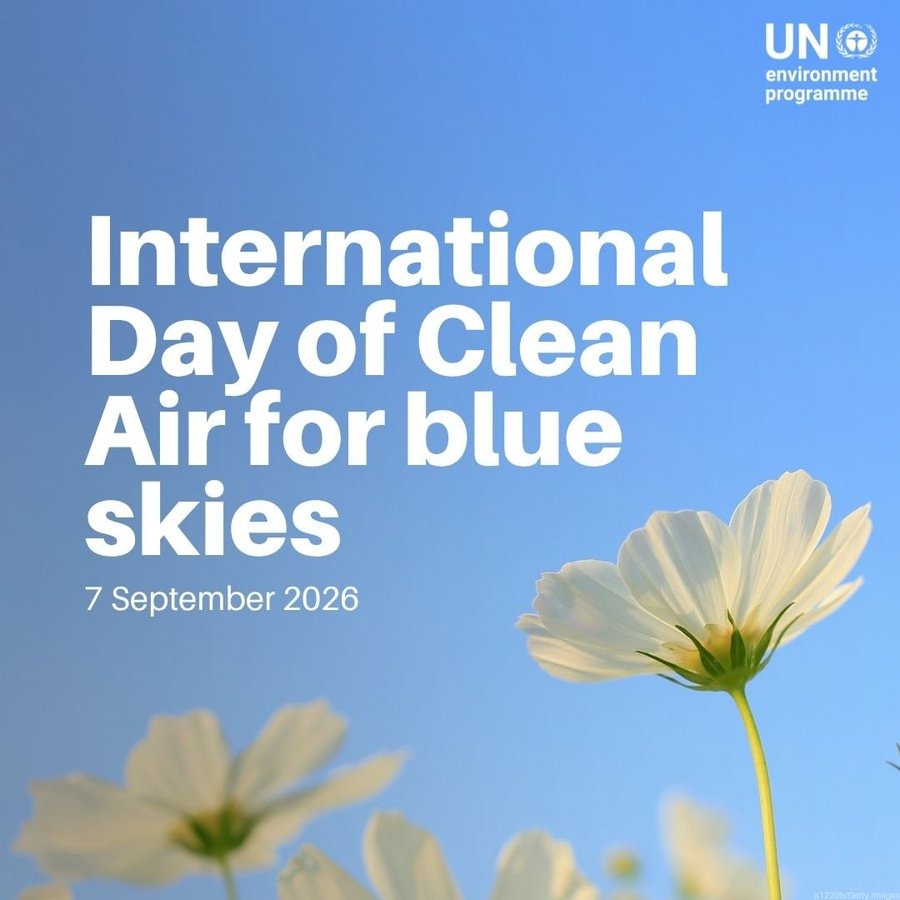
Minister of Environment, Balarabe Lawal, disclosed this in a keynote address delivered on his behalf by the Permanent Secretary of the ministry, Dr Salihu Usman, at the 2026 commemoration of the International Day of Clean Air for Blue Skies.
The event brought together government officials, development partners, environmental experts, civil society organisations, private-sector representatives, academics and other stakeholders to deliberate on Nigeria’s worsening air pollution challenge.
Lawal described air pollution as one of the country’s most pressing environmental and public health challenges, warning that its impact extends beyond atmospheric conditions to human health, ecosystems, agricultural productivity, livelihoods and community resilience.
He said the situation was becoming more urgent amid rapid population growth, urbanisation, increasing transportation and industrial activities, rising energy demand, waste generation, agricultural practices and continued dependence on polluting fuels.
The minister cited Nigeria’s ranking as the third most polluted country in Africa in the 2025 World Air Quality Report, with an average annual PM2.5 concentration of 23.4 micrograms per cubic metre—about 4.8 times the World Health Organisation’s annual guideline level.
He stressed that the figures represented millions of Nigerians exposed daily to polluted air, noting that the issue was not merely environmental but also a health, economic, social justice and development concern.
“Nigeria must grow. But Nigeria must grow in a manner that allows both people and the environment to thrive,” Lawal said.
Emissions testing, cleaner fuels
The minister disclosed that the Federal Ministry of Environment was developing a national framework to guide states establishing vehicular and generator emissions testing centres.
According to him, the framework would ensure that the centres operate in accordance with national minimum standards and contribute effectively to reducing emissions from vehicles and generators.
He also identified the Federal Government’s transition to cleaner and alternative fuels, particularly compressed natural gas (CNG), as a major opportunity to reduce emissions and improve air quality in Nigerian cities.
Lawal said the government was equally tackling indoor air pollution through the National Clean Cooking Policy, stressing that efforts to improve air quality must address pollution caused by harmful cooking fuels.
The policy, he said, was designed to provide universal access to clean cooking energy solutions by 2030.
Nationwide monitoring network
The minister said reliable data would remain central to Nigeria’s air quality management strategy, disclosing plans to establish a robust network of monitoring stations across the country.
He said the objective was to generate timely and reliable data for evidence-based policymaking while enabling Nigerians to know, in real time, the quality of the air they breathe.
Lawal disclosed that monitoring stations had already been established in Port Harcourt, Kano and Lagos, while a mobile application was being developed to provide real-time Air Quality Index information.
He, however, acknowledged that the initiative remained a starting point and that broader monitoring coverage was required nationwide.
The ministry is also engaging stakeholders on national air quality management policies and a youth-led clean air programme, under which young celebrities and high-net-worth individuals would be encouraged to serve as clean-air ambassadors.
Experts demand urgent action
Also speaking, Benjamin Suleiman, Founder and Executive Director of the Save the Planet Initiative and an ecotoxicologist specialising in air pollution, called for urgent collective action to confront the health consequences of polluted air.
Suleiman cited global reports linking air pollution to about 8.4 million deaths, warning that children were particularly vulnerable to its effects. He said prolonged exposure had been associated with serious health conditions and could aggravate existing diseases.
He also spoke on his research into traffic-related air pollution, including laboratory studies examining the effects of PM2.5 and carbon monoxide exposure.
According to him, the research recorded significant changes in the lungs of laboratory mice exposed to traffic pollution over 30 days, with mortality also recorded during the study.
Suleiman further disclosed that a public health perception study conducted in Ojota, Lagos, found that many residents were unaware of the health implications of air pollution.
He identified vehicle and industrial emissions, bush burning and other human activities as major pollution sources, insisting that the responsibility for tackling the problem must extend beyond government.
“This whole responsibility is not on the government alone,” he said, urging communities, youths, market women, transport workers and other stakeholders to take ownership of clean-air initiatives.
Youth, private sector urged to act
Suleiman also highlighted the EcoGenius programme of the Save the Planet Initiative, which seeks to engage and mentor young Nigerians in environmental sustainability.
He said the initiative had attracted close to 1,000 members, with young environmental advocates undergoing training to prepare them for leadership roles in environmental sustainability.
Lawal, meanwhile, urged the private sector to invest in cleaner technologies, energy efficiency, sustainable transportation, responsible waste management and low-emission production systems.
He called on civil society organisations and communities to intensify public awareness and advocacy, while urging research institutions to generate the scientific knowledge and innovations needed to address emerging environmental threats.
The minister also tasked the media with translating complex scientific information into messages that Nigerians could understand and act upon.
Lawal urged Nigerians, particularly young people, to become active partners and champions of environmental sustainability rather than mere recipients of government policies.
He called for the 2026 commemoration to mark a turning point in the country’s fight against air pollution.
“Let this year’s commemoration be more than another annual event. Let it be a turning point,” he said.
Both government and environmental experts stressed the need for sustained collaboration among government agencies, private organisations, communities, researchers, youths, civil society organisations and the media to achieve meaningful improvements in Nigeria’s air quality.