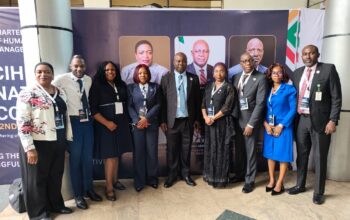
The United States Centers for Disease Control and Prevention (CDC) kicked off its fifth round of stakeholder engagement meetings in Abuja on October 30th.
The two-day event, themed “Strategic Pivoting Towards Program Simplification and Sustainable Public Health Intervention,” aims to foster collaboration among key health stakeholders.
On the first day, participants focused on groundwork for HIV program simplification, a crucial step towards enhancing ownership and sustainability in public health initiatives across Nigeria. Federal and state officials, multilateral agencies, community stakeholders, and implementing partners engaged in discussions about optimizing the health workforce and integrating services.
The second day will review the progress of the state-led President’s Emergency Plan for AIDS Relief (PEPFAR) program and explore innovative health insurance models at both national and state levels, emphasizing sustainable healthcare solutions vital for long-term impacts on Nigeria’s public health landscape.
In his opening remarks, U.S. Ambassador to Nigeria Richard Mills Jr. reaffirmed the U.S. Government’s commitment to working with stakeholders to achieve and sustain HIV epidemic control, prevent outbreaks, and improve health outcomes. He praised those working tirelessly to support Nigerians living with HIV and highlighted Nigeria’s potential as a global model for achieving epidemic control and empowering communities.
Suzanne Theroux, Acting Country Director for the U.S. CDC, noted Nigeria’s significant progress through transformative partnerships and evidence-based public health programming. She mentioned the initiative “Getting the Data Right,” aimed at determining the number of people living with HIV receiving lifesaving antiretroviral treatment, which supports sustainable health outcomes.
Ms. Theroux emphasized the coordinated response to recent outbreaks of Lassa fever, cholera, and other diseases, reflecting collective resilience. She added that efforts are underway to close the gap for zero-dose children and combat vaccine-preventable diseases while working to eliminate malaria as a public health threat.
The meeting underscores the U.S. CDC’s dedication to regularly reviewing and adapting programming to address the evolving needs of Nigeria’s HIV response. The next stakeholder meeting is scheduled for April 2025.