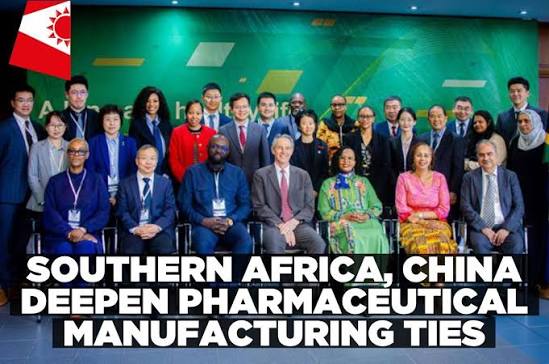
Southern Africa is stepping up efforts to reduce its dependence on imported medicines as the Joint United Nations Programme on HIV/AIDS (UNAIDS), the Southern African Development Community (SADC), China and other partners intensify moves to expand pharmaceutical manufacturing capacity across the region.
The initiative brings together the governments of South Africa and China, Chinese pharmaceutical companies, research institutions, financial and development partners and health experts in a strategic drive to convert Africa-China cooperation into increased local production of medicines, diagnostics and other health technologies.
The five-day SADC-China Strategic Exchange, taking place from August 31 to September 4 across Johannesburg, Durban and Cape Town, is being supported through sustained engagement led by UNAIDS, with the Global Health Innovation Institute (GHII) facilitating connections between African and Chinese industry and innovation partners.
The collaboration draws on lessons from the global HIV response, particularly the critical role of resilient supply chains, technology transfer, financing, regulatory capacity and local expertise in ensuring sustained access to lifesaving medicines.
UNAIDS Regional Director for East and Southern Africa, Anne Githuku-Shongwe, said strengthening pharmaceutical manufacturing was fundamental to Africa’s long-term health security.
“Strengthening pharmaceutical manufacturing is about much more than producing medicines. It is about African countries having greater control over the health products their people depend on, including for HIV, while building the skills, investment, technology and systems needed for long-term health security,” she said.
The initiative comes amid growing efforts by African countries to build more resilient health systems following repeated disruptions to global supply chains and concerns over excessive dependence on external sources for essential medicines and health commodities.
For Southern Africa, expanding regional manufacturing could reduce vulnerability to international supply shocks while creating opportunities for technology transfer, skilled employment, industrial development, innovation and investment.
A representative of the SADC Secretariat, Dr Lamboly Kumboneki, said local pharmaceutical production was becoming increasingly essential to regional health security.
“Health security requires the capacity to produce. Our partnership with China can help connect African manufacturing capability with the investment, technology and skills needed to strengthen regional pharmaceutical production,” Kumboneki said.
A key focus of the strategic exchange is determining how China’s pharmaceutical industry can support African production through investment, manufacturing expertise, technology transfer and innovation.
Participants are exploring measures to improve investment flows, strengthen market intelligence and demand forecasting, enhance regulatory preparedness and establish more effective systems for pooled procurement and health commodity security.
The programme features high-level policy engagements with government and regulatory authorities, discussions with development and financing institutions, as well as visits to pharmaceutical manufacturing and research facilities in Johannesburg, Durban and Cape Town.
The organisers are also seeking concrete opportunities to move Africa-China pharmaceutical cooperation beyond policy discussions towards sustainable commercial and manufacturing partnerships.
Gary Yang, Head of Business Development and Innovation at GHII, said the rapid growth of China’s healthcare industry presented significant opportunities for deeper partnerships with African markets.
“China’s healthcare industry has grown and matured significantly over the last few decades, and companies are looking for opportunities beyond, globally. Africa is the market of the future,” Yang said.
He said engagements with South African companies and policymakers had demonstrated strong interest in partnerships capable of expanding access to affordable health products.
The initiative reflects a broader shift in Africa’s approach to health security—from relying predominantly on international suppliers towards developing the continent’s own capacity to manufacture essential medicines and health technologies.
The global HIV response demonstrated that collaboration among governments, international organisations, manufacturers, researchers and financing institutions can significantly expand access to critical medicines when supported by sustainable supply chains and effective policy and regulatory frameworks.
The partners now seek to apply those lessons across a broader range of health products while strengthening Southern Africa’s industrial, technological and regulatory ecosystem.
At the conclusion of the strategic exchange, participants are expected to identify priority investment opportunities and practical actions for expanding pharmaceutical manufacturing and improving the security of regional health commodity supplies.
The initiative could ultimately strengthen Southern Africa’s position as a regional manufacturing hub for medicines and health technologies while deepening strategic health, industrial and economic cooperation between Africa and China.