Governor Babagana Zulum of Borno State has visited Bama town to sympathise with victims of a devastating windstorm that destroyed more than 1,200 houses and claimed four lives in the community.
During the visit on Sunday, the governor announced immediate relief measures for affected residents, including a cash donation of N500,000 to each family that lost a relative in the disaster.
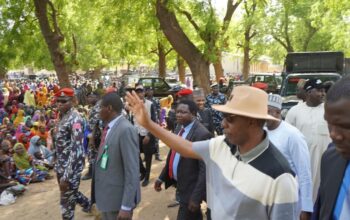
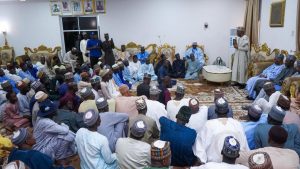
Zulum, accompanied by a member of the House of Representatives, Hon. Bukar Talba, Secretary to the State Government Bukar Tijani, Acting Chief of Staff Babagana Malumbe, former commissioners and other senior government officials, toured affected areas and assessed the extent of destruction caused by the storm.
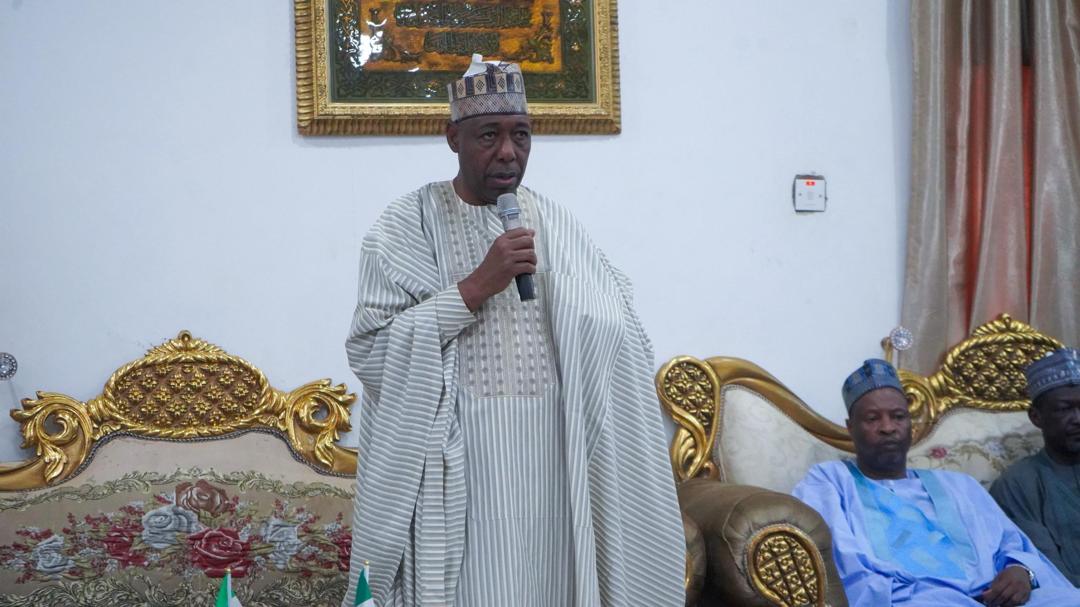
Addressing residents, the governor directed an immediate evaluation of damaged homes and properties, assuring victims that government support would be provided based on the level of destruction suffered by each household.
The windstorm reportedly swept through several parts of Bama town, destroying rooftops, residential buildings and other property, leaving many residents homeless.

Chairman of Bama Local Government Area, Babagana Barma, disclosed that no fewer than 1,200 houses were affected, while four persons lost their lives in the incident.
Describing the disaster as unfortunate, Zulum expressed condolences to bereaved families and assured victims of continued government support during the recovery period.
The governor also raised concerns over environmental degradation, warning against indiscriminate tree felling, which he said contributes significantly to the growing frequency of windstorms and other ecological disasters in the region.
“We must stop cutting down trees arbitrarily. This is a key factor behind the increasing intensity of storms and ecological challenges we face. We already have laws on the ground, and there is a need to ensure that we fully implement them,” he said.
Environmental experts have consistently identified deforestation and desert encroachment as major environmental threats across northern Nigeria, particularly in states within the Sahel region where changing climate patterns have intensified flooding, erosion and wind-related disasters.
Borno State has in recent years expanded environmental protection campaigns and tree-planting initiatives aimed at combating desertification and mitigating climate-related challenges.
Zulum further reiterated his administration’s commitment to the safe return and resettlement of displaced persons currently living in Internally Displaced Persons camps across the state.
He assured residents that the government would sustain policies focused on rebuilding communities affected by insurgency and humanitarian crises.
Bama, one of the communities hardest hit by the Boko Haram insurgency, has witnessed gradual reconstruction and resettlement efforts under the present administration despite persistent security and environmental challenges.