The Government of Bangladesh has reaffirmed its commitment to deepening strategic relations with Nigeria, highlighting growing opportunities for cooperation across key sectors.
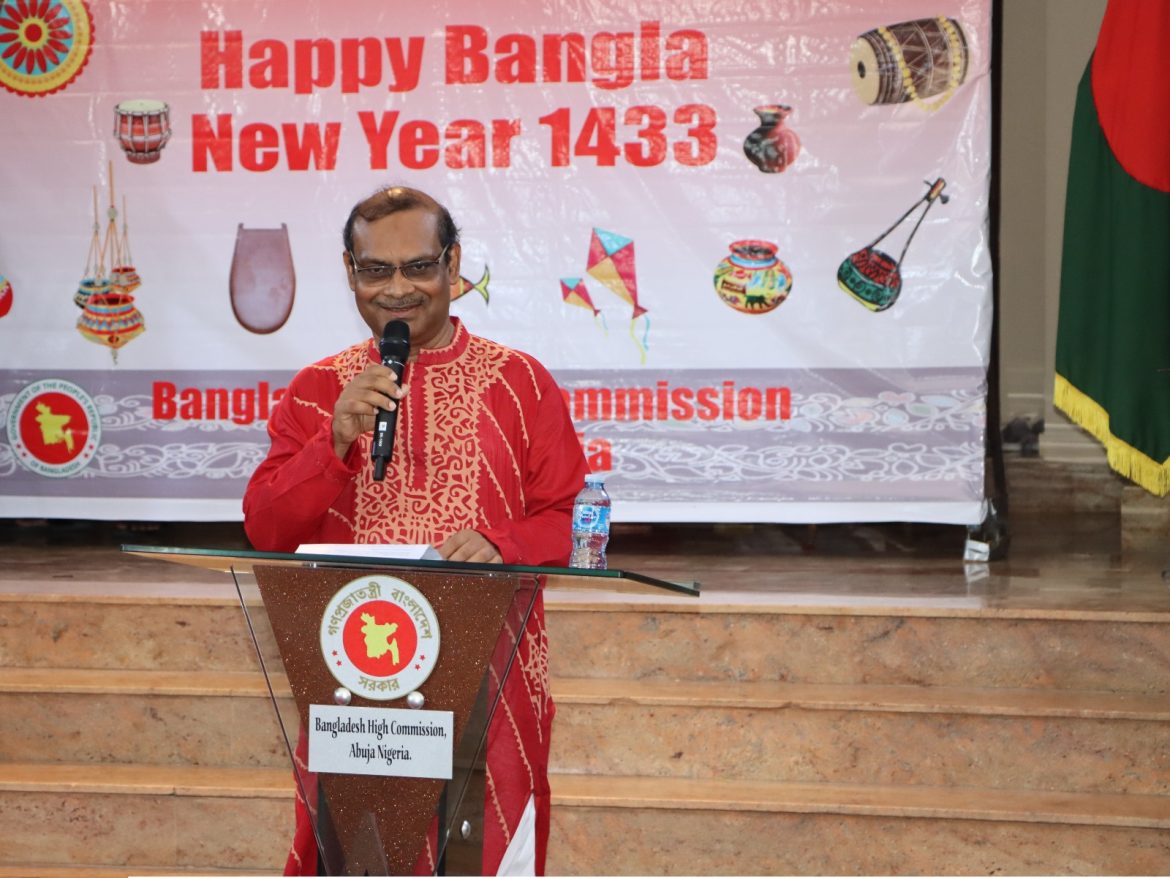
Speaking at the Bangla New Year 1433 celebration in Abuja, the High Commissioner of Bangladesh to Nigeria, Miah Md. Mainul Kabir, described both nations as natural partners united by shared development goals, cultural ties, and aspirations for global engagement.
He noted that despite geographical distance, Bangladesh and Nigeria share similarities as populous and rapidly evolving economies, adding that bilateral relations have expanded steadily in recent years, particularly in trade, education, capacity building, and cultural exchange.
According to the envoy, significant untapped potential remains in critical sectors such as agriculture, pharmaceuticals, energy, information and communications technology (ICT), and human capital development.
Kabir emphasised the role of cultural diplomacy in strengthening bilateral ties, stating that events like the Bangla New Year celebration serve as important platforms for fostering mutual understanding and trust between both countries.
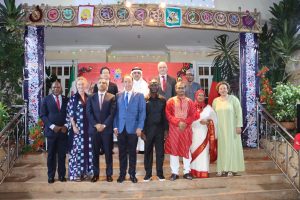
He further underscored the importance of people-to-people connections, noting that the Bangladeshi community in Nigeria contributes to strengthening goodwill and acts as informal ambassadors, while also supporting Nigeria’s socio-economic landscape.
Reiterating Bangladesh’s interest in expanding engagement with Nigeria, the High Commissioner expressed optimism that sustained dialogue, trade diversification, and investment partnerships would translate into more structured bilateral initiatives.
The celebration, organised by the High Commission of Bangladesh in Abuja, attracted ambassadors, members of the diplomatic corps, officials from the Ministry of Foreign Affairs, representatives of think tanks, media practitioners, and the business community.
The event featured vibrant displays of Bangladeshi cultural heritage, including traditional artefacts, seasonal landscape exhibitions, and performances by Bangladeshi and Nigerian artists. Guests were also treated to a variety of traditional dishes, including local delicacies known as pithas, reflecting the country’s rich culinary tradition.