The government of China has restated its commitment to the One-China principle, insisting that Taiwan remains an inseparable part of Chinese territory, while criticizing recent diplomatic and media engagements involving Taiwan’s leadership and foreign partners, including interactions with Nigerian journalists.
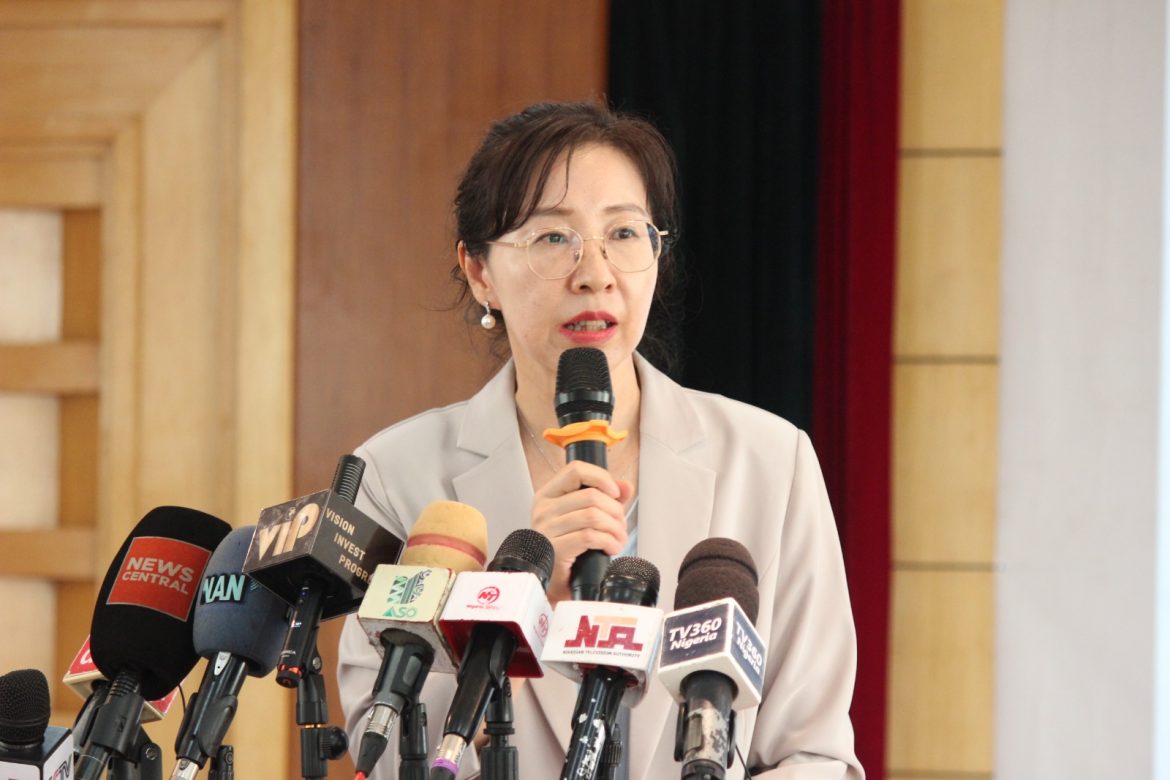
The position was outlined during a policy and media briefing in Abuja by officials of the Embassy of the People’s Republic of China, where Beijing combined historical, diplomatic and legal arguments to defend its stance on Taiwan and caution against reportage or activities it believes undermine the One-China framework.
Speaking at the event, Counselor at the Chinese Embassy in Nigeria, Ms. Dong Hairong, referenced recent overseas engagements by Taiwan President Lai Ching-te, including his visit to Eswatini, where he met members of the royal family.
According to her, Beijing views such engagements as attempts to expand Taiwan’s international profile and promote separatist objectives. Taiwan, however, continues to maintain its self-governing political system and unofficial foreign relations with a number of countries.
Chinese officials also expressed concern over recent meetings involving Nigerian journalists and representatives linked to Taiwan’s external affairs institutions, as well as discussions aimed at expanding Taiwan’s trade presence in Nigeria.
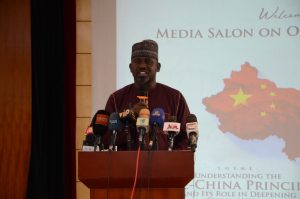
Beijing argued that such interactions challenge diplomatic understandings between China and countries that formally recognize the One-China principle.
Defending China’s position, Dong cited historical records dating back to imperial China, maintaining that Taiwan had long been under Chinese administration. She also referenced key international agreements reached after the Second World War, including the Cairo Declaration of 1943 and the Potsdam Proclamation of 1945, which stated that territories seized by Japan, including Taiwan, should be returned to China following Japan’s defeat.
According to her, Japan’s surrender and acceptance of those terms legally confirmed Taiwan’s return to Chinese sovereignty.
She further noted that after the Chinese civil war in 1949, the government of the People’s Republic of China emerged as the sole legal authority representing China, while the rival administration relocated to Taiwan, resulting in the enduring political separation across the Taiwan Strait.
Dong also cited the United Nations General Assembly Resolution 2758 of 1971, which recognized the People’s Republic of China as “the only legitimate representative of China to the United Nations” and removed representatives of Chiang Kai-shek’s administration.
She argued that the resolution established the One-China principle within international law and left no basis for the concepts of “two Chinas” or “one China, one Taiwan.”
According to the Chinese government, more than 180 countries, including Nigeria, maintain diplomatic relations with Beijing under this framework.
The Chinese official reaffirmed that national reunification remains a central objective of Beijing’s long-term national strategy, while accusing Taiwan’s ruling Democratic Progressive Party of pursuing “de-Sinicization” and separatist policies.
Despite ongoing political tensions, she said China continues to support cross-strait exchanges in trade, education, culture and youth engagement, adding that Chinese diplomatic missions had in the past assisted Taiwanese citizens during evacuations from crisis zones.
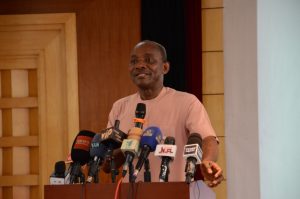
The briefing also highlighted growing relations between Nigeria and China, noting that diplomatic ties established in 1971 were founded on Nigeria’s recognition of the One-China principle.
Dong said Nigeria has consistently acknowledged the government of the People’s Republic of China as the sole legitimate government of China and recognizes Taiwan as part of Chinese territory.
She added that the relationship between both countries has expanded through economic cooperation, infrastructure development, trade partnerships and broader South-South collaboration, including Chinese-backed projects and market access initiatives for African exports.
The Chinese Embassy also urged Nigerian journalists and international media organisations to strictly adhere to the One-China framework in their reporting on Taiwan-related issues.
Dong cautioned against the use of language or diplomatic titles that could imply Taiwanese statehood, warning that such portrayals could affect diplomatic relations.
Meanwhile, public affairs analyst and political strategist Segun Showunmi said Nigeria’s continued support for the One-China principle remains vital to the strengthening of diplomatic, economic and strategic ties between both countries in an increasingly multipolar global order.
Presenting a paper titled “The One-China Principle and the Next Phase of China–Nigeria Relations in an Emerging Multipolar World,” Showunmi argued that relations between Nigeria and China were built on mutual respect, sovereignty and non-interference.
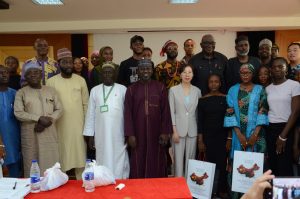
He noted that Nigeria formally adopted the One-China principle in 1971 upon establishing diplomatic relations with Beijing and recognizing the People’s Republic of China as the sole legitimate representative of China.
According to him, Nigeria’s consistency on the matter has strengthened bilateral trust and contributed to significant Chinese investments in strategic sectors of the Nigerian economy.
He listed projects such as the Abuja–Kaduna Railway, Lagos–Ibadan Railway, airport terminal expansions, telecommunications projects, power infrastructure and the Lekki Deep Sea Port as examples of Chinese-supported interventions contributing to Nigeria’s infrastructure development.
Showunmi further stated that China has become a major development partner for African countries seeking alternatives to Western financing models, noting that Nigeria has benefited from increased trade opportunities, technology transfer, educational exchanges and diplomatic cooperation.
However, he argued that the next phase of Nigeria-China relations should move beyond symbolic diplomatic alignment toward a more structured economic partnership capable of driving industrialization and long-term development.
He proposed the creation of a China–Nigeria Strategic Economic Council to coordinate industrial policy, energy transition initiatives, artificial intelligence development, critical minerals and advanced manufacturing.
He also urged the Nigerian government to negotiate stronger local content provisions in Chinese-funded projects to boost indigenous engineering capacity and domestic supply chains.
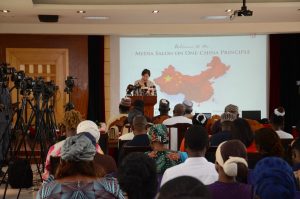
Also speaking at the media salon held at the China General Chamber of Commerce in Nigeria, Director of the Abuja School of Social and Political Thoughts and Dean of the Faculty of Law at Ave Maria University, Prof. Sam Amadi, called on African countries to carefully manage their foreign policy positions on the Taiwan question.
Amadi noted that while the One-China principle and One-China policy are often treated as identical, they differ in diplomatic application.
“The One-China principle and One-China policy are clear, but difficult to operationalise,” he said, explaining that many countries maintain official recognition of Beijing while sustaining informal economic and trade engagements with Taiwan.
According to him, Africa’s traditional commitment to territorial integrity broadly aligns with China’s position, although contemporary diplomatic and economic realities create practical complexities.
He warned against what he described as “sovereignty for rent,” where diplomatic recognition could be influenced by economic incentives.
Amadi maintained that African states should avoid formal diplomatic engagement with Taiwan while cautiously managing trade relations within the broader framework of the One-China policy.