International partners including the European Union (EU), the United Nations Office on Drugs and Crime (UNODC), and the Economic Community of West African States (ECOWAS) have pledged continued support to Nigeria in its efforts to combat substance abuse and illicit drug trafficking over the next five years.
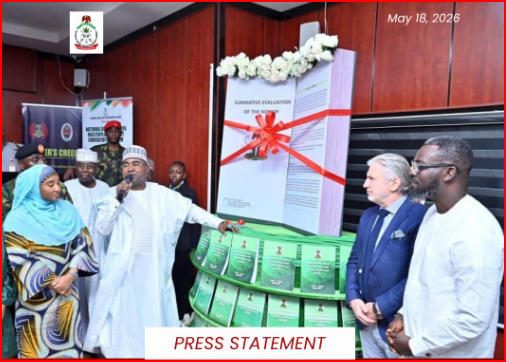
The commitment was made on Monday during the opening of a two-day National Drug Control Master Plan (NDCMP) Consultative Forum organised by the National Drug Law Enforcement Agency in Abuja.
Speaking at the event on behalf of the EU delegation to Nigeria and ECOWAS, Deputy Head of Delegation, Mr. Zissimos Vergos, described drug trafficking as a transnational challenge requiring collective international action.
According to him, Nigeria’s stability and Europe’s security are closely connected, stressing that the new drug control roadmap represents Nigeria’s contribution to a broader global response against illicit drug networks.
“Our presence here today is that of partners who have walked this uphill and rough road ourselves,” Vergos said. “What affects the youth of Maiduguri or the streets of Ibadan does not stay within Nigerian borders.”
He added that the EU remained committed to supporting Nigeria’s institutions and communities in transforming the master plan into practical progress capable of saving lives and improving public safety.
Also addressing participants, UNODC Country Representative, Mr. Chiekh Ousmane Touré, warned that the global drug landscape is undergoing significant changes driven by the rise of synthetic drugs, technologically advanced trafficking operations, and expanding illicit markets.
Touré noted that Nigeria sits at the centre of these evolving threats and therefore requires a comprehensive, data-driven, and adaptable response strategy.
He reaffirmed the UN agency’s commitment to supporting Nigeria through capacity building, drug demand reduction programmes, evidence-based prevention and treatment initiatives, as well as enhanced international cooperation.
“As we look ahead, we see this master plan as an opportunity to deepen impact, strengthen institutions, and ensure that the response is people-centred, inclusive, and sustainable,” he stated.
Chairman and Chief Executive Officer of the National Drug Law Enforcement Agency, Mohamed Buba Marwa, said Nigeria must confront the growing complexity of drug-related threats despite gains recorded in recent years.
Marwa cited projections by UNODC indicating a possible 40 per cent rise in drug use across Africa by 2030, while reports from the Global Initiative Against Transnational Organized Crime identified West Africa as a major corridor for cocaine trafficking between Latin America and Europe.
He expressed concern over the increasing abuse of synthetic substances, prescription drugs, poly-drug use, and the growing deployment of encrypted platforms and dark web operations by traffickers.
“As Africa’s most populous nation and largest economy, Nigeria cannot afford to be a passive observer,” Marwa said. “The risks to our youth, workforce, and national security are too high.”
He explained that the proposed NDCMP 2026–2030 introduces new pillars focused on alternative development and sustainable livelihoods, as well as the disruption of illicit drug economies through financial intelligence and asset tracking.
The NDLEA boss urged stakeholders at the forum to adopt innovative and practical strategies capable of delivering a safer and healthier society over the next five years.
ECOWAS Commissioner for Human Development and Social Affairs, Daniel Amankwaah, described Nigeria’s drug control framework as significant to regional policy development, noting that several ECOWAS member states draw lessons from Nigeria’s experience.
He assured the agency of continued regional support not only in developing the plan but also during implementation.
Similarly, Minister of State for Education, Suwaiba Said Ahmad, commended the NDLEA for its professionalism and sustained efforts in combating drug abuse and trafficking.
She called for a holistic and multi-sectoral approach involving education, healthcare, law enforcement, community engagement, and social support systems to effectively address the root causes and consequences of substance abuse.
Other dignitaries at the event included representatives of the Senate Committee on Drugs and Narcotics and the National Orientation Agency.