The Economic Community of West African States (ECOWAS) has deployed 30 fully equipped ambulances to strengthen emergency healthcare and improve the speed of medical response across the region.
The ambulances were formally handed over on Friday, August 14, 2026, in Lomé, Togo, under an initiative implemented by the ECOWAS Commission in collaboration with the West African Health Organisation (WAHO) and the United Nations Office for Project Services (UNOPS).
The intervention is designed to tackle one of West Africa’s longstanding healthcare challenges — delays in transporting critically ill or injured patients from emergency scenes to facilities capable of providing definitive treatment.
Speaking at the handover ceremony, President of the ECOWAS Commission, Dr Omar Alieu Touray, stressed the importance of rapid access to emergency medical services, particularly for people in rural and underserved communities.
Touray noted that in critical medical situations, the speed at which professional medical assistance reaches a patient can determine the difference between life and death.
The ambulances are equipped to function as mobile emergency-care platforms rather than mere transportation vehicles, enabling medical personnel to provide essential interventions while patients are being taken to healthcare facilities.

They are expected to enhance emergency responses to road traffic accidents, obstetric complications, trauma cases, disease outbreaks, disasters and other life-threatening situations.
Director-General of WAHO, Professor Melchior Athanase Joël Adou, described the deployment as a significant step towards strengthening pre-hospital care and improving the resilience of health systems across West Africa.
He stressed that effective emergency healthcare requires more than hospitals, noting that functional systems depend on rapid communication, trained personnel, properly equipped ambulances and efficient referral networks connecting communities with appropriate medical facilities.
Togo’s Minister of Health and Public Hygiene, Professor Tchin Darre, also welcomed the initiative, highlighting the severe consequences of delays in emergency transportation.
He cited pregnant women requiring urgent care, victims of road crashes, children and elderly persons among those for whom timely transportation can be critical to survival.
The ECOWAS intervention comes amid recurring health emergencies and humanitarian crises that have exposed gaps in emergency-response capacity across the region.
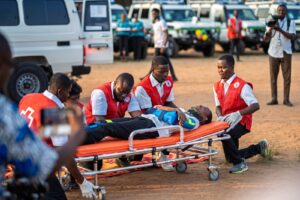
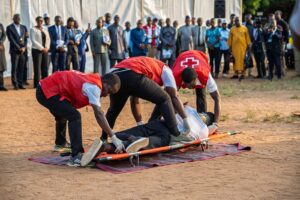
The COVID-19 pandemic, Ebola and Lassa fever outbreaks, road traffic injuries, natural disasters and other emergencies have underscored the urgent need for stronger pre-hospital care and rapid medical evacuation systems.
The deployment of the 30 ambulances therefore represents more than the provision of medical vehicles. It is part of ECOWAS’ broader effort to strengthen regional health security, emergency preparedness and access to critical care for vulnerable populations.
The effectiveness of the programme, however, will depend on sustained funding, proper deployment, regular maintenance, availability of trained emergency personnel and integration of the ambulances into existing national emergency-response systems.
For millions of West Africans, the ultimate measure of the initiative will be the lives saved through faster access to emergency medical care.
With the handover, ECOWAS is seeking to translate regional health cooperation into a more effective emergency-response network capable of ensuring that when medical crises strike, assistance is available — and arrives in time.