The ECOWAS Parliament has intensified efforts to dismantle barriers to regional trade, pledging to champion reforms aimed at easing cross-border commerce and unlocking the growth potential of Micro, Small and Medium Enterprises (MSMEs) across West Africa.
The commitment followed field visits and a town hall meeting in Cotonou, Benin Republic, where lawmakers heard firsthand accounts of the challenges facing businesses and traders despite decades of regional integration initiatives under the Economic Community of West African States (ECOWAS).
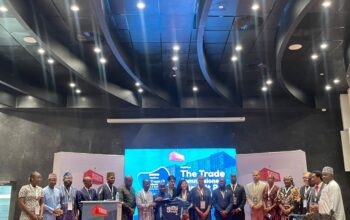
The engagements, held on July 29 and 30, formed part of the ongoing delocalised meeting of the ECOWAS Parliament’s Committees on Industry and Private Sector, Macroeconomic Policy and Economic Research, Administration, Finance and Budget, and Public Accounts.
The mission was designed to assess obstacles confronting businesses and identify policy gaps hindering the effective implementation of ECOWAS protocols on free movement and regional trade.
During a visit to LES JUS TILLOU, a pineapple juice processing company in Benin Republic, lawmakers were told that entrepreneurs continue to face significant bureaucratic and border-related obstacles when trading within West Africa, despite the region’s commitment to economic integration.
The company’s owner, Madam Guedegbe Marcos, said exporting products to Europe and Canada had proven easier than accessing neighbouring West African markets because of persistent administrative bottlenecks and trade restrictions.
She disclosed that the company, established with nearly CFA 4 billion in financing from the ECOWAS Bank for Investment and Development (EBID), requires an additional CFA 1 billion to expand production capacity and improve packaging.
Despite growing demand for its products, she said regional trade barriers continue to limit the company’s expansion.
“Free movement of people, goods and services is just a phrase; it is far from the reality on the ground,” she lamented.
Her concerns echoed broader complaints from businesses across the sub-region that the objectives of the ECOWAS Trade Liberalisation Scheme (ETLS) and other regional integration protocols have yet to translate into seamless cross-border trade.
Businesses continue to grapple with multiple checkpoints, inconsistent customs procedures, unofficial levies, prolonged border delays and limited access to finance—constraints that disproportionately affect MSMEs, which remain major contributors to employment and economic activity across West Africa.
In response, members of the ECOWAS Parliament pledged to engage national legislatures and relevant authorities across member states to address the identified bottlenecks and strengthen implementation of regional trade agreements.
The lawmakers also toured the Glo-Djigbe Industrial Zone (GDIZ), a flagship industrial hub developed through a partnership between the Government of Benin Republic and ARISE Integrated Industrial Platforms.
Located about 45 kilometres from the Port of Cotonou, the industrial zone hosts more than 40 companies operating in sectors including cashew and soybean processing, textiles, pharmaceuticals, ceramics and electric vehicle manufacturing.
At the GDIZ Textile Park, parliamentarians observed an integrated textile value chain encompassing spinning, weaving and garment production, highlighting the role of industrialisation and value addition in enhancing the competitiveness of West African economies.
The lawmakers later held a town hall meeting at KP3 in Cotonou, where traders, particularly women entrepreneurs, narrated their experiences with cross-border trade.
Participants alleged harassment and extortion by some border officials and called for urgent reforms to make regional trade more predictable, transparent and secure.
They also appealed for improved access to credit, especially for women-owned businesses, and urged ECOWAS member states to harmonise customs charges to reduce the cost and complexity of moving goods across borders.
The traders further called on governments to create policies that encourage informal businesses to transition into the formal economy through simplified regulations and greater financial inclusion.
Responding, members of the ECOWAS Parliament assured stakeholders that their concerns would be incorporated into the Parliament’s recommendations and presented to relevant authorities for policy action.
The lawmakers stressed that regional trade should serve as a practical instrument for reducing poverty, creating jobs and addressing insecurity, insisting that barriers limiting the growth of MSMEs must be removed if the ECOWAS integration agenda is to achieve its objectives.
They maintained that the true success of regional integration would be measured not by the number of treaties adopted but by the ease with which ordinary traders, entrepreneurs and businesses can move goods, access markets and compete across West Africa’s single market.