- Ethiopian envoy dismisses Trump’s claim, says GERD was financed through domestic resources
Ethiopia has dismissed claims that American money was used to construct the Grand Ethiopian Renaissance Dam (GERD), insisting that the multibillion-dollar hydroelectric project was financed entirely through domestic resources.
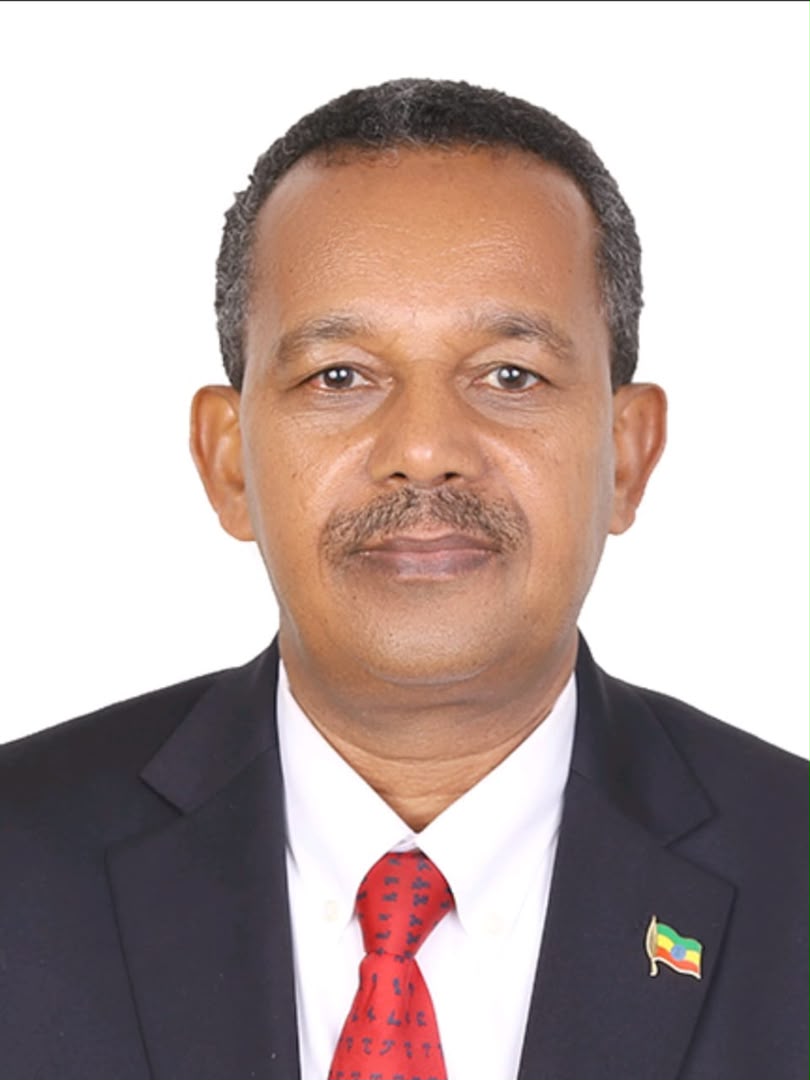
Ethiopian Ambassador to Nigeria, Legesse Haile, stated this while speaking with journalists in Abuja, responding to remarks attributed to US President Donald Trump that American funds were used to build the dam.
Trump was reported to have made the claim at a recent rally in Syracuse, New York, while alleging that Ethiopia had taken water from the Nile River, leaving Egypt without adequate supplies.
“You know, it is not too good if you are Egypt and the Nile River has no water in it, but I worked that out,” Trump was quoted as saying.
However, Haile rejected the assertion that the dam was depriving downstream countries of Nile water, explaining that the project was designed primarily to generate electricity rather than consume or permanently retain the river’s water.
According to the ambassador, water stored in the reservoir passes through turbines to generate electricity before continuing downstream, allowing the river to maintain its flow.
“Once the dam stores water at full capacity, which is already completed, water simply hits the turbine and continues to flow downstream countries,” he said.
“The water never stops and is continuing to flow every second without interruption,” Haile added.
The envoy also drew comparisons between GERD and Egypt’s Aswan High Dam, arguing that the Egyptian facility has twice the storage capacity of the Ethiopian project.
He described GERD as Africa’s largest hydroelectric dam, highlighting its strategic importance to Ethiopia’s electricity generation capacity and broader development ambitions.
“There is also no coin taken from any external body to finance the construction of the GERD,” Haile said, reiterating that the project was funded without external financial assistance.
Located on the Blue Nile in Ethiopia’s Benishangul-Gumuz region, near the Sudanese border, GERD is one of Africa’s most ambitious infrastructure projects and a major component of Ethiopia’s drive to expand electricity generation.
The project was financed through domestic sources, including government allocations and Renaissance Bonds purchased by Ethiopian citizens and members of the diaspora.
Construction began in 2011, and the dam was officially inaugurated in September 2025.
Beyond its significance for Ethiopia’s energy sector, GERD has remained a major source of diplomatic tension between Ethiopia and downstream countries Egypt and Sudan, particularly over reservoir filling, dam operations and the management of Nile water resources.
The dispute has underscored the competing interests of upstream and downstream nations over the equitable use of the Nile, a critical water source for millions of people across northeastern Africa.