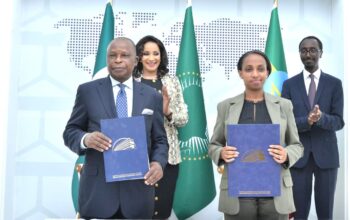
The Federal Government of Nigeria is set to engage in a collaborative endeavor with the Government of India focused on geospatial mapping, technical expertise exchange, remote sensing, carbon mapping, and auto imagery.
This collaboration, spearheaded by Nigeria through the Office of the Surveyor-General of the Federation, marks a significant step toward harnessing advanced geospatial technologies and fostering bilateral cooperation in this critical domain.
The announcement was made during a meeting between the Surveyor-General, Surv. Abuduganiyu Adebomehin, and the Indian High Commissioner to Nigeria, Ambassador Gangadharan Balasubramanian, on Friday.
Ambassador Balasubramanian outlined the purpose of his visit, emphasizing India’s keen interest in forging collaborations with Nigeria under its new geospatial policy. Leveraging India’s robust remote sensing and space capabilities, he underscored potential areas of cooperation, including hydrography, remote sensing, surveying training, and technical expertise exchange.
Furthermore, the Ambassador highlighted India’s proficiency in utilizing Artificial Intelligence to provide high-resolution auto imagery, underscoring the potential for harmonizing datasets through collaborative efforts with Nigeria.
Expressing readiness for partnership and cooperation, Ambassador Balasubramanian assured swift attention to pending agreements, such as the Memorandum of Understanding on Hydrography between India and Nigeria.
In response, the Surveyor-General of the Federation emphasized the pivotal role of his office in defining Nigeria’s geographical landscape. Affirming Nigeria’s openness to collaboration, he emphasized the value of leveraging India’s expertise in joint mapping endeavors and related initiatives.
Identifying areas of mutual interest, the Surveyor-General proposed leveraging India’s satellite capabilities to capture underground carbon data, thereby enhancing Nigeria’s environmental stewardship efforts. Additionally, he underscored the potential application of India’s geospatial data in optimizing agricultural productivity and food security in Nigeria.
Highlighting past benefits derived from Indian technical expertise training, the Surveyor-General emphasized the importance of human capacity development in driving sustainable collaboration. He pledged vigorous pursuit of the proposed collaboration, aiming to maximize its mutual benefits for both countries.
The envisioned collaboration between Nigeria and India holds promise for advancing geospatial capabilities, promoting sustainable development, and fostering enduring bilateral ties in the realm of scientific innovation and technology.