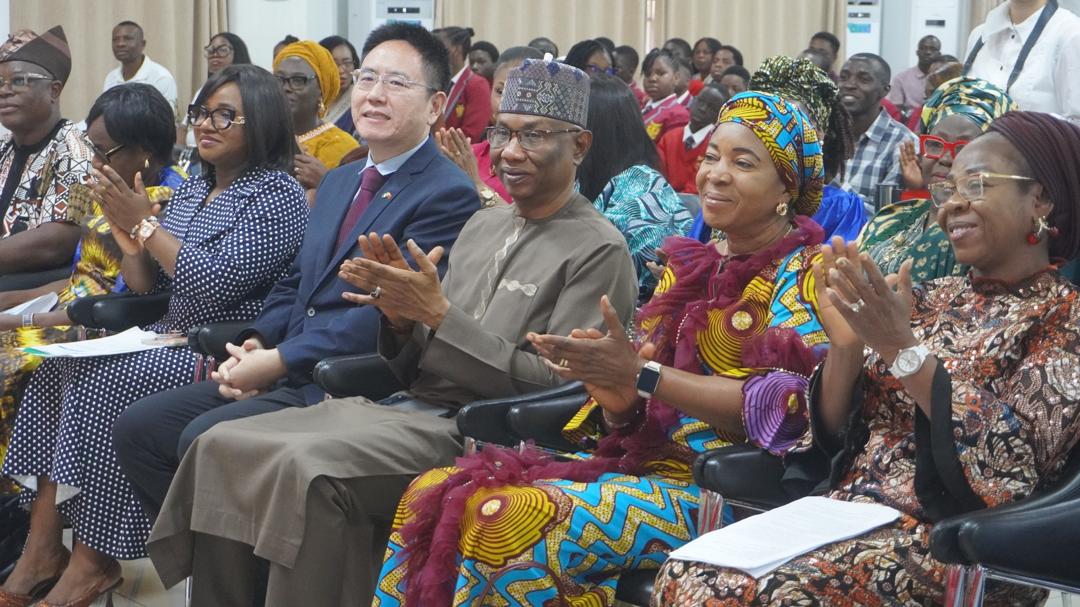
The Federal Radio Corporation of Nigeria (FRCN), the Chinese Embassy in Nigeria and the Nigeria Union of Journalists (NUJ), FCT Council, have called for stronger people-to-people relations between Nigeria and China, identifying broadcasting, language learning and digital engagement as strategic tools for deepening bilateral cooperation beyond trade, infrastructure and official diplomacy.
The call was made in Abuja on Thursday during the celebration of 456 days of Ni Hao! China, a joint Chinese-language radio programme produced by FRCN and the Chinese Embassy, with support from the China Cultural Centre in Nigeria.
The event brought together media professionals, diplomats and cultural stakeholders, who urged the programme’s partners to expand its reach, promote reciprocal cultural exchanges and encourage young Nigerians to become ambassadors of friendship between the two countries.
Speaking at the event, FRCN Director-General, Dr Mohammed Bulama; Cultural Counsellor of the Chinese Embassy and Director of the China Cultural Centre in Nigeria, Yang Jianxing; and NUJ FCT Council Chairman, Comrade Grace Ike, described the initiative as an effective platform for fostering mutual understanding and strengthening relations between Nigerians and Chinese.
The anniversary coincided with the 55th anniversary of diplomatic relations between Nigeria and China and China’s Year of People-to-People Exchanges with Africa.
Bulama said Ni Hao! China had grown beyond an initial broadcasting experiment into a significant platform for cultural diplomacy, bringing citizens of both countries closer through language, storytelling and cultural education.
He noted that although Nigeria-China relations had traditionally been driven by trade, infrastructure development and government-to-government engagements, the programme had introduced a vital people-centred dimension to the partnership.
“Although Nigeria and China have enjoyed decades of diplomatic relations, often viewed through the lenses of infrastructure, trade and diplomacy, which we all agree are vital pillars, ‘Ni Hao! China’ introduced a new, essential pillar: the people,” he said.
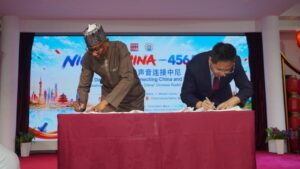
Officially launched in July 2025, the programme introduces Nigerian audiences to the Chinese language, history, festivals, philosophy, food, technological innovations and everyday life, while also creating opportunities to showcase Nigerian culture to international audiences.
Bulama said the initiative demonstrated that broadcasting remained a powerful instrument of international engagement, even as diplomatic relations increasingly focused on economic agreements and strategic partnerships.
“The FRCN, in collaboration with the Chinese Embassy, has moved beyond ‘Business to Business’ to ‘Heart to Heart’,” he said.
He explained that the programme aligned with FRCN’s public-service mandate and its motto, “Uplift the People, and Unite the Nation,” by promoting cultural education, international cooperation and constructive engagement across national boundaries.
According to him, the initiative enables Nigerians to learn about China without travelling there, helping them appreciate its culture, development experiences and shared aspirations with Nigeria.
The FRCN director-general pledged the corporation’s continued commitment to the programme, promising more engaging content on Mandarin language lessons, culture, education, tourism, innovation, business and everyday life.
He also disclosed that FRCN was integrating conventional radio broadcasting with digital platforms, including podcasts, social media videos, audience quizzes and other learning resources, to enable listeners to revisit lessons and improve their language skills at their convenience.

China seeks reciprocal cultural learning
Yang described Ni Hao! China as an important bridge of friendship and mutual understanding, providing Nigerians with an accessible opportunity to learn Chinese and explore the country’s cultural heritage.
He said the programme was jointly produced by the Chinese Embassy and FRCN, with support from the China Cultural Centre, and distributed through FRCN’s FM stations, website, YouTube and other online platforms.
The diplomat said the 55th anniversary of Nigeria-China diplomatic relations provided an opportunity to reflect on decades of political engagement, economic cooperation and cultural exchanges.
He described the programme as both a reflection of the growing relationship and a contributor to its development, particularly as China and Africa place renewed emphasis on people-to-people exchanges.
However, Yang stressed that the programme’s next phase should move beyond teaching Nigerians Chinese to establish a genuinely reciprocal platform through which citizens of both countries could learn about each other.
He advocated the inclusion of lessons that would teach Nigerians how to explain their own traditions, cultural practices and everyday experiences in Chinese, thereby making the programme a two-way channel of cultural exchange.
“We hope the programme will cover a wider range of topics, including Chinese culture, tourism, education, and other aspects of life in China. At the same time, we would love to see more lessons teaching listeners how to introduce Nigerian culture, traditions, and everyday life in Chinese,” he said.
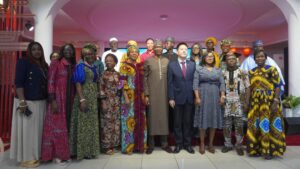
Yang identified richer content, innovative audience engagement and greater youth participation as key priorities for the programme’s future.
He urged the organisers to combine radio broadcasts with short videos, social media campaigns and physical cultural activities to attract wider audiences, particularly young people interested in learning Chinese and exploring China.
He also expressed the hope that more Nigerian youths would participate in language lessons, cultural programmes and bilateral exchange activities, eventually becoming advocates for stronger Nigeria-China relations.
The diplomat commended FRCN management and the production team, particularly Abiodun Ogidan, Director of Programme Production; Juanita, the programme’s producer; and Zhang Yaping, a Chinese-language teacher at the China Cultural Centre, for their contributions to the initiative.
NUJ tasks media on international understanding
In her goodwill message, Ike said the significance of Ni Hao! China extended beyond the 456 days being celebrated, describing it as evidence of how purposeful broadcasting could challenge misconceptions, deepen mutual respect and promote peaceful coexistence.
Representing the NUJ FCT Council, she commended the Chinese Embassy, FRCN and the China Cultural Centre for deploying language and cultural programming to strengthen relations between the two countries.
She said the media had a critical role in shaping public opinion, influencing relationships and inspiring action, making programmes such as Ni Hao! China important instruments of international understanding.
“The programme has shown that when the media is used purposefully, it can do more than report events; it can bring nations closer, correct misconceptions, deepen respect and promote peaceful coexistence,” Ike said.

She observed that international friendship was not built exclusively through diplomatic meetings and official engagements but also through everyday conversations, music, stories and cultural programmes that help people understand one another.
The NUJ FCT chairman called on the programme’s partners to expand its audience through radio, digital platforms and social media, with particular emphasis on encouraging young Nigerians to participate in cultural exchanges.
She further urged sustained support for initiatives that promote professional journalism, cultural diplomacy, language learning and responsible public communication.
Congratulating the organisers, presenters, producers, partners and listeners, Ike expressed optimism that the programme’s continued growth would strengthen cooperation and shared progress between Nigeria and China.
Partners target wider reach, stronger engagement
The speakers agreed that the programme’s long-term success would depend on its ability to become more accessible, interactive and sustainable, with greater opportunities for audiences in both countries to participate actively in cultural exchanges.
For FRCN, the initiative reinforces public-service broadcasting as a means of connecting Nigerians with other societies. For the Chinese Embassy, it offers a platform to complement existing political and economic cooperation with deeper cultural understanding. For the NUJ, it demonstrates the media’s capacity to promote peace, mutual respect and international collaboration.
Bulama described the 456-day milestone as the beginning of a partnership whose benefits would become more apparent with time.
“The 456 days was about planting the seed. In the coming years, I wish to assure this gathering that it will be about harvesting the fruits of a partnership that is destined to grow even stronger,” he said.
The event attracted representatives of the Chinese Embassy, FRCN management, the Independent Corrupt Practices and Other Related Offences Commission, the Nigerian Press Council, the FCT Education Secretariat, the NUJ, the Society of Nigerian Artists, the University of Abuja and the Diplomatic Correspondents Association of Nigeria, as well as media practitioners, Mandarin learners and other guests.
As Ni Hao! China moves into its next phase, its partners face the task of translating the goodwill generated by the programme into broader audience participation, sustained language learning and more direct cultural interactions between Nigerians and Chinese.
The initiative’s future impact will ultimately depend on whether its broadcasts can inspire lasting connections among citizens, complement economic cooperation and strengthen the people-to-people foundations of Nigeria-China relations.