Germany has announced a fresh package of diplomatic, economic and security measures against Russia following its attribution of a drone incident at Leipzig/Halle Airport to Moscow, describing the episode as part of a broader Russian hybrid campaign against Europe.
German Foreign Minister Johann Wadephul, speaking alongside Interior Minister Alexander Dobrindt on Tuesday, said the incident demonstrated what he described as Russia’s continued efforts to destabilise European countries through sabotage, disinformation, threats and other hostile activities.
Wadephul said Russia’s leadership was treating Germany with “blatant hostility”, despite Berlin’s repeated calls for an end to the war in Ukraine, restoration of peace in Europe and, eventually, a return to constructive relations with Moscow.
“On the contrary, with the attempted attack in Leipzig, Russia’s leadership has instead made a conscious decision to inflict further significant damage on our bilateral relations, which are already under tremendous strain,” he said.
Under the measures announced by Berlin, the Russian Consulate General in Bonn will be closed from September 18, while Germany will terminate the lease of the Russian House in Berlin.
The government will also push for new European Union sanctions against Russian individuals allegedly involved in hybrid attacks and tighten immigration controls for Russian nationals.
Berlin said it would intensify efforts against Russia’s so-called shadow fleet and introduce additional intelligence and security measures as part of its response.
Germany will simultaneously deepen cooperation with NATO and EU partners to strengthen collective defence and deterrence against Russia, while maintaining its military, financial and humanitarian support for Ukraine.
As part of the diplomatic measures, the Russian ambassador will be summoned to receive formal notification of Germany’s position and the actions being taken by Berlin.
Wadephul insisted that Germany remained secure and capable of protecting its population from actors seeking to undermine national stability.
“We will not allow ourselves to be divided in our social cohesion or be intimidated by Russia’s attacks,” he said.
Drone Found Near Ukrainian Cargo Aircraft
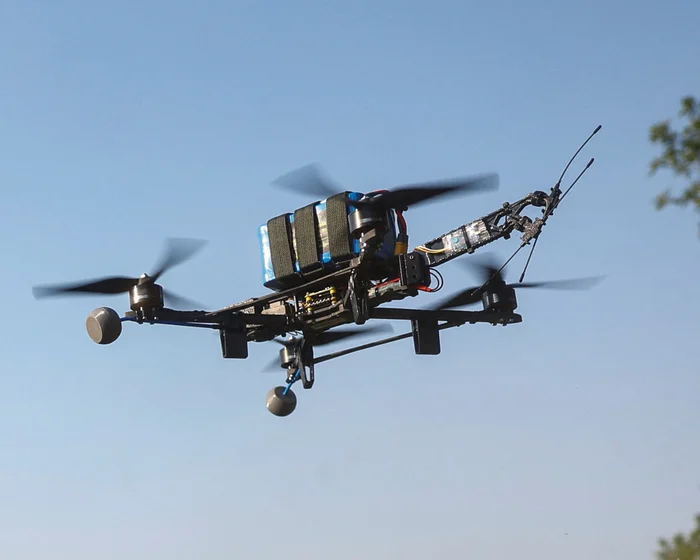
The Leipzig/Halle incident occurred on August 4, 2026, when an explosive-laden drone was discovered at the airport near a Ukrainian cargo aircraft.
Security authorities subsequently defused the device, while airport operations were temporarily disrupted as runways were closed during the response.
Leipzig/Halle Airport is one of Germany’s major cargo and logistics hubs and plays an important role in European freight transportation. Its use by large cargo aircraft, including Ukrainian Antonov aircraft, has also given the facility strategic importance amid the continuing war in Ukraine.
German authorities initially investigated the incident without publicly assigning responsibility. However, following police investigations and intelligence assessments, Berlin announced on September 1 that it had concluded that Russia was responsible.
The German government characterised the incident as a hybrid attack, saying investigators had identified features consistent with suspected Russian operations elsewhere in Europe.
The attribution marks a significant escalation in Berlin’s public response to suspected Russian hostile activities on German territory and comes amid growing European concerns over alleged sabotage, espionage, cyber operations and other forms of interference targeting critical infrastructure and organisations supporting Ukraine.
Moscow Rejects Allegation
Russia has denied involvement in the Leipzig incident, dismissing Germany’s accusation as unfounded and warning that Berlin’s retaliatory measures risk further worsening already strained bilateral relations.
Relations between Germany and Russia have deteriorated sharply since Moscow launched its full-scale invasion of Ukraine. Germany has since emerged as one of Kyiv’s key European supporters, providing military, financial and humanitarian assistance while working with NATO and the EU to strengthen Europe’s deterrence and defence capabilities.
The latest measures underscore the widening confrontation between Berlin and Moscow as European governments increasingly frame suspected sabotage, cyberattacks, disinformation and attacks on critical infrastructure as components of Russia’s broader hybrid warfare strategy.