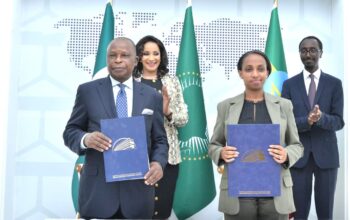
The Kaduna State Government and the Bill & Melinda Gates Foundation have signed the Kaduna Mutual Accountability Framework (KaMAF), a new platform designed to strengthen collaboration, transparency, and sustainable development in the state.
The signing, which took place on the sidelines of the United Nations General Assembly, reflects a joint commitment to advancing Kaduna’s development agenda through targeted interventions and stronger cooperation.
According to a joint statement by Fatima Abubakar Alkali, Senior Communications Officer at the Gates Foundation, and Ibraheem Musa, Chief Press Secretary to Governor Uba Sani, the framework establishes a non-binding platform for dialogue and accountability. While it creates no enforceable legal or financial obligations, it is intended to align both parties’ development priorities for maximum impact.
KaMAF builds on the Kaduna State International Development Cooperation Framework (2017–2020) and introduces mechanisms for strategic dialogue, measurable commitments, and citizen-centered monitoring. Its key focus areas include health, agriculture, data management, realistic budgeting, and economic empowerment.
Governor Uba Sani described the initiative as a bold step toward Kaduna’s long-term vision.
“The KaMAF represents a bold shift from promises to delivery. By ensuring accountability, transparency, and alignment with the priorities of our citizens, Kaduna is working toward building a more inclusive, resilient, and prosperous future. We are proud to partner with the Gates Foundation to drive real, measurable change that improves lives across our state,” he said.
Also speaking, Uche Amaonwu, Gates Foundation Country Director for Nigeria, reaffirmed the Foundation’s support for Kaduna through continued investments and technical assistance.
“Our work in Kaduna is grounded in a shared vision for inclusive, accountable, and data-driven development. We are not just investing in systems; we are investing in people, communities, and institutions that support sustainable change,” Amaonwu said.
The framework will guide collaboration between 2025 and 2026, with regular strategic dialogues and a joint steering committee to monitor progress and resolve challenges.
Both parties said the initiative aims to align resources, reinforce accountability, and place citizens at the center of development, setting a model for transformative state-donor partnerships in Nigeria and beyond.