Global and national leaders have called on Nigerian students to take an active role in shaping the future, as the 2026 edition of the Lagos Secondary Schools Model United Nations opened with a strong emphasis on digital transformation, equity, and sustainable development.
The conference brought together students and thought leaders around a shared message: young people are not merely future leaders but are already influencing global change.
In a keynote address, António Guterres reaffirmed the United Nations’ commitment to youth empowerment, describing Model United Nations platforms as vital training grounds for leadership, diplomacy, and problem-solving in a complex global environment. He urged participants to approach decision-making with courage, resilience, and a strong commitment to fairness, particularly in addressing the needs of vulnerable populations.
The Lagos State Commissioner for Basic and Secondary Education, Jamiu Tolani Alli-Balogun, highlighted the central role of education in national development, noting that LASSMUN represents a strategic investment in future leadership. He outlined ongoing government efforts to strengthen the education sector through innovation, infrastructure development, and policies that encourage critical thinking and character formation.

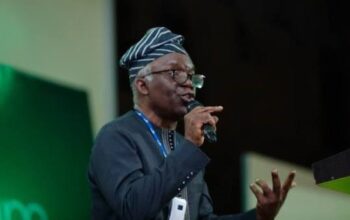
Providing further insight, Efosa Osaghae, represented by Joshua Bolarinwa, said digital transformation offers significant opportunities to bridge global educational inequalities. However, he cautioned that without inclusive policies, technological advancement could exacerbate existing disparities. He called for sustained investment in digital infrastructure and equitable access to ensure broad participation in the evolving knowledge economy.
The Director of the United Nations Information Centre Abuja, Ronald Kayanja, underscored the growing role of youth in advancing global priorities such as peacebuilding, climate action, and sustainable development. He encouraged students to embrace dialogue, tolerance, and cooperation while developing the ability to discern credible information in an increasingly complex media environment.
Earlier, LASSMUN President Damilola Ogunsanwo described the conference as a transformative platform that fosters discipline, collaboration, and respect for international processes.
Also speaking, the Tutor-General/Permanent Secretary of Education District III, Mojisola Christiana Yusuf, emphasised the value of Model UN in bridging theoretical learning with practical application, equipping students with essential skills such as negotiation, public speaking, and teamwork.
From a development perspective, Genevieve Chukwuezi, representing the United Nations Development Programme Lagos Office, noted that digital tools played a critical role in sustaining education during the COVID-19 pandemic. She stressed that digital transformation must extend beyond access to technology to include innovation, scalability, and practical solutions that drive socio-economic progress.

In her remarks, the conference Secretary-General, Praise Oyekunbi, warned against superficial adoption of technology, arguing that without equitable access, digital tools could reinforce inequality rather than reduce it.
“Technology without equity is not progress—it is exclusion,” she stated, highlighting the urgency of inclusive digital policies.
As deliberations continue, LASSMUN 2026 is positioning itself as more than a student conference, serving as a platform for nurturing informed, responsible, and globally minded leaders equipped to address the defining challenges of the 21st century.