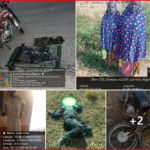
The National Human Rights Commission (NHRC) has strongly condemned the recent airstrike on a civilian market along the Borno–Yobe border, calling for an independent investigation and comprehensive reforms to strengthen civilian protection in Nigeria’s counter-terrorism operations.
The incident, which occurred on Sunday, April 12, 2026, reportedly left more than 56 people dead and several others injured, raising renewed concerns about the safety of civilians in conflict-affected communities.
Reacting to the development, NHRC Executive Secretary, Tony Ojukwu, described the attack as a grave violation of fundamental rights, including the right to life, dignity, and personal security as guaranteed under Nigeria’s Constitution, the African Charter on Human and Peoples’ Rights, and international humanitarian law.
Ojukwu stressed that labelling the strike as accidental does not absolve the state of responsibility, noting that recurring incidents involving civilian casualties suggest lapses in adherence to the principles of distinction, proportionality, and precaution in military operations.
He warned that the pattern of such occurrences risks undermining public trust and weakening the credibility of ongoing efforts against insurgency.
The Commission called for an immediate, transparent, and independent probe into the incident, urging that the process involve not only the military but also the NHRC, the National Assembly, independent experts, and representatives of affected communities.
It further demanded accountability across all stages of the operation—from intelligence gathering to execution—insisting that any personnel found culpable should face appropriate legal sanctions. The NHRC also recommended the temporary suspension of officers directly involved in the operation to safeguard the integrity of the investigation.
On humanitarian grounds, the Commission urged the Federal Government to provide urgent medical care for the injured, ensure dignified burial arrangements for the deceased, and offer adequate compensation to victims’ families in line with international obligations.
The NHRC emphasised the need for systematic post-incident reviews of military procedures to prevent recurrence, while renewing its call for the immediate adoption of a National Policy on the Protection of Civilians. According to the Commission, such a framework should prioritise human rights in operational planning, with clear protocols for intelligence verification, targeting, and post-strike assessments.
It also advocated the creation of an independent civilian casualty tracking and response mechanism, underscoring that protecting civilian lives remains both a legal obligation and a strategic imperative.
Reiterating its stance, the Commission cautioned that the fight against terrorism must not replicate the lawlessness it seeks to eradicate.
The NHRC extended its condolences to affected families and affirmed its commitment to monitoring the situation while engaging relevant authorities to ensure justice, accountability, and measures to prevent future incidents.