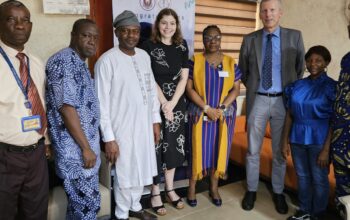
The National Counter Terrorism Centre (NCTC) under the Office of the National Security Adviser, in partnership with the United Nations Office on Drugs and Crime (UNODC) and with support from the Government of Canada, has inaugurated a Technical Working Group (TWG) to combat mineral-related crime and terrorism financing in Nigeria.
The initiative comes amid growing concern that the country’s mineral sector—particularly artisanal and small-scale gold mining—has become a major target for criminal and terrorist networks. These groups exploit regulatory loopholes, weak oversight and opaque value chains to launder illicit proceeds, evade taxes, and fuel conflict across several regions.
Authorities warn that the proliferation of illegal mining is eroding government revenue, undermining public service delivery, and contributing to widespread insecurity. The TWG, drawn from law enforcement, intelligence and security agencies, as well as key ministries, departments and agencies including the Presidential Artisanal Gold Mining Initiative (PAGMI), will coordinate national efforts to counter these threats.
The group is tasked with enhancing Nigeria’s criminal justice response to illicit financial flows linked to terrorism and money laundering within the mining sector. It will support policy reforms, guide interagency collaboration, and promote community resilience in artisanal mining areas, while integrating gender and human rights considerations into government interventions.
In a keynote address delivered on behalf of NCTC National Coordinator, Major General Adamu Garba Laka, the Centre’s Director of Preventing and Countering Violent Extremism, Ambassador Mairo Musa Abbas, reaffirmed Nigeria’s commitment to dismantling terrorist financing networks.
He said illegal mining has become a direct driver of insecurity. “This is not merely a theoretical risk; it is a lived reality in several regions of our country, where illegal mining intersects with banditry, insurgency, arms trafficking and cross-border smuggling,” he stated. He added that safeguarding mineral resources is both a security and economic imperative, describing it as a “sovereign duty.”
UNODC Country Representative, Mr. Cheikh Toure, represented by Tom Parker, Head of the UNODC Counter Terrorism Unit, commended the NCTC’s leadership. He noted that illicit mining and associated financial flows threaten Nigeria’s long-term stability and development. “The creation of this interagency Working Group is an important step in reversing this trend,” he said, pledging continued UNODC support to strengthen detection, investigation, and prosecution of financial crimes tied to terrorism and organized crime.
Through funding from the Government of Canada, UNODC is partnering with the NCTC, Economic and Financial Crimes Commission, National Financial Intelligence Unit, Mining Marshals Corps, and the Ministry of Solid Minerals Development. The collaboration aims to expand financial-sector supervision, equip institutions to detect suspicious transactions, and enhance state and federal capacity to investigate and prosecute money laundering and terrorism-financing offences.
The TWG is expected to lead a coordinated national response to protect Nigeria’s mineral resources from criminal exploitation and curtail the financial pipelines sustaining violent groups.