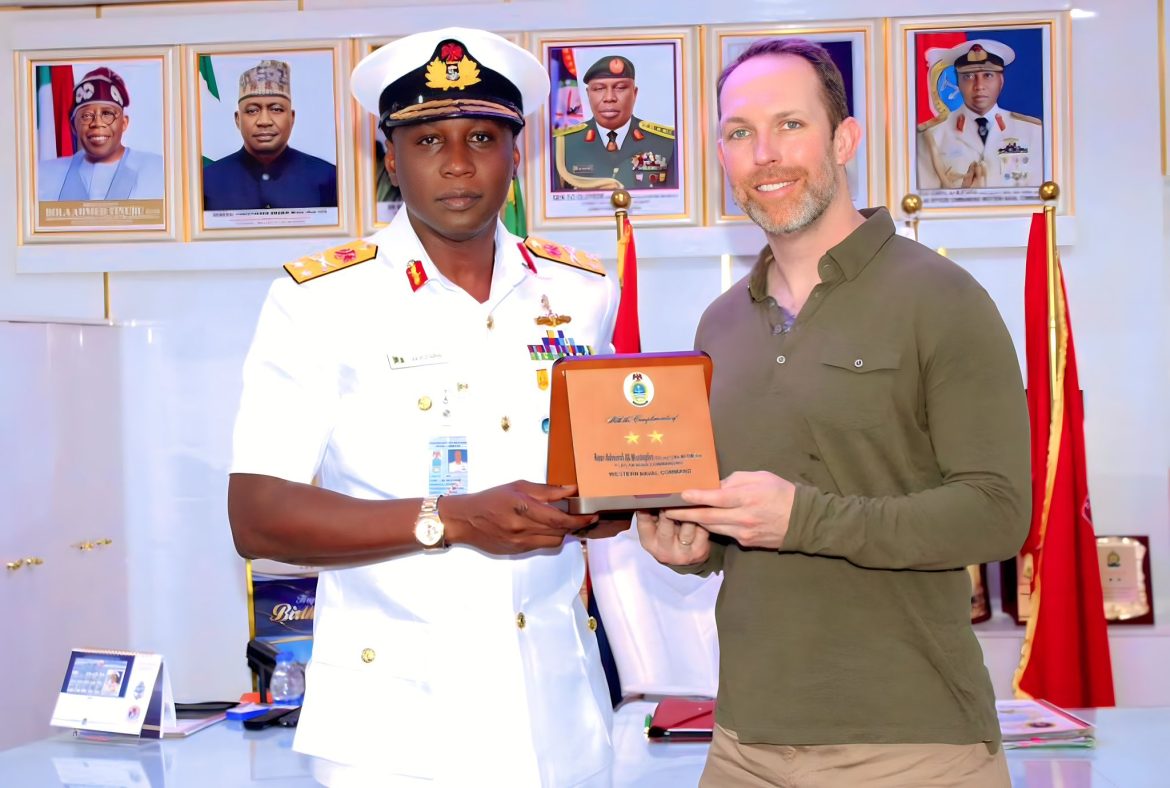
The Nigerian Navy has strengthened its maritime security partnership with the United States Congress following a high-level visit by a United States Congressional Delegation (CODEL) to the Western Naval Command Headquarters in Lagos.
The delegation, led by Adam Barker, was received by the Flag Officer Commanding (FOC) Western Naval Command, Abubakar Mustapha, who highlighted the command’s strategic role in securing Nigeria’s maritime domain and supporting regional stability in the Gulf of Guinea.
Speaking during the engagement, Rear Admiral Mustapha emphasised the importance of the Regional Maritime Awareness Capability (RMAC) in strengthening maritime domain awareness through real-time surveillance, intelligence sharing, and coordinated operational responses.
He stated that the RMAC has significantly improved the Nigerian Navy’s ability to combat sea robbery, crude oil theft, and other illicit maritime activities, contributing to safer international shipping routes. According to him, the RMAC played a pivotal role in the suppression of piracy in Nigerian waters in 2022, a development that led the International Maritime Bureau to remove Nigeria from its global piracy list.
The FOC noted that sustained collaboration with international partners, particularly the United States, remains essential for enhancing regional maritime security. He added that such partnerships provide critical opportunities for capacity building, technical assistance, and intelligence exchange needed to tackle evolving maritime threats.
As part of the visit, the U.S. delegation toured the RMAC Complex and received a detailed operational briefing on the facility’s capabilities and its contributions to regional maritime security efforts.
In his remarks, Barker commended the Nigerian Navy’s proactive maritime security initiatives and reaffirmed the United States’ commitment to continued cooperation in advancing maritime awareness and collective security in the Gulf of Guinea.
The visit also provided both parties an opportunity to exchange views on emerging maritime threats and explore practical areas for deeper operational collaboration.