Vice President Kashim Shettima has announced a N166 billion Special Intervention Fund to bolster Nigeria’s capacity for anticipatory disaster management in 2026, marking a major shift toward data-driven preparedness.
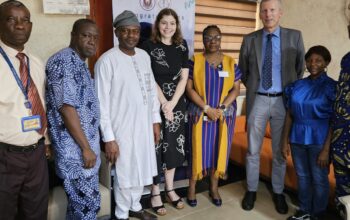
Speaking on Thursday at the National Conference on Anticipatory Action in Abuja, Shettima—represented by the Deputy Chief of Staff to the President, Senator Ibrahim Hassan Hadejia—said the Federal Government is committed to building a nation that anticipates disasters rather than reacts to them.
He said the fund, approved by the National Economic Council, will support the implementation of the National Anticipatory Action Framework, enabling early interventions before floods, droughts or other climate-related emergencies occur.
“We are strengthening national systems to ensure that early warning is not just issued but heard, understood, and acted upon at the last mile,” he said. “The Nigeria we are building will be proactive, not reactive; resilient, not vulnerable.”
Shettima highlighted ongoing investments in climate-resilient agriculture, machine-learning-powered flood prediction models, national data-generating agencies, disaster management systems, and community-led resilience initiatives. These efforts, he said, are aimed at ensuring no community is left to face rising waters, failed rains, or eroding livelihoods alone.
Describing anticipatory action as both a humanitarian necessity and a climate strategy, the Vice President stressed that data and early warning systems must drive national decision-making. “If we unlock the power of data-driven anticipatory action, we will build a Nigeria that withstands shocks, protects its citizens, and stands as a global model for resilience,” he said.
He warned that climate threats are no longer distant, citing annual floods across 26 states, drought-induced crop losses in the North, and the rise of climate-related diseases. These crises, he noted, have displaced tens of thousands and weakened local economies.
Shettima said anticipatory action offers Nigeria a chance to turn predictability into protection: moving families before floods hit, safeguarding farms ahead of drought, and supporting households before they resort to harmful coping strategies.
“This is common sense, smart economics, good governance, and humane leadership,” he said.
The Vice President acknowledged successful collaborations in Adamawa involving the UN, the International Rescue Committee (IRC), and other partners, noting that anticipatory interventions there helped communities recover more quickly and with dignity.
He called on development partners and private donors to scale up investment in anticipatory action, saying every naira or dollar spent ahead of disaster saves multiples of that cost afterward. “This is not charity,” he said. “It is a strategic investment in stability, economic growth, and resilience.”
Shettima urged stakeholders to strengthen data collection, expand forecasting capacity with advanced analytics, improve early warning systems, scale climate-resilient agriculture, and empower communities with tools and financing to act early.
Delivering his opening remarks, IRC Nigeria Country Director Babatunde Ojei described anticipatory action as “a lifeline” and said the conference marked a turning point in how Nigeria prepares for climate shocks.
“For too long, floods, droughts, and displacement have shaped the lives of ordinary Nigerians,” Ojei said. “Today, science meets leadership, and data meets decisive action. Nigeria is showing the world that we will not wait for disaster before we protect our people.”