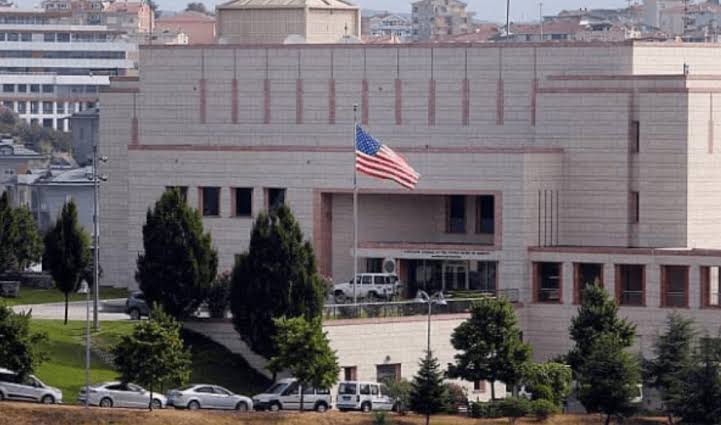
The United States Embassy in Abuja has clarified that its recent restructuring of routine visa services in Nigeria has not resulted in the suspension of all visa processing at the diplomatic mission, confirming that selected categories, including diplomatic, official and specialised applications, remain subject to separate processing arrangements.
The clarification is particularly significant for Nigerian journalists and other media professionals seeking entry to the United States on I visas, following uncertainty triggered by the US government’s decision to realign routine visa services in Abuja with designated regional processing hubs.
The new arrangement, which took effect on August 1, 2026, moved routine visa processing away from Abuja as part of a broader effort by the United States to strengthen security screening, improve operational efficiency and align overseas consular services with national priorities.
However, the United States Mission in Nigeria stressed that the Embassy in Abuja remains fully operational and that the restructuring does not amount to the closure of the diplomatic mission.
Under the revised arrangement, the Abuja Embassy will continue to process A, G and C visa categories, which cover diplomatic and official travel, while other specialised visa applications remain subject to the applicable procedures.
The distinction is important for foreign media representatives, as the I visa is specifically designed for journalists, members of the foreign press and other eligible media professionals travelling to the United States for professional assignments.
The development means that the suspension of routine visa services in Abuja should not be interpreted as a blanket halt to all consular activities at the Embassy.
Instead, the US government has separated routine visa processing from categories considered essential to diplomatic, official and specialised international engagements.
Nigeria’s designated regional visa hub is Lagos, meaning that applicants for routine visa services may now be required to make arrangements to process their applications there rather than at the Abuja Embassy.
The US government said the realignment was intended to strengthen national security, improve the consistency of visa screening and adjudication, and ensure more efficient deployment of consular resources.
I-Visa Applicants Still Covered
For Nigerian media practitioners, the status of the I visa remains particularly important.
The I visa is the principal non-immigrant visa category for foreign journalists, members of the foreign press and certain media professionals travelling to the United States on work-related assignments.
The restructuring of routine visa services, therefore, should not automatically be interpreted as a suspension of access to the United States for legitimate foreign media representatives.
The development comes amid heightened scrutiny of visa applicants, as the US administration continues to introduce broader screening and vetting measures across several visa categories.
Foreign media representatives have also faced increased scrutiny under recent changes to US immigration policy.
A separate US regulation expected to take effect in September will introduce fixed periods of admission for foreign media representatives entering the United States on I visas, replacing the previous duration-of-status arrangement.
Under the new rule, I-visa holders will generally be admitted for periods of up to 240 days, subject to applicable regulations and extension procedures.
Abuja Embassy Remains Open
The clarification is expected to correct growing misconceptions that the United States Embassy in Abuja has completely ceased visa operations.
It has not.
Rather, the restructuring primarily affects routine visa processing, while designated visa categories continue to receive attention under applicable arrangements.
Applicants who believe they qualify for A, G or C visas have been advised to contact their relevant protocol offices, which ordinarily coordinate visa matters involving diplomatic and official travel.
For ordinary visa applicants, however, the transfer of routine processing to regional hubs represents a significant change in the application process.
Applicants will now need to determine the appropriate visa category before beginning the process, as the location for visa processing may depend on the purpose and nature of the proposed travel.
The US government said the realignment affects several American diplomatic posts across Africa, including Abuja, while the affected missions continue to carry out their wider diplomatic and official responsibilities.
For now, the message from the United States Mission is clear: the Embassy in Abuja remains open and operational, but routine visa processing has been reorganised—and not every visa category is affected by the new arrangement.