The National Agency for the Prohibition of Trafficking in Persons (NAPTIP) has rescued more than 180 children allegedly trafficked from communities across five states and uncovered suspected criminal networks accused of operating under the guise of civil society and humanitarian organisations.
The agency also arrested a nurse at the Federal Medical Centre (FMC), Onitsha, Anambra State, after she was allegedly found in possession of one of the trafficked children.
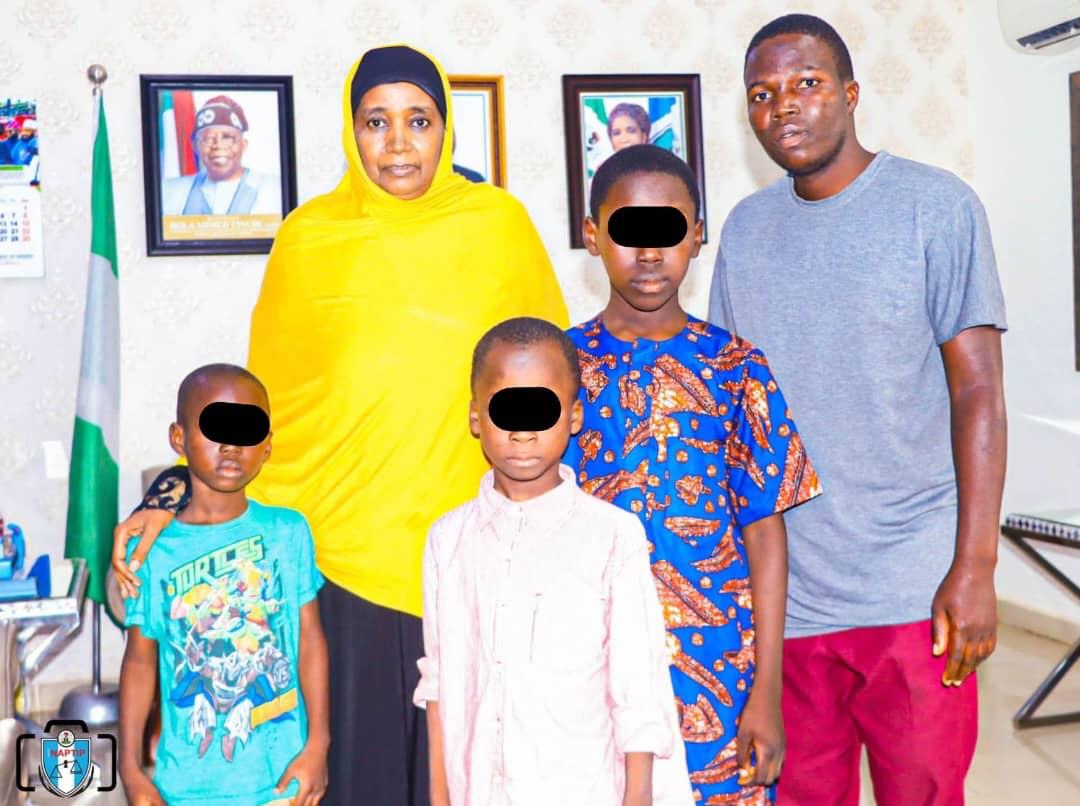
In a statement issued on Monday, NAPTIP spokesperson, Vincent Adekoye, said the latest operation led to the recovery of three children allegedly taken from distressed families in Kajuru, Kaduna State, and moved to a private high-rise building in a choice area of Onitsha.
Another child, allegedly trafficked from a vulnerable community, was also recovered from the care of the arrested nurse at FMC Onitsha.
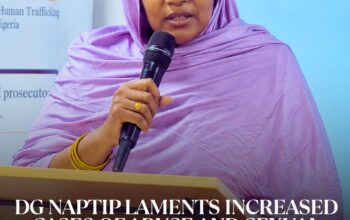
The development has prompted the Director-General of NAPTIP, Binta Bello, to challenge the umbrella body of civil society organisations in Nigeria to investigate and expose criminal elements allegedly exploiting the identity and platforms of legitimate organisations to traffic children.
Bello said preliminary investigations had uncovered what she described as a disturbing pattern in which suspected trafficking syndicates target communities ravaged by insecurity and humanitarian crises while presenting themselves as organisations offering educational support and back-to-school programmes.
“I am seriously disturbed by the activities of some persons masquerading as members of the Civil Society Organisations, who have been fingered in several issues of child trafficking from across the country,” she said.
According to the NAPTIP boss, the suspects allegedly exploit the vulnerability of parents in conflict-affected communities by promising to relocate their children to urban centres for education and welfare support, only for the children to disappear from their families.
She expressed concern that criminal elements may have infiltrated parts of the civil society space despite the existence of many credible organisations working with NAPTIP and other agencies in humanitarian and counter-trafficking efforts.
“It seems that they have been infiltrated by some criminal elements whose mission is to steal and traffic children for various forms of reasons,” Bello said.
She disclosed that NAPTIP had launched a manhunt for persons identified during the ongoing investigation and vowed that anyone found culpable would face the full weight of the law.
Bello also called on civil society organisations, particularly those working in the counter-trafficking sector, to undertake what she described as an internal cleansing and expose members allegedly involved in criminal activities.
“I want to challenge the umbrella body of the Civil Society Organisations in Nigeria, especially those working closely with us in the counter-trafficking space, to carry out in-house cleansing and expose those suspected to be criminal elements among them. They must be flushed out,” she said.
One of the rescued children’s fathers, whose identity was withheld, recounted how his three-year-old son was taken from Kajuru after gunmen invaded the community about three years ago.
He said residents were displaced following the attack, after which some persons known to the community approached affected families, claiming to represent a non-governmental organisation providing assistance to victims of insecurity.
According to him, the group persuaded some parents to release their children for what was presented as an opportunity to receive education and welfare support in the city.
The father said he subsequently lost contact with the individuals and could no longer trace his son.
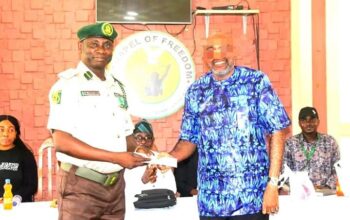
His son, now six years old, was eventually identified among children recovered by NAPTIP after the father saw the boy’s photograph on the agency’s Facebook page.
“I am overwhelmed with joy because I had initially lost hope of seeing my son,” he said.
However, the emotional reunion was marked by concern over the child’s condition, with the father saying the boy appeared unkempt, unhappy and may have been used as a domestic worker.
“It is a mixture of joy and sadness for me because he looks very unkempt, unhappy, and it appears that he is being used as house help. On the other hand, I am happy that I am seeing him alive,” he said.
He thanked the NAPTIP management and its operatives for recovering his son, describing the reunion as “just like a dream.”
In a separate development, the nurse arrested at FMC Onitsha reportedly told investigators that she obtained the child from a prominent orphanage in Abuja in 2023.
NAPTIP said the nurse allegedly admitted paying N771,000 for the child.
The agency said the case forms part of a wider investigation into suspected networks through which children allegedly taken from vulnerable families are transferred to orphanages and subsequently handed over to individuals under the guise of adoption.
NAPTIP had earlier established a Special Squad within its Investigation and Monitoring Department following several reports of missing children across the country.
The squad was tasked with tracing and recovering allegedly trafficked children and identifying and prosecuting those responsible for the crimes.
The agency said the first batch of children recovered by the squad were allegedly taken from communities in Benue and Nasarawa states before being moved to orphanages in Abuja and other locations.
Some of the children were subsequently alleged to have been transferred to unidentified individuals under the guise of adoption after substantial sums of money changed hands.
The latest recoveries, NAPTIP said, have strengthened its ongoing investigation into the suspected trafficking networks and individuals allegedly using legitimate-looking humanitarian and civil society platforms to conceal criminal activities.
The agency said efforts were continuing to trace other missing children, dismantle the suspected networks and reunite rescued victims with their families where possible.