A landmark international study has upended long-held assumptions about global pandemic preparedness, concluding that economic inequality—not the strength of healthcare systems, laboratories or emergency response plans—is the most powerful predictor of how severely countries are affected during disease outbreaks.
The study, published in the New England Journal of Medicine, found that nations with high levels of income inequality experienced significantly higher infection and death rates during both the COVID-19 and HIV/AIDS pandemics, regardless of the sophistication of their health infrastructure.
Led by Nobel Prize-winning economist Joseph Stiglitz and a team of leading global health experts under the Global Council on Inequality, AIDS and Pandemics, the research urges governments to redesign pandemic preparedness strategies by placing inequality at the centre of health security planning.
According to the findings, countries widely regarded as among the world’s best prepared for pandemics, including the United States and the United Kingdom, recorded some of the highest COVID-19 infection and mortality rates despite possessing advanced healthcare systems and emergency response capabilities.
In contrast, countries with relatively modest preparedness rankings but lower levels of income inequality, such as Vietnam and Ethiopia, achieved significantly better outcomes in controlling the spread of the virus.
The researchers found no meaningful relationship between conventional pandemic preparedness indicators—including laboratory capacity, surveillance systems and emergency response mechanisms—and actual outcomes during either the COVID-19 or HIV/AIDS pandemics.
Instead, income inequality emerged as the strongest predictor of deaths and infections. The analysis revealed that every one-point increase in a country’s Gini coefficient—the internationally recognised measure of income inequality—was associated with approximately 12.5 additional COVID-19 deaths per 100,000 people. A similar pattern was observed for AIDS-related deaths and new HIV infections, even after adjusting for poverty levels and healthcare capacity.
The report attributed the trend to the way inequality undermines public health responses by limiting people’s ability to comply with disease-control measures, reducing trust in public institutions and creating unequal access to healthcare services.
It warned that more than 90 per cent of the global population now lives in countries with high levels of income inequality—the highest recorded since the Industrial Revolution—leaving the world increasingly vulnerable to future pandemics.
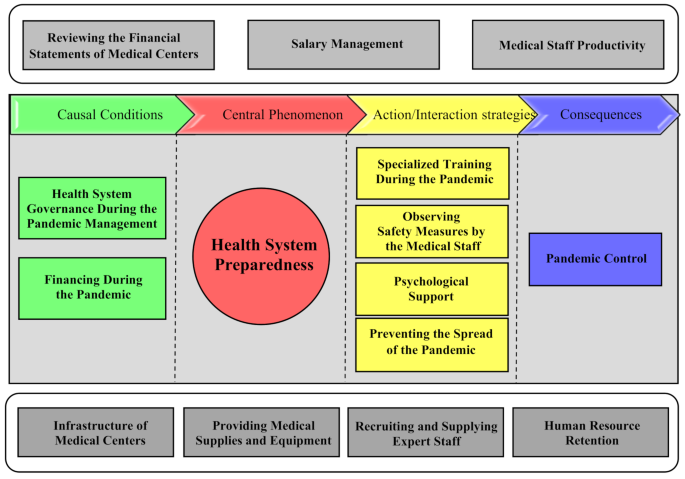
To address the challenge, the researchers proposed an “Inequality-Informed Pandemic Preparedness and Response” framework that expands preparedness beyond hospitals and laboratories to include economic and social protection measures.
Key recommendations include expanding paid sick leave, unemployment benefits and emergency cash transfers during health crises; involving finance, labour and education ministries in pandemic planning; reforming global financial systems through emergency debt relief and automatic international funding; and promoting open licensing of publicly funded medical research alongside increased regional production of vaccines and medicines.
Joseph Stiglitz, Nobel Laureate in Economics and Co-Chair of the Global Council, said the findings expose critical flaws in the world’s current approach to pandemic preparedness.
“For decades the world judged how ready a country is for a pandemic by counting its laboratories, stockpiles and response plans. This research shows that this is not enough. High economic inequality can leave even wealthy, well-equipped nations dangerously exposed,” he said.
UNAIDS Executive Director Winnie Byanyima said the evidence confirms that inequality lies at the heart of pandemic vulnerability.
“The research proves that inequality is the ground in which pandemics take root. By tackling inequality, we can end AIDS as a public health threat and make the world safer from future pandemics,” she said.
The findings will be discussed at the AIDS 2026 Conference in Rio de Janeiro, where global leaders are expected to examine their implications for future international health policy.
The Global Council on Inequality, AIDS and Pandemics, established by UNAIDS, compared national responses to COVID-19 and HIV/AIDS and concluded that conventional preparedness indices, which focus largely on technical capacity, fail to predict real-world performance during health emergencies.
The researchers said the lessons from COVID-19—which claimed millions of lives worldwide—and HIV/AIDS, which has killed more than 44 million people since the early 1980s, underscore the urgent need to treat reducing inequality as a central pillar of global health security rather than merely a social policy objective.