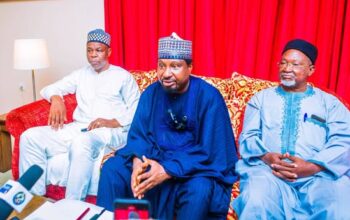
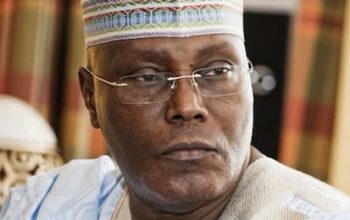
In a significant public address today, Atiku Abubakar, a prominent Nigerian politician and former Vice President of Nigeria (1999-2007), who contested the Presidential Election as the candidate of the Peoples Democratic Party in the 2023 elections, held a press conference at the PDP Headquarters in Abuja.
The focus of his statement revolved around the recent judgement of the Presidential Election Petition Tribunal (PEPC) and the Supreme Court, as well as broader issues related to the state of democracy and the electoral process in Nigeria.
Mr. Abubakar, while addressing the gathered press and distinguished guests, began by expressing his concerns about the potential consequences of the Supreme Court’s judgement. He highlighted the risk of legitimizing illegal activities such as forgery, identity theft, and perjury, asserting that if the Supreme Court condones these actions, it could have dire consequences for Nigeria’s democracy and electoral system.
He further stressed the enduring impacts of such decisions on the country and emphasized that his concerns transcended any single presidential election, advocating for the greater good of Nigeria. He provided a historical perspective on his own political journey, citing instances where he had made difficult but morally sound choices, including opposing the extension of a government’s tenure beyond constitutional limits.
Regarding the recent election and his decision to pursue legal remedies, Atiku Abubakar clarified that his intention was not only about his personal stake but rather about safeguarding the democratic principles that underpin Nigeria’s political landscape. He recounted his efforts to uncover evidence related to the academic qualifications of the President and submitted it to the Supreme Court.
Mr. Abubakar also expressed concern about the current state of Nigeria’s institutions, particularly the judiciary and the electoral commission. He lamented the politicization and nepotism affecting the appointment of judges and electoral officials and warned that these factors were detrimental to the health of democracy.
Furthermore, he pointed out that the erosion of trust in the electoral system and democracy itself was a significant issue. The manipulation of electoral technology and INEC’s deviation from the use of modern technology were highlighted as causes of concern. He underscored that a lack of trust in elections can undermine the foundations of democracy.
Mr. Abubakar emphasized the grave implications of the recent judgments, including a potential endorsement of identity theft, forgeries, and violence as means to secure victory. He also voiced concerns about the court’s treatment of evidence and the potential for self-help strategies to emerge.
In response, he proposed a series of constitutional amendments aimed at fortifying Nigeria’s democracy. These suggestions included mandating electronic voting and collation of results, concluding litigation before inauguration, adopting a Two-Round System for presidential elections, implementing a single six-year presidential term, verifying candidates’ credentials, and ensuring transparency in judicial appointments.
Additionally, he called for the restoration of confidence in the electoral system and judicial reform to reduce the number of election petitions and corruption within the judiciary.
Mr. Abubakar called upon the younger generation to lead the effort to deepen democracy and uphold the rule of law. He urged the adoption of his proposed amendments to protect the integrity of Nigeria’s electoral process and return the power to elect leaders to the voters.